NHL · transaction
Bedard's $75M Extension Signals Chicago's Offensive Commitment—and What It Means for His Volume Props
Connor Bedard just locked in a $15M annual cap hit through age 26, and the Blackhawks' investment tells you everything about their confidence in his scoring trajectory.
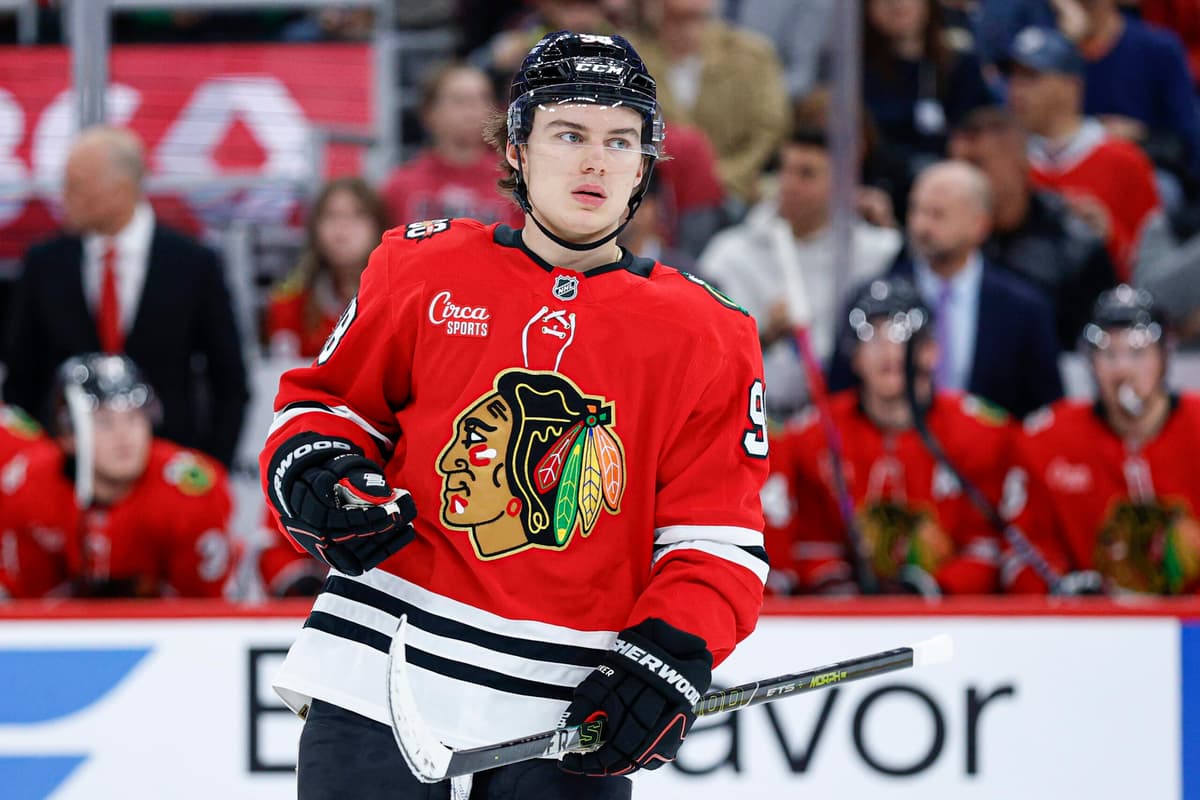
The Chicago Blackhawks announced Saturday they extended Connor Bedard to a five-year, $75-million deal carrying a $15-million annual cap hit. At 21 years old, Bedard becomes one of the NHL's highest-paid forwards, a valuation that reflects not just his 2025-26 production—30 goals and 45 assists across 69 games—but the organization's conviction that he's an elite, franchise-cornerstone talent.
Bedard's three-year NHL resume is the real story here. In 219 career games, he's posted 75 goals and 128 assists for 203 points, averaging 0.927 points per game. That pace, sustained across a full career arc from age 18 to 21, places him in rare air: he's on a trajectory that rivals some of the league's generational forwards. The contract extension validates what the raw numbers already suggest—Chicago isn't treating him as a prospect anymore. He's the engine. General manager Kyle Davidson's language about Bedard making "the players around him better" and setting "an extraordinary standard" for the young core reads like a franchise reset around one player.
The 2025-26 season delivered the first real test of whether Bedard can sustain elite production in a full 82-game season. His 75 points in 69 games (.923 PPG) trails his prior rates only slightly, suggesting the wear of a full regular season hasn't eroded his offensive output. Crucially, he hit career highs in goals (30) and assists (45), meaning his improvements weren't variance-driven clustering in one category—both arms of his game evolved.
For bettors, the extension carries two immediate implications. First, Bedard's role security is now absolute. He'll see late-game leverage, man-advantage opportunities, and first-line usage for the entire five-year window. This matters because usage amplifies volume props. His shots-on-goal and assists lines—especially in power-play scenarios—should remain among the league's highest-ceiling plays. The market has already priced in "elite young forward," but the contract locks in the organizational commitment to feed him. Second, the extension removes injury-risk discount. Before Saturday, there was latent concern that a serious injury could push Chicago into rebuild-mode earlier, reducing Bedard's role. The five-year commitment with a $15M cap hit eliminates that tail risk for the deal's duration. Multi-game prop parlays that include Bedard's points or assists lines carry less downside volatility than comparable young stars still operating on entry-level deals.
The durability of this edge depends on whether the market has fully absorbed that Chicago is now locked into Bedard as the franchise centerpiece through his prime. If sportsbooks are still pricing him as a high-variance prospect with usage uncertainty, his assist and goal-contribution lines could offer value on the over side, especially in games where the Blackhawks lean on him in high-leverage spots. However, if the market has already adjusted to his contract status and usage certainty, the edge evaporates quickly. Watchers should monitor his next 10-15 games for any line tightening; that adjustment will tell you whether the betting market got ahead of the narrative or lagged it.