Byram Trade Reshapes Chicago's Defensive Ceiling—and Bedard's Scoring Landscape
By Erik Schwartz ·
The Blackhawks sacrificed draft capital and a prospect to land an elite two-way defenseman two days before the 2026 draft, signaling a shift from youth development to immediate competitive window.
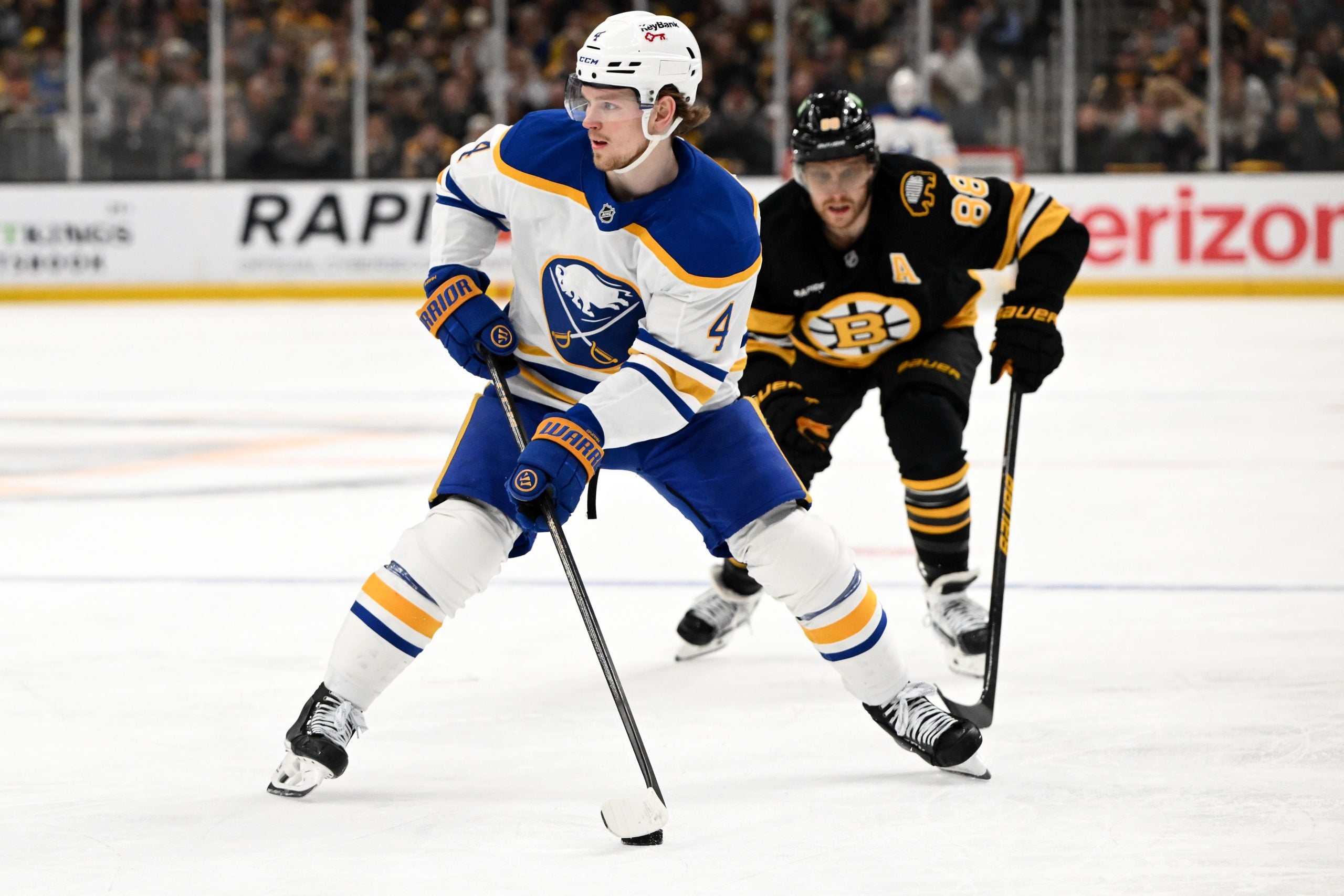
The Chicago Blackhawks completed a blockbuster trade on June 23, acquiring defenseman Bowen Byram and forward Jordan Greenway from Buffalo in exchange for the No. 4 overall pick, the No. 45 selection, and prospect Louis Crevier. The move trades near-term drafting firepower for established NHL depth at a pivotal moment—the organization elected to build around Bedard's prime window rather than continue the youth stockpiling strategy that defined the rebuild.
Byram, 25, represents the kind of foundational defensive talent that rarely becomes available mid-offseason. The two-way defenseman brings legitimate puck-transport ability, early-career power-play development (he logged expanded PP minutes in Buffalo over the past year), and—critically—credibility on both ends of the ice. His skating allows him to defend reactively rather than purely positionally, a trait that matters when you're protecting a young, still-forming core. At his introductory press conference on June 24, Byram emphasized his readiness for elevated responsibility and framed his fit as cultural: his father played in the Chicago organization, and Byram has been a Blackhawks fan since childhood, watching them eliminate his native BC's Canucks in the playoffs. That alignment of motivation and opportunity rarely compounds this cleanly.
The trade's cost—a top-five selection—tells you exactly how Chicago's front office values this window. That pick could have yielded another foundational piece; instead, they chose to upgrade an existing position to elite status. Byram's defensive positioning and gap control directly reduce the offensive load required from Bedard and the wing corps. When your top defenseman can neutralize opponents' entries and close skating lanes quickly, your top-six forwards face fewer shot-suppression moments and spend more time in offensive-creation zones. The young defensive corps benefits too: Byram's maturity compresses the learning curve for players still calibrating their NHL timing.
For prop bettors, the mechanism is straightforward: Byram's arrival should depress Chicago's goals-against totals and increase Bedard's per-game assist volume by proximity. A defenseman who specializes in puck movement and transition speeds up offensive flow; Bedard's assist rate will likely tick upward because Byram's breakout passes and zone exits create better entry conditions. Conversely, the defensive upgrade reduces the team's vulnerability to high-volume offensive nights—unders on team goals-against carry less tail risk than they did pre-trade. Greenway adds organizational depth at wing but is a secondary consideration for prop angles; the Byram addition is the structural lever.
The angle is durable because it rests on Byram's established two-way track record, not a single-game outlier. Chicago's defensive profile will visibly shift across a full season. Early-season lines (games 1-5) may not yet reflect the Byram premium; books typically price defensemen more conservatively than forwards in team totals. By week two, the correction typically stabilizes. Bet the edge early before the market fully prices the defensive upgrade into Chicago's goal-suppression profile.