Burakovsky's Exit Opens Chicago's Cap—But Leaves a Void Davidson Must Fill
By PropBetEdge Editorial Team ·
The Blackhawks dump a $5.5M albatross for a sixth-rounder and gain breathing room, but their forward corps needs immediate reinforcement to stay competitive.
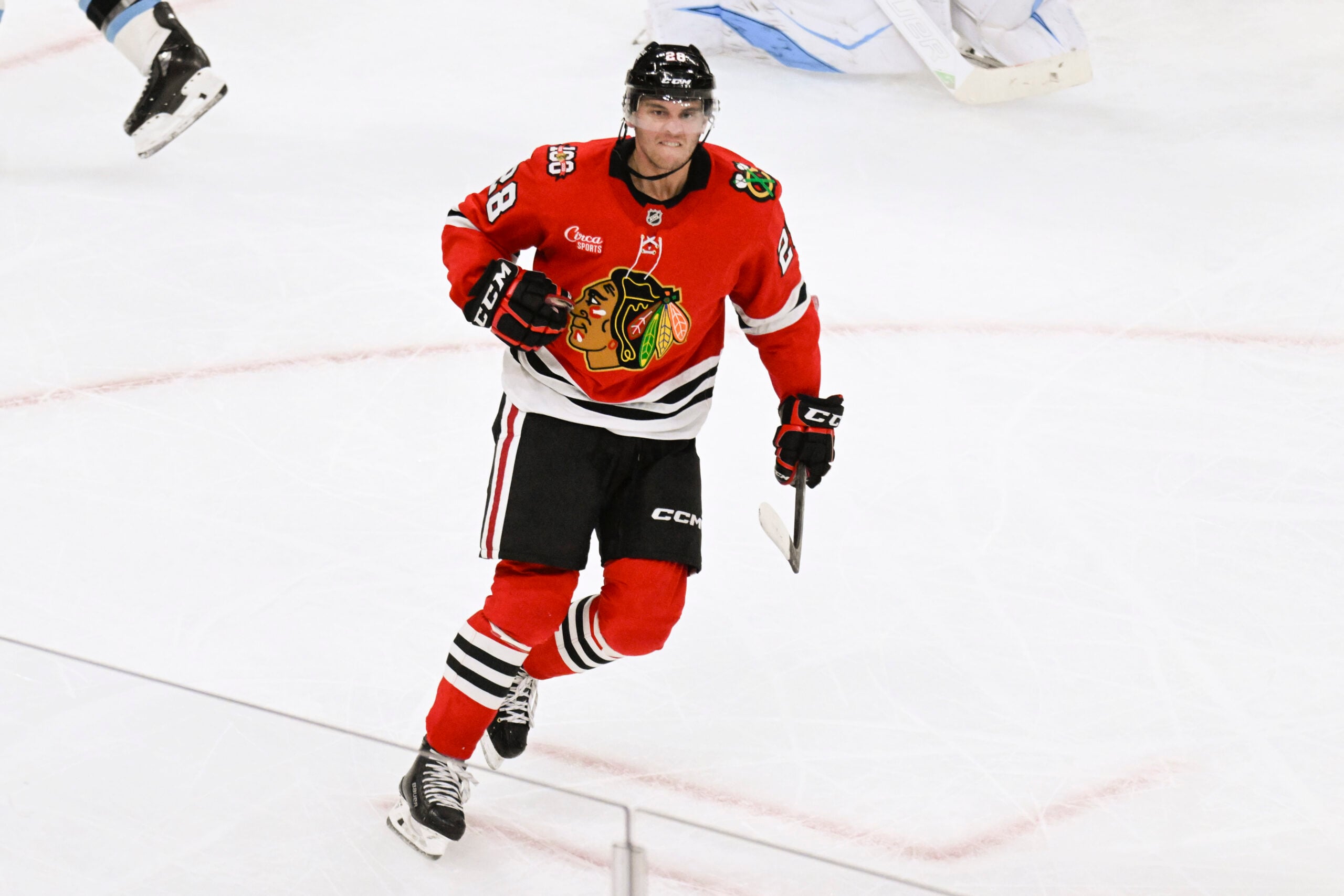
Kyle Davidson moved fast on draft day, shipping Andre Burakovsky to Ottawa for a 2027 sixth-round pick and clearing $5.5 million in cap space. The Blackhawks receive immediate relief on a salary that produced just four points over the final 37 games of 2025-26—a return rate that justified the exit. Burakovsky's offensive disappearance came alongside defensive unreliability, making him a liability in a rebuild that demands high-impact contributors.
The math works cleanly. Chicago now projects $36 million in cap space heading into free agency, with only $10 million needed to hit the salary floor. That cushion gives Davidson legitimate flexibility to address the roster's primary weakness: lack of secondary scoring and physical balance. The team retains cap ceiling room to absorb Connor Bedard's future deal and still target mid-tier forwards. The dead-cap math on Burakovsky—had he been bought out instead—would have created a $3.25 million combined hit across two seasons; the trade eliminates that entirely.
But opportunity cuts both directions. Jordan Greenway, acquired in the Bowen Byram swap, profiles as a fourth-line option, not a middle-six replacement. That vacancy becomes critical when evaluating Chicago's forward depth against the Atlantic Division's established rosters. Mason Marchment represents the type of add-on that could rebalance the lineup—a 6-foot-5 presence with edge and skill who posted 32 points in 39 games with Columbus after struggling in Seattle. The free-agent class is thin; Tuch's deal with Washington already signaled upward pressure on wing pricing. Marchment will command $7 million-plus on a four-to-five-year deal, but that still slots within Chicago's cap envelope.
From a prop angle, this trade immediately impacts Blackhawks team totals and spread exposure for the remainder of the offseason. If Davidson secures Marchment or a comparable forward, Chicago's goal-scoring projection climbs—the addition of a net-front presence and boards physical adds 10-15 goals to their seasonal floor. Conversely, if the team fails to fill the gap and enters training camp with Greenway as the primary Burakovsky replacement, you're looking at a materially weaker middle-six attack. Early-season Blackhawks unders (team total under 3.5 goals per game) become safer to lean into if the front office doesn't move decisively by late summer. The roster's young core has ceiling talent; what it lacks is the ballast required to compete immediately. Davidson's cap flexibility is real. How he deploys it will determine whether this trade reads as shrewd asset management or a step backward masked by a temporary salary reprieve.