Bedard Locked In at $15M AAV, but Shoulder Surgery Rewrites 2026-27 Timeline
By Erik Schwartz ·
Connor Bedard's five-year extension signals organizational commitment, but a July 8 shoulder procedure pushes his return to late November at earliest, creating a four-month absence that forces the Blackhawks to operate without their franchise centerpiece.
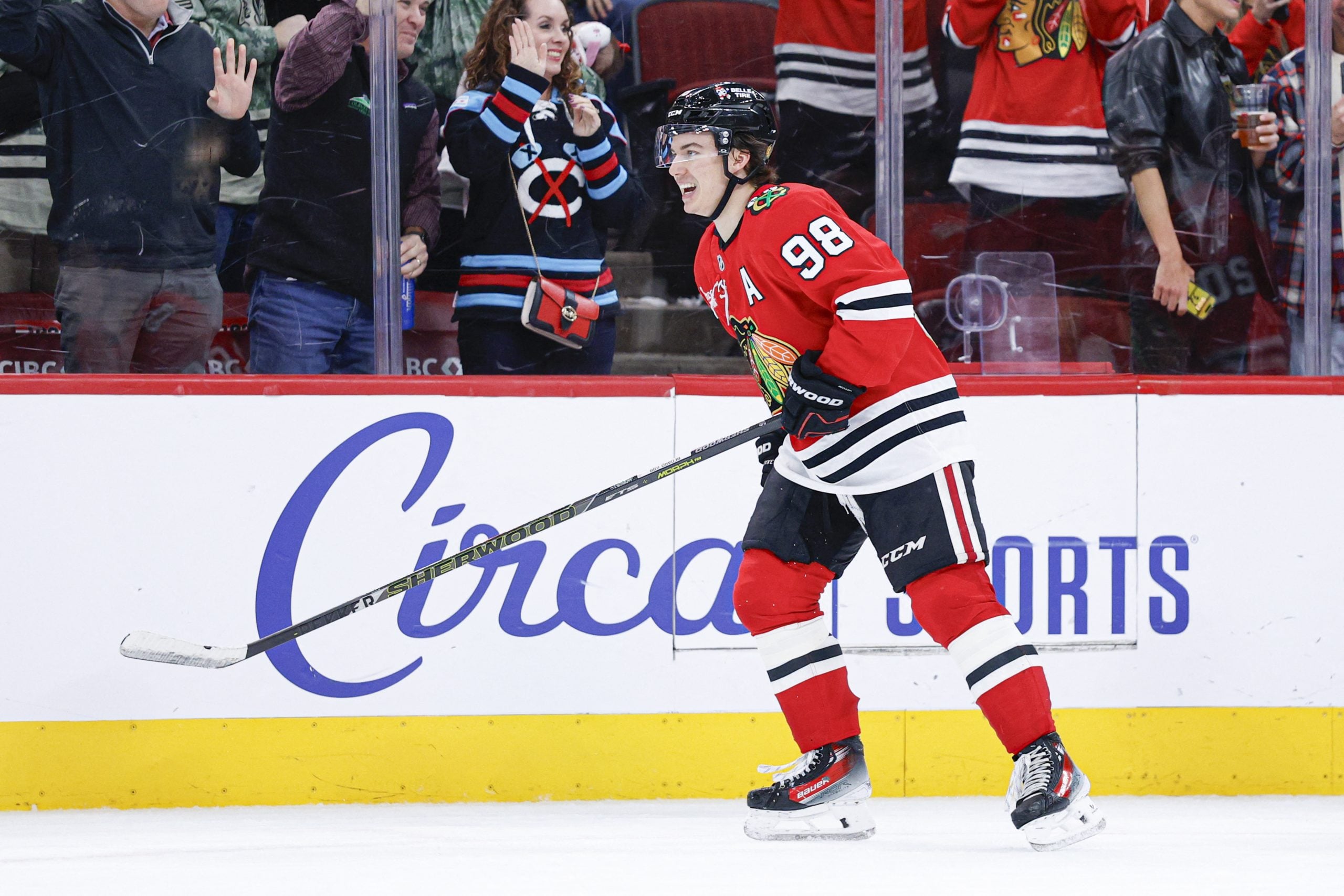
Connor Bedard signed a five-year, $15 million AAV extension with the Chicago Blackhawks on July 18, two days before turning 21. The deal arrived without friction—Bedard held the leverage and the team had no incentive to delay, but more importantly, the player made clear he had no intention of exploring other markets. The contract removes one of the NHL's few remaining extension questions and gives the Blackhawks the salary-cap certainty they need to build around their generational talent.
The extension itself is relatively team-friendly for a player of Bedard's caliber. At $15 million annually, he's being paid at or slightly below market rate for a 20-year-old franchise cornerstone with elite goal and assist projection. The deal locks him through age 26—his prime offensive years—and eliminates the risk of a hostile negotiation or offer sheet. From a cap-construction standpoint, the Blackhawks got what they wanted: stability without overpaying relative to comparable talent. The market had expected somewhere in the $16-17M range; this came in cleaner.
The far larger problem is the July 8 shoulder surgery that now dominates his availability for the 2026-27 season. Bedard is expected to miss four months from that date, which places his return window in mid-November at the earliest. That's roughly 25-30 games into the Blackhawks' schedule—a quarter of their season. Even if recovery accelerates, the team should plan for November as the realistic target; rushing a shoulder injury for a 21-year-old centerpiece is how you sacrifice a five-year window. Per Bedard's update on July 20, the recovery is tracking normally and early, but any setback in shoulder mechanics (common in that joint) could push the timeline into December.
For prop bettors, the absence creates two distinct betting environments. From now through October, Blackhawks games lose their centerpiece playmaker, which suppresses both their shot volume at even-strength and their expected-goal output. Bedard averaged 2.8 shots per game as a rookie; his absence removes that shot creator from the lineup, shifting offensive load to secondary talent. Byram's arrival helps the transition, but transitional defenses don't score like healthy, intact offenses. Any team total unders on CHI for September and October carry reduced variance risk because the team literally lacks its best weapon. Once Bedard returns in November, the overnight re-establishment of that shot and goal-creation axis will likely trigger sharp line movement—not because the market missed the extension, but because it forgot to recalibrate the injury. Look for CHI team totals and player prop lines to shift upward the moment he's cleared for contact drills.
The extension itself is structurally sound and announces the organization's confidence, but the timing of this presser—two days after surgery—underscore that the Blackhawks are building around a player who will spend the first quarter of the season rehabbing. The contract is the headline. The injury recovery is the operational reality that affects play-by-play betting for the next four months.