Kane's Return Reshuffles Chicago's Offensive Math—and Bedard's Assist Profile
By Ty Whitney ·
Patrick Kane signs a two-year deal with the Blackhawks at age 37, arriving as a secondary playmaker to a young core sidelined by injury.
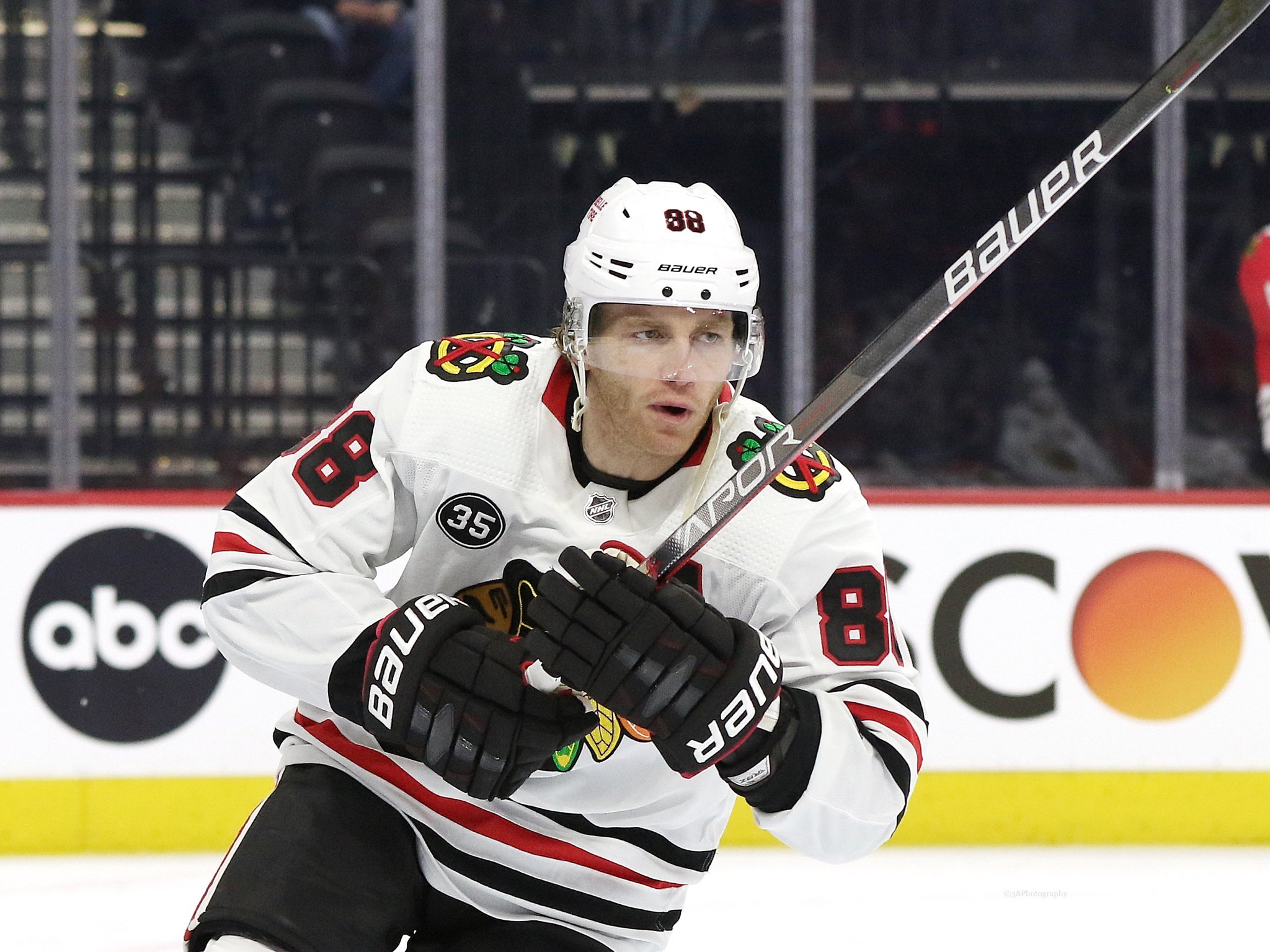
The Chicago Blackhawks announced yesterday that Patrick Kane has agreed to a two-year contract worth $8 million annually, reversing the franchise's 2023 rebuild logic by reuniting their former franchise pillar with Connor Bedard's emerging core. Kane, 37, spent last season with Detroit averaging 0.85 points per game (57 in 67 contests) and logged 41 assists—a secondary creator's workload that signals the Blackhawks view him as a complement, not a centerpiece.
The timing is not incidental. Bedard, the 2023 first-overall pick who captivated Chicago through three seasons as the building block, suffered an offseason injury that will sideline him for the start of the 2026-27 season. The Blackhawks' front office, which had publicly committed to a significant step forward this season, suddenly faced the prospect of fielding their top prospect without their generational talent. Kane's $8 million cap hit—a $5 million raise from his Detroit salary—became the market's fastest available antidote. That he chose Chicago over Buffalo (his hometown) after weeks of deliberation underscores the Blackhawks' aggression in securing secondary scoring depth during Bedard's absence.
From a roster construction standpoint, Kane fills a critical gap. The Blackhawks' young forwards—Bedard, Frank Nazar, Alex Vlasic—carry offensive promise but lack the playmaking gravity Kane still commands. At 57 points in 67 games, Kane remains a legitimate secondary option. His 41 assists last season trailed only Bedard's 45 in the organization's internal assist hierarchy, a useful signal about where the Blackhawks expect him to operate: high-volume touch in the passing game, distributed across younger wings and up-and-coming linemates.
For prop purposes, Kane's arrival reshapes Bedard's opportunity set upon return. When Bedard reenters the lineup, he'll have a veteran facilitator on his wing or in rotational alignment—someone capable of maintaining possession and generating looks. Historically, elite young centers experience measurable assist bumps when paired with reliable high-touch wings; Bedard's assist total (45 over his last full season) should benefit from Kane's presence, particularly in the first weeks of Bedard's integration back from injury. The market will likely lean into Bedard's assist ceiling (8.5–9.5 range, depending on sportsbook) without full repricing for Kane's supporting role. Kane himself, playing a tertiary role, carries lower assist totals than his career peak but should sustain a 0.55–0.65 assists-per-game pace given his deployment alongside young, creative forwards. The Blackhawks' offensive volume—shot totals and team points—gains a low-variance contributor at a time when Bedard's availability creates volatility.
One caveat: Kane's impact will hinge entirely on Bedard's recovery timeline. If Bedard's absence extends beyond the season's first month, Kane becomes Chicago's primary secondary creator, inflating his own totals but capping Bedard's upside. If Bedard returns on schedule, Kane settles into a predictable role. Early-season prop action should discount the uncertainty; once Bedard is cleared, the efficiency calculus clarifies.