NHL
Avalanche's Goaltending Gamble: Wedgewood's Breakout Masks Deeper Uncertainty in the Crease
Colorado's contention window hinges on whether Scott Wedgewood's career season is sustainable or a mirage masking a franchise vulnerability.
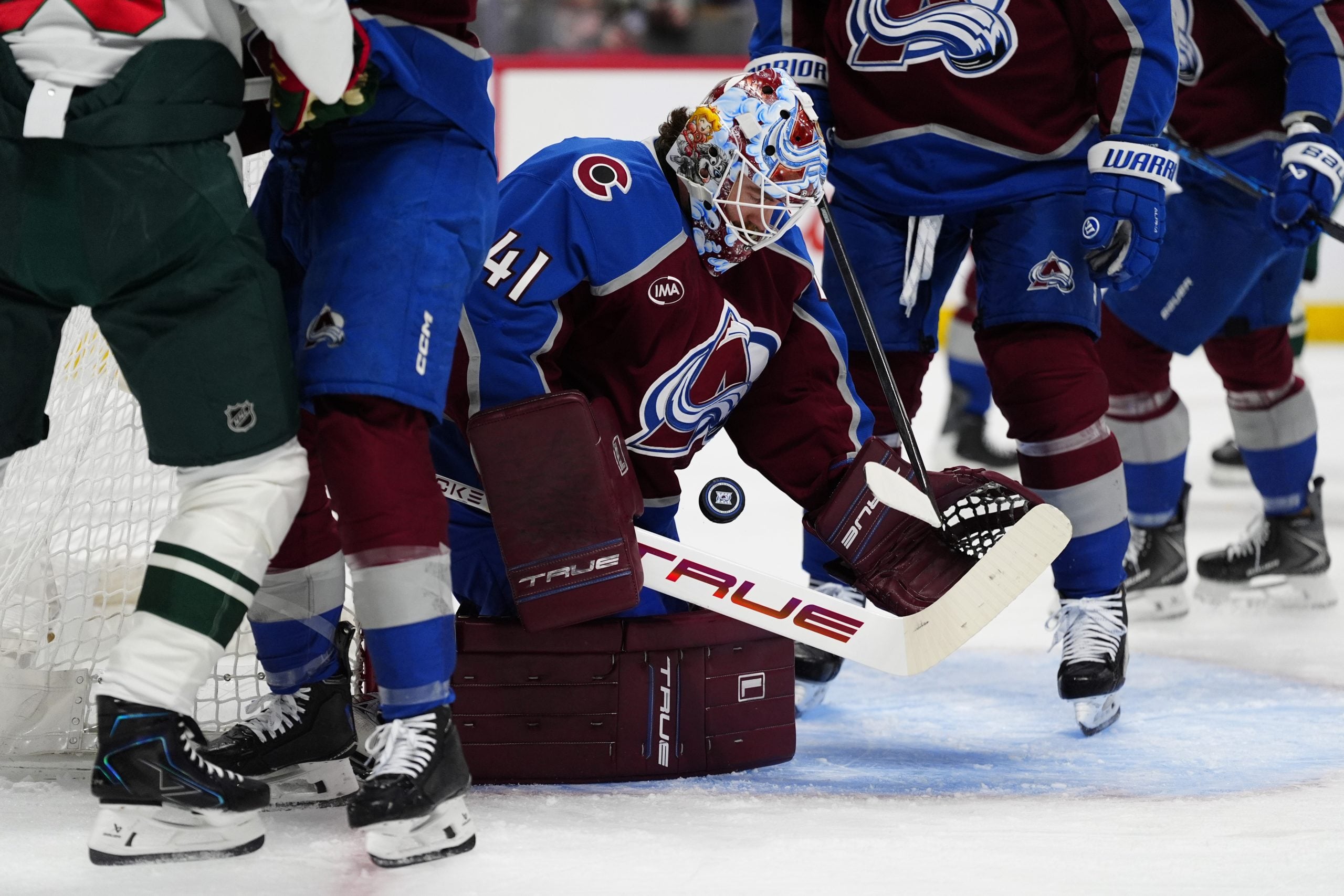
The Colorado Avalanche won 52 games in 2025-26 behind an elite offense and top-five defense, yet they exited the playoffs in a second-round sweep to Vegas—a result that exposed something the regular-season record concealed: fragility in goal. Scott Wedgewood had the best season of his 34-year-old career, but the Avalanche cannot afford to confuse one strong year with a permanent solution. Mackenzie Blackwood, the net beneficiary of a sizable contract extension, has delivered flashes rather than consistency. Together, they form a capable duo on paper. In practice, they've become the franchise's central point of failure.
Wedgewood's emergence was genuine, but the underlying ask is whether a backup-turned-starter who has spent his entire career shuffling between organizations has truly arrived—or merely caught lightning at an age when regression is the statistical norm. He posted a .920+ save percentage in the regular season, an outlier for a goaltender who has never sustained that mark across a full campaign. Blackwood's 2.51 GAA and .904 save percentage represent decent complementary output, but they also underscore the margin for error: when the primary starter falters, the backup cannot carry a team deep into April. The Vegas sweep revealed that exact vulnerability. Vegas attacked with volume and precision; Wedgewood was adequate, not exceptional when it mattered most.
The prospect pipeline—headlined by Ilya Nabokov, the first goalie selected in 2024—offers hope but no immediate relief. Nabokov won KHL Rookie of the Year and became the youngest goaltender to claim playoff MVP honors in that league, credentials that look impressive on paper. Reality is harsher: he remains years away from an NHL role, likely developing through the AHL (Colorado Eagles) on a measured timeline that cannot accelerate even if the parent team's window slams shut. The Avalanche are banking on a compressed development arc that rarely materializes. Meanwhile, their core is aging rapidly—MacKinnon is 31, Landeskog 33 and closing on 34, Kadri soon 36. Even the defensive anchors (Toews at 32, Makar approaching 30) are creeping into the years when marginal decline compounds across a roster. The contention window does not stay open indefinitely.
For bettors, this dynamic creates a tension in how to price the Avalanche's future. The regular season may look deceptively strong again—the roster talent is still elite—but the postseason exposure has shifted the odds landscape. Teams with fragile goaltending that relies on outlier performance from aging starters do not survive deep playoff runs, and sportsbooks have begun pricing that risk into Avalanche series odds and Stanley Cup futures. The edge exists not in backing them for another run, but in fading their postseason window specifically. Their team total over/unders for the regular season may remain inflated because the public anchors to last year's 52-win pace. The same offense and defense are there. What has changed is the certainty that Wedgewood will repeat, and that uncertainty should be reflected in playoff series spreads (Colorado as favorites in the first round should attract fade interest) rather than in regular-season win totals. However, if the Avalanche are forced into a starting-goaltender change mid-season—whether due to injury or performance—their savings-per-game in the goals-against column will visibly deteriorate, making their unders (both team total and overs on opponent team totals) more attractive as a hedge against organizational fragility.