Wild's Collapse Against Avalanche Exposes Goaltending Vulnerability in Elimination Spots
By PropBetEdge Editorial Team ·
Minnesota's season ended in a 4-3 overtime loss after surrendering four unanswered goals in Game 5, revealing a pattern of late-game breakdowns that should reshape how bettors evaluate their playoff positioning next season.
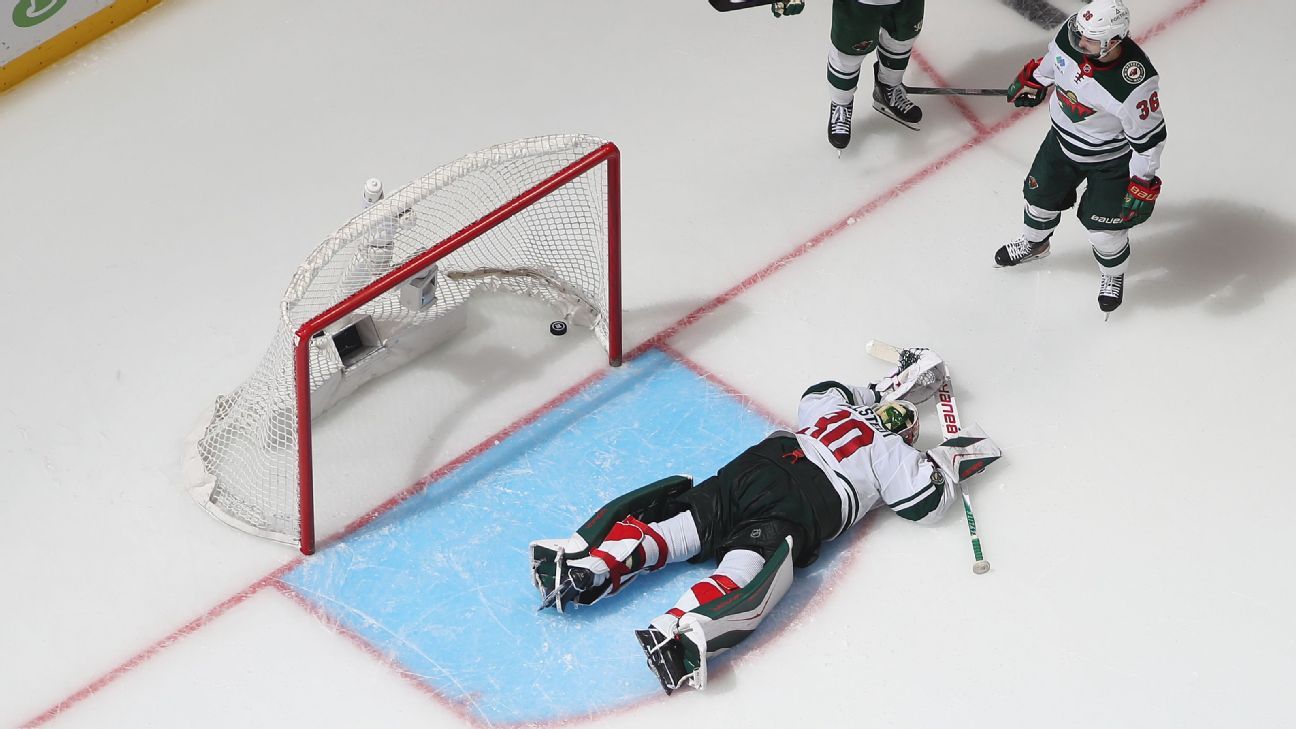
The Minnesota Wild's season ended Wednesday not with a fight but with a surrender. Leading 3-0 after the first period—a lead built on the back of two goals from deadline pickup Nick Foligno and an early strike from Marcus Johansson—the Wild watched Colorado methodically dismantle that advantage across two periods of 5-on-5 hockey where the Avalanche controlled 78.4% of shot share in the second and 67.6% in the third. Brett Kulak's overtime goal completed the comeback. Final score: 4-3. The Wild are eliminated.
What happened in Game 5 wasn't an anomaly for Minnesota this series—it was the pattern playing out to its logical conclusion. In Game 1, the Wild clawed back from down 3-0 to take a 5-4 lead before Colorado scored three straight. Game 4 saw them tie the game midway through the third, only to surrender three consecutive goals in a 5-2 loss. The through line isn't bad hockey early; it's structural collapse when possession matters most. Colorado's goaltending changes—pulling Mackenzie Blackwood after three goals on 13 shots and inserting Scott Wedgewood, who faced just seven shots over 43-plus minutes—should have tilted momentum further toward Minnesota. Instead, the Wild's offense went dormant and their defensive structure evaporated.
Jesper Wallstedt and the Wild are now 2-8 in their past 10 elimination games, a statistic that shouldn't be dismissed as noise. Wallstedt faced relentless pressure in the final two periods as Colorado's forecheck and transition game suffocated Minnesota's ability to execute breakouts. The underlying possession numbers tell the story: when the Avalanche seized control, they didn't just pile on shots—they organized play so thoroughly that high-danger chances became inevitable. Wallstedt's position in late-game, high-leverage situations has become a liability rather than an anchor.
For bettors tracking next season's playoff pools, this elimination pattern carries direct implications. Teams paired against Minnesota in tight series will have price incentives to attack goaltender durability and reliance on early leads. The prop angle lives in Wallstedt's save percentage and goals-against totals in games where the Wild face early deficits—a situation that historically triggers defensive chaos rather than organized recovery. Minnesota's collapse wasn't tactical innovation from Colorado; it was Minnesota's inability to sustain structure when possession swung. That vulnerability will remain until the coaching staff and roster composition address the middle-period management that has now cost them in multiple playoff sequences. Expect oddsmakers to factor this elimination pattern into Wallstedt's pricing in high-leverage playoff matchups next spring, where backers of opposing offenses should see value in shots-on-goal and goal-volume props against a team that historically unravels when leading.
The broader organizational takeaway: a three-goal first-period lead is not a feature of strong goaltending or defensive systems when it erodes in regulation. It's a symptom of reliance on early execution without the structural depth to weather possession swings. Colorado proved this Wednesday night.