Blackwood's Playoff Audition: Colorado's Cup Math Just Got Longer
By Erik Schwartz ·
Jared Bednar yanked Scott Wedgewood after Game 3 and handed the crease back to Mackenzie Blackwood—signaling either a pivot to higher upside or an admission that even dominant play isn't durable enough to win a cup.
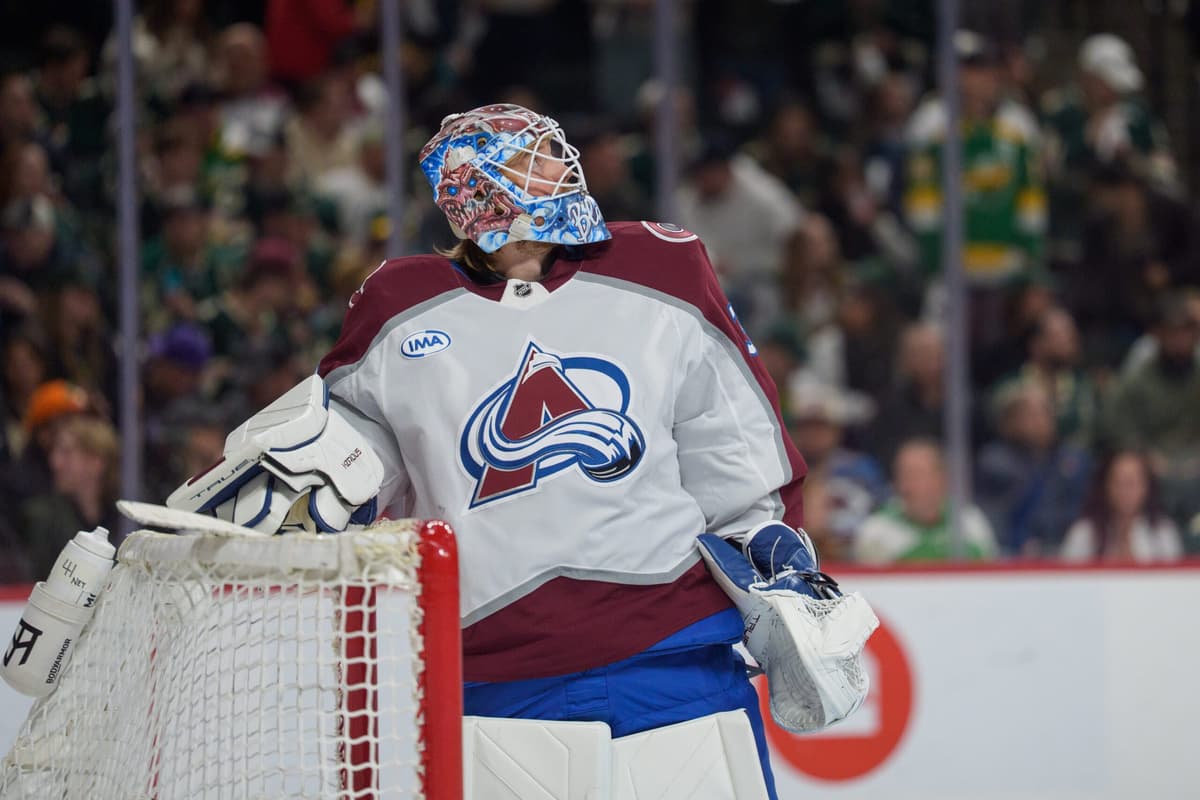
The Colorado Avalanche throttled Minnesota 5-2 in Game 4 of their second-round series, and in doing so, they made a statement beyond the scoreline: Scott Wedgewood's six-game playoff run was over. After Wedgewood took the loss in Game 3, head coach Jared Bednar inserted Mackenzie Blackwood into the net for Monday's contest. Blackwood stopped 17 of 19 shots—a .895 save percentage—in a game the Avalanche controlled from puck drop. The result was clean. But the decision carries weight that pure performance numbers don't capture.
Wedgewood entered these playoffs as a near-revelation: an undrafted, career-journeyman signing who rode a 23-8-4 regular-season record and .917 SV% into the postseason. Six straight wins is elite momentum. Yet one loss—even in a defensive collapse—was enough to demote him. That speaks to organizational conviction about role architecture and trust thresholds. Bednar wasn't swinging the door open to pure meritocracy; he was executing a predetermined plan to get Blackwood game reps while the series remained salvageable. At 3-1, Colorado can afford a Game 5 stumble and still have Wedgewood rested and ready for Game 6 and a potential Game 7. The move is structurally sound, but it also reveals that Colorado's brass doesn't view Wedgewood's regular-season dominance as a playoff-grade answer.
Blackwood's ceiling has always been higher than Wedgewood's. He carries the pedigree—first-round pedigree, higher athletic projection, the type of goalie teams construct cup campaigns around. The wrinkle: he thrives when traffic is heavy. Blackwood's save percentage historically balloons in high-volume games (35-40 shots). Against a Minnesota team that generated only 19 shots, he faced a lighter workload than his historical comfort zone. This was a controlled audition, not a trial by fire. The cleanliness of the win matters less than what comes next. If Colorado starts Blackwood at home in Game 5 and the Wild mount a shot barrage, the context switches entirely—Blackwood will either validate his reputation or confirm why Wedgewood held the job through four games.
For bettors, Blackwood's .895 save percentage in Game 4 is a noise reading. A single 19-shot game tells you almost nothing about his true talent line, and the market's adjustment to Colorado's goalie depth will be muted until a second start materializes. The sharper angle lies in Blackwood's volume dependency: if his next appearance arrives against a shot-heavy opponent (or if Minnesota figures out how to generate more rubber), his performance prop lines—saves and save percentage—will face stiff variance. Conversely, if Colorado remains defensively dominant and Blackwood faces another sub-25-shot night, his save percentage will artificially elevate, creating an illusion of stability that disappears once he encounters a playoff team that shoots the puck with urgency.
The larger playoff narrative is now bifurcated. Wedgewood proved he could dominate in a relief role, but Bednar's willingness to bench him after one loss suggests the organization views him as a luxury depth piece, not a co-equal option. Blackwood is now the de facto starter—for now. How many games that arrangement survives depends entirely on workload and performance at higher volumes. Colorado's cup ceiling may indeed rest on Blackwood's shoulders, as former goaltender Carter Hutton suggested, but it also might hinge on whether Bednar's timing gamble—yanking a hot hand to spool up a higher-ceiling alternative—proves prescient or premature.