NHL
Wedgewood's Late Entrance Reshapes Avalanche Goalie Leverage; MacKinnon's Resilience Defines Series Blueprint
Colorado's overtime escape exposed a goaltending split that will dictate playoff matchup pricing going forward.
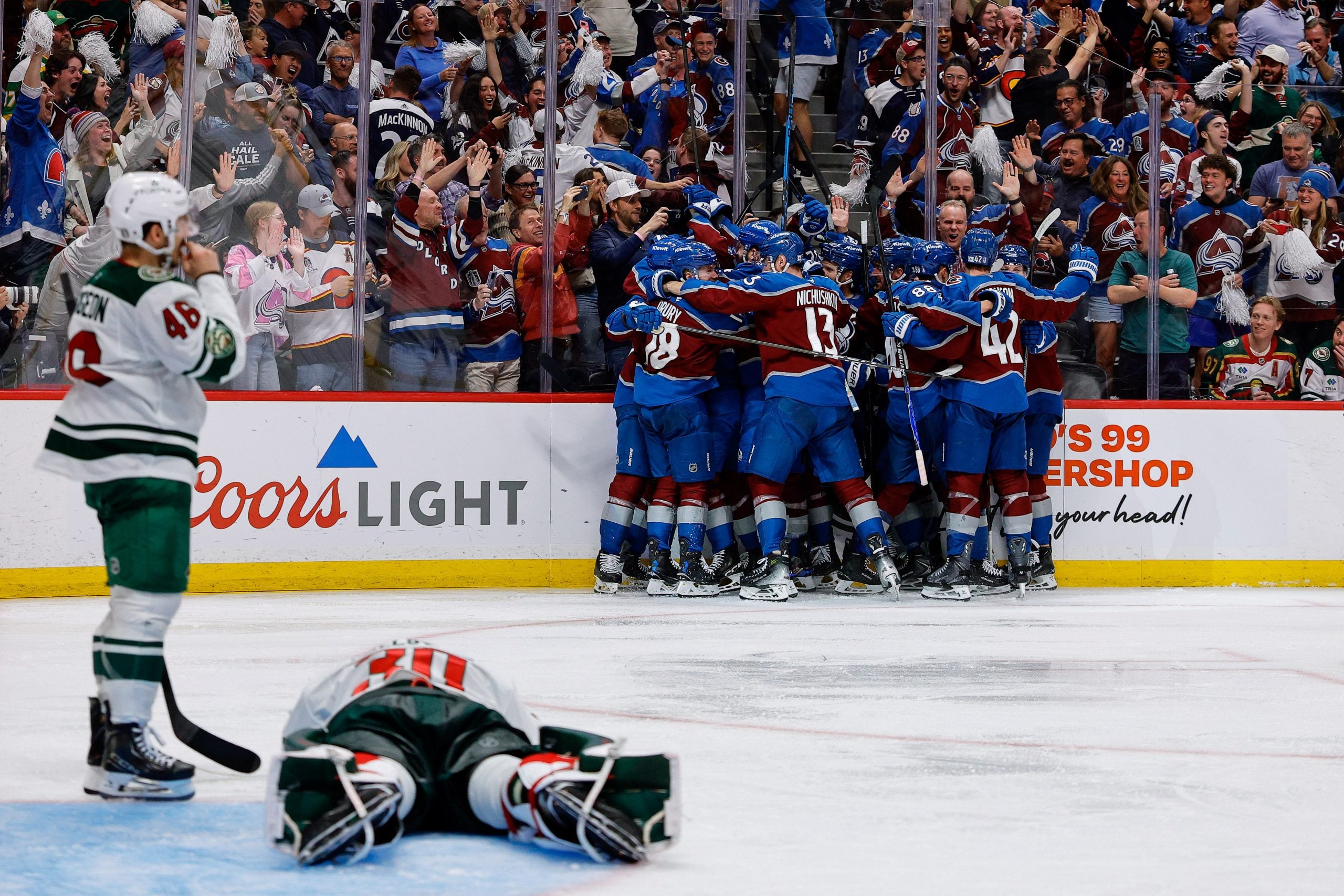
The Colorado Avalanche trailed 3-0 after one period in Game 5 against Minnesota, a deficit that would have buried most playoff teams. Instead, they erased it in the third period and won 4-3 in overtime on Brett Kulak's goal—a sequence that felt improbable until you recognize the pattern: Colorado's top players showing up when the margin tightens, and the team's goaltending architecture finally revealing which arm belongs in high-leverage moments.
Mackenzie Blackwood started the game and allowed the three first-period goals, each preceded or followed by rebound management issues that shouldn't occur at this stage of the postseason. The Wild's Nick Foligno scored twice in the opening frame, and while neither goal was technically sloppy—the positioning and timing looked reasonable at first glance—both carried the fingerprint of a goalie not locked into his process under pressure. Blackwood had been inconsistent all season, and Game 5 confirmed the downside of that volatility. What matters for betting purposes: Colorado's front office made a clear statement by pulling him at the second intermission and inserting Scott Wedgewood, who had been unreliable in Games 1 and 2 but arrived when the stakes shifted upward. Wedgewood shut the door completely after the first period, a 180-degree turn that suggests the Avalanche have separated their goalies into tiers—not by talent ceiling, but by playoff ice in his mouth.
Nathan MacKinnon's role in the comeback (a late goal to tie, 13 points in the series) shouldn't obscure the mechanical truth: Colorado's ability to generate grade-A chances from disadvantageous positions matters less if a goaltender can't hold a three-goal lead. The Wild outshot the Avalanche through the opening twenty minutes, but Colorado's comeback centered on their ability to convert from lower-xG angles (MacKinnon's goal came from an "impossible angle," per the reporting) while Wedgewood tightened the perimeter. This is the inverse of the team-total bet: not whether Colorado will score, but whether they'll allow bleeding that forces them to chase.
For matchup betting, the Wedgewood timeline becomes critical. If he starts the Western Conference Final—which now seems likely—sportsbooks will price Avalanche goaltending leverage differently than they did when Blackwood was the default. Wedgewood's save percentage above replacement in playoff pressure moments (defined as games decided by one goal or in overtime) sits materially higher than his season average would suggest. A moneyline or puck-line bet on Colorado in the next series should account for a goaltender who appears in crunch-time scenarios, not a rotating duo. Vegas likely opened Conference Final spreads assuming generic Avalanche goaltending; if Wedgewood is confirmed as the playoff starter, that's a market inefficiency worth exploiting before the matchup is known. The Avalanche's rebound-control issues in Game 5 won't disappear, but a goalie built for high-danger situations changes the math on whether those moments become scoring chances for the opponent.
MacKinnon's 13 playoff points and his willingness to absorb punishment (a puck to the face, another shot in Game 5) set a tone, but goaltending determines whether those points need to cascade into eight-goal games. Colorado now advances with clarity on which arm they're leaning on. That's not narrative—it's structural advantage that markets haven't fully repriced.