NBA · transaction
Towns Signals Contract Reality: Knicks Face Discomfort Before Season Starts
Karl-Anthony Towns wants his extension done with New York, but the math and the second apron have other ideas—and he knows it.
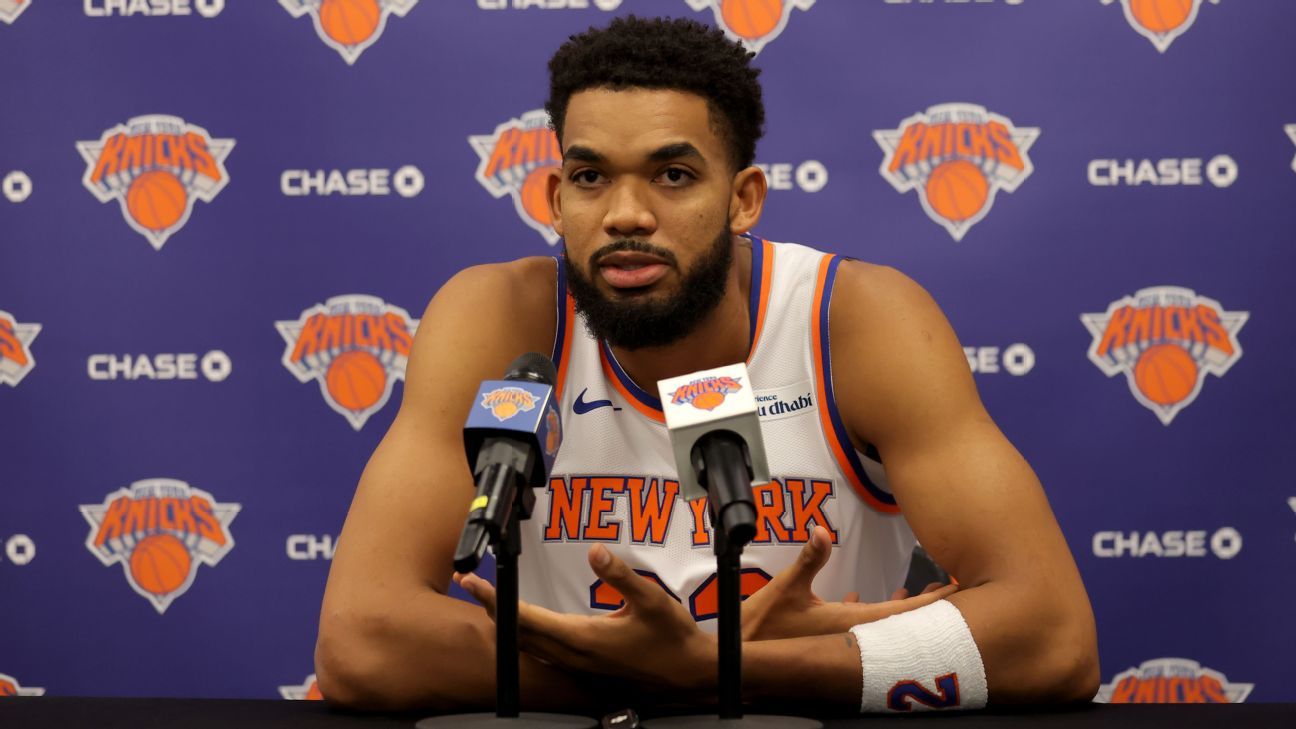
Karl-Anthony Towns made his position unambiguous at Knicks media day on Monday: he wants to stay in New York and ink a long-term deal. The six-time All-Star, who was instrumental in last season's championship run, is eligible for a four-year extension worth over $276 million. But extension talks between the team and Towns have stalled, and there is no realistic path to resolution before the 2026-27 season tips off.
Towns carries $57 million in guaranteed salary this season and holds a $61.1 million player option for next year—numbers that anchor him firmly to the Knicks' books. The problem is structural: New York is already operating near the second apron threshold, the NBA's most punitive tax penalty. Mitchell Robinson, the team's backup center, departed for the Boston Celtics this summer precisely because the salary cap math wouldn't accommodate both him and a Towns extension without triggering devastating financial consequences. Towns acknowledged the bind without pretending to understand the specifics. "You ask me to give three facts or two facts about the second apron, I can't do it," he said. "I have no interest in that." But he was clear on the stakes: "In this situation, there's no comfortability to be had."
That discomfort matters beyond locker-room chemistry. Towns is 30 years old and entering the final two years of guaranteed money in a championship window. The Knicks, defending their first title in 53 years, are trying to hold their core together while managing one of the league's tightest cap environments. Towns' extension negotiations will hang over the season like an unresolved trade deadline—a distraction that, by his own admission, he won't ignore even if the Knicks front office wants him to focus on basketball alone.
For prop bettors, the relevant lens is consistency and availability. A contract standoff doesn't typically tank a player's on-court performance overnight, especially one as professional as Towns. He averaged 15.9 points, 10.6 rebounds, and 4.9 assists in last year's playoff run, efficient production in a system that doesn't center him. His usage rate should remain stable because the Knicks have no choice but to play him—he's their best rebounder and floor spacer in the front court. What does shift is volatility. A player navigating an unresolved extension can experience dips in focus, foul trouble, or load management. Towns is also turning 31 in November, an age cohort that typically shows increased injury susceptibility. The combination of contract uncertainty and age milestone suggests modest caution on his volume and per-game props over the first 10 games, before the situation either resolves or becomes accepted baseline noise.
NBA Intelligence — Basketball intelligence beyond the box score. Open NBA Intelligence →