Robinson's Celtics Move Reshapes Eastern Conference Playoff Math
By PropBetEdge Editorial Team ·
Boston plugs its interior defense weakness by signing the Knicks' 2025 playoff terror, forcing New York into a backup center scramble it can't easily solve.
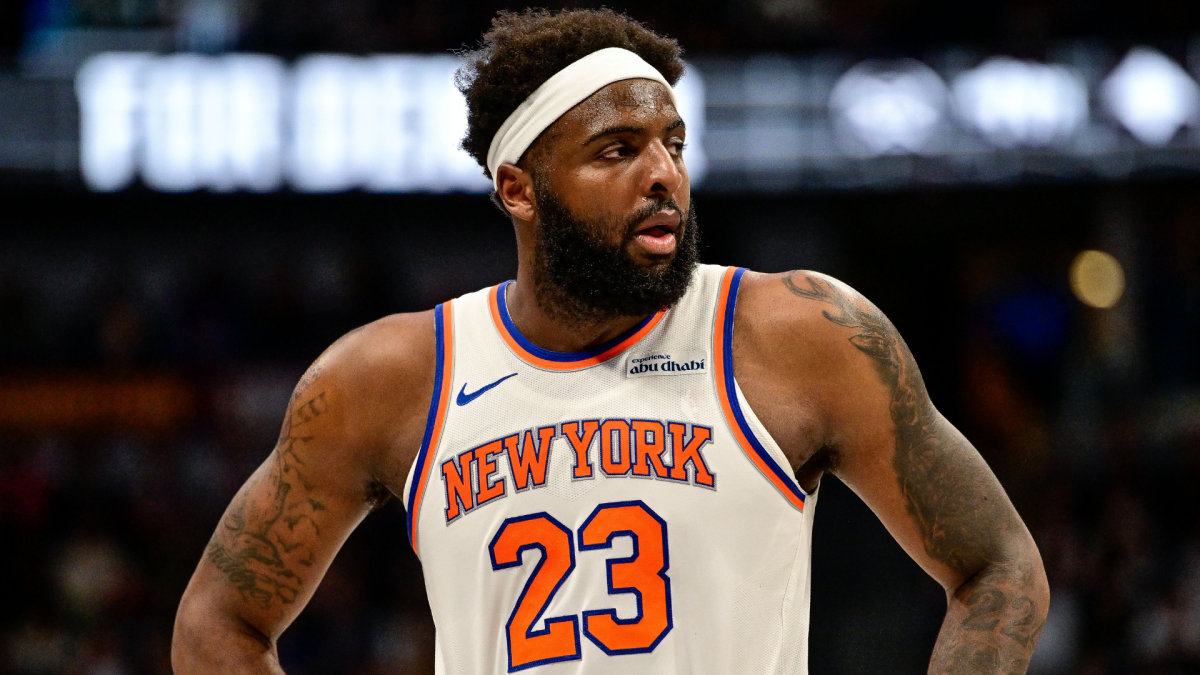
Mitchell Robinson has agreed to a three-year, $47.4 million deal with the Boston Celtics, per ESPN, reuniting him with the team he tormented in last year's playoffs and leaving the reigning champion Knicks scrambling to backfill the paint. The signing lands roughly 48 hours after the Celtics' first-round elimination to Philadelphia—a reminder that Boston's offensive rebounding vulnerability and interior spacing deficiency have become playoff liabilities, and Robinson is the one remaining free agent with the size and instinctive rebounding craft to address them.
Last season's playoff series between these teams offers the clearest evidence of what Robinson provides. In 124 playoff minutes, New York outscored Boston by 18.1 points per 100 possessions with Robinson on the floor. The Knicks' offensive rebounding rate with him reached 40.2%—a transformation that gave them second chances and rhythm advantages the Celtics couldn't generate on the other end. Robinson's 7-foot-4 wingspan creates vertical spacing the Celtics haven't possessed since Robert Williams III's departure, and his ability to operate as a switchable backline defender against wings in pick-and-roll actions—particularly against Towns—is the kind of redundancy Boston desperately needed after losing 3-1 to Joel Embiid's relentless interior bulldozing.
The durability profile invites legitimate caution. Robinson has undergone multiple ankle surgeries and appeared in just 48 regular-season games across the two seasons preceding New York's title run. Since the 2023-24 season, he has cleared 30 minutes only twice despite starting 19 games, and he hasn't played both sides of a back-to-back during that span. The Celtics' construction—56 wins with Neemias Queta and Luka Garza absorbing the bulk of center minutes—suggests Boston can absorb load management and strategic benching without regression during the regular season. But the real test is playoff availability when minutes compress and matchups tighten. If Robinson's availability is capped or hindered by ankle issues when the stakes peak, his value deflates considerably.
From a betting perspective, the move creates structural imbalance in potential playoff rematches. If Boston and New York collide next April, the Celtics have now acquired the single most disruptive interior defender against New York's offensive identity—a player whose presence directly suppresses the Knicks' offensive rebounding rate and forces Towns into uncomfortable postings. The market will price Celtics playoff odds tighter immediately, but the edge sits in team total overs for Boston in regular-season matchups against clubs with weak interior defense or high-volume three-point shooting. With Robinson's rim protection and his willingness to roam on the offensive glass, Boston's defensive efficiency should improve by 1.5 to 2.5 points per 100 possessions in those spots. Conversely, New York's ability to control the glass and dominate second-chance opportunities faces a marginal decline if backup center acquisitions don't match Robinson's versatility—a scenario that filters into Knicks team total unders when facing Boston's defense in regular-season play.
The Knicks' response will define the secondary impact. Owner James Dolan's refusal to exceed the second apron severely constrains New York's options; Ariel Hukporti has already signed with Philadelphia, and Kevon Looney or Andre Drummond on minimum deals represent the fallback. If New York cannot upgrade materially at the position, their offensive rebounding rate will decline relative to the 2025-26 baseline, making them more vulnerable to efficient perimeter defenses in the postseason. This is not a one-year problem; it's architectural. Boston solved its interior problem by taking New York's solution.