NBA · transaction
Knicks-Towns Extension Talks Dead in Water as Camp Opens; What It Means for New York's Championship Window
With Karl-Anthony Towns and the Knicks unable to close on a contract extension before training camp, the defending champs face a looming payroll crunch that could force hard roster moves later this season.
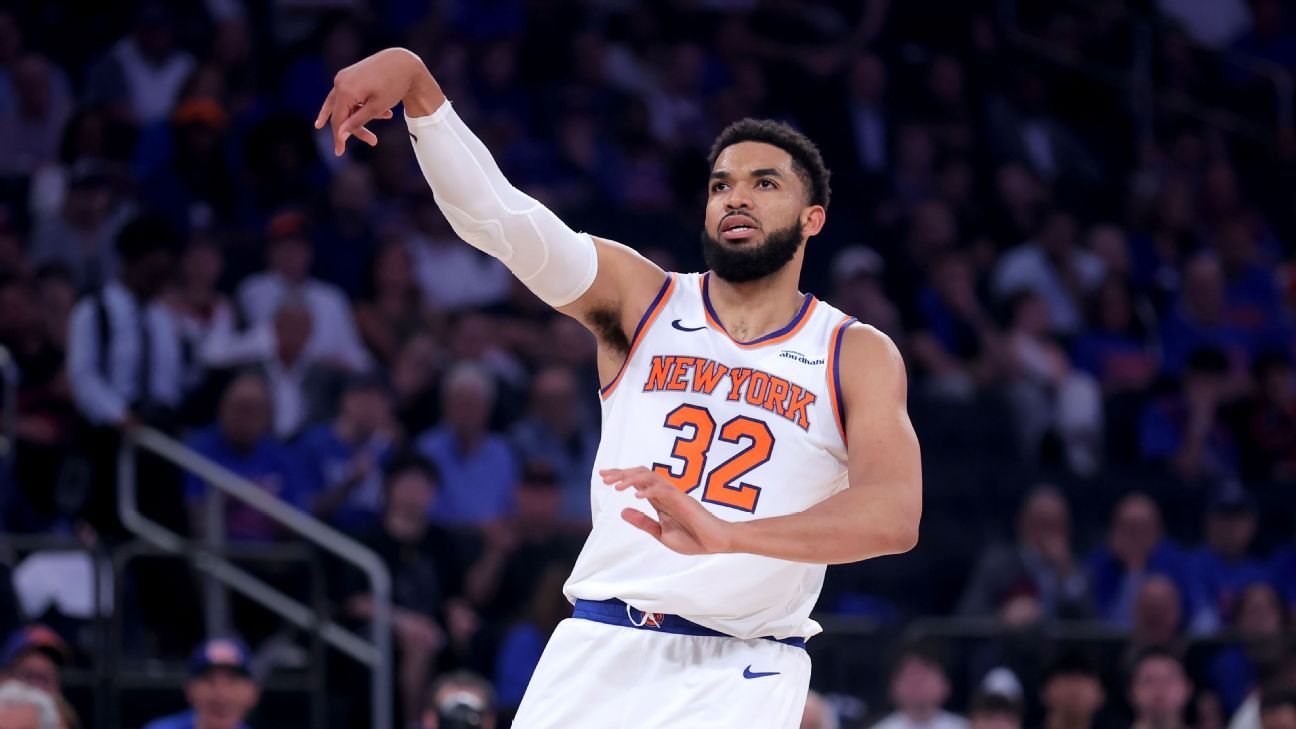
Karl-Anthony Towns and the New York Knicks have hit a wall in extension negotiations, with talks stalled as the team opens training camp next week and an agreement now considered unlikely in the short term, per ESPN. The two sides spent the entire offseason exploring a four-year, $273 million deal—within Towns's maximum eligible range—but momentum has evaporated. Towns, who turned 30 earlier this year and will become a free agent after the 2027-28 season if he doesn't extend, remains unsigned on a $57 million deal this season with a $61 million player option looming in 2027-28.
The real constraint isn't ambition; it's the Knicks' ownership structure. James Dolan has made clear the franchise wants to avoid the second apron tax—a punitive financial cliff that forces teams to dump salary. That mandate already cost the Knicks Mitchell Robinson, a valuable backup center who signed with Boston this offseason rather than take a pay cut to stay under the threshold. The math is simple: keep Towns happy, maintain depth, and stay under the tax, or pick two. The Knicks can't have all three.
Towns was essential to last season's Finals run. He averaged 15.9 points, 10.6 rebounds, and 4.9 assists on 55% shooting through the playoffs as New York went 16-3 and beat San Antonio in five games to capture the franchise's first title in 53 years. He's an All-Star who spaces the floor and rebounds at center—a rare combination that fits seamlessly alongside Jalen Brunson and OG Anunoby. But the Knicks have additional extension decisions looming: Josh Hart is eligible now, and both Brunson and Anunoby hit the market next offseason. Dolan's payroll orthodoxy means the team will have to sacrifice depth or accept punitive luxury-tax bills to keep the core intact.
The standstill creates a unique betting angle on Knicks scoring dynamics. If Towns eventually signs an extension at a below-market rate—a concession the Knicks might extract in exchange for security—it signals internal doubt about his durability or value. Conversely, if no deal materializes and Towns plays this season on his current deal with a looming free-agency choice, the Knicks may deploy him more strategically in the regular season to preserve him for playoffs, reducing his minutes and scoring volume. The market hasn't yet priced the possibility that New York deprioritizes regular-season health management for a star role player in a repeat-title window. Monitor Towns's usage rate early in the season: if it dips below his 21.4% playoff rate, that's a signal the Knicks are playing it safe. Game totals and Towns scoring props should be checked against that trend, as lower usage directly suppresses point projections.
The broader organizational signal is also worth watching. Robinson's departure, the apparent salary-floor obsession, and now a standoff with a core piece all suggest the Knicks front office may be in triage mode rather than aggressive expansion. That shifts how we model their bench depth and late-game closing lineups—forces which materially affect team totals and spread outcomes. If secondary scorers get fewer opportunities because the core stays on the floor longer, game totals may compress. The Knicks' title defense isn't in question; the structure of how they defend it is now more fragile and tactically constrained.