NBA
Quickley sees Leonard as the missing piece for Raptors spacing and creation
At media day, Toronto's guard laid out how Kawhi Leonard's arrival reshapes the offensive load and opens driving lanes for everyone else.
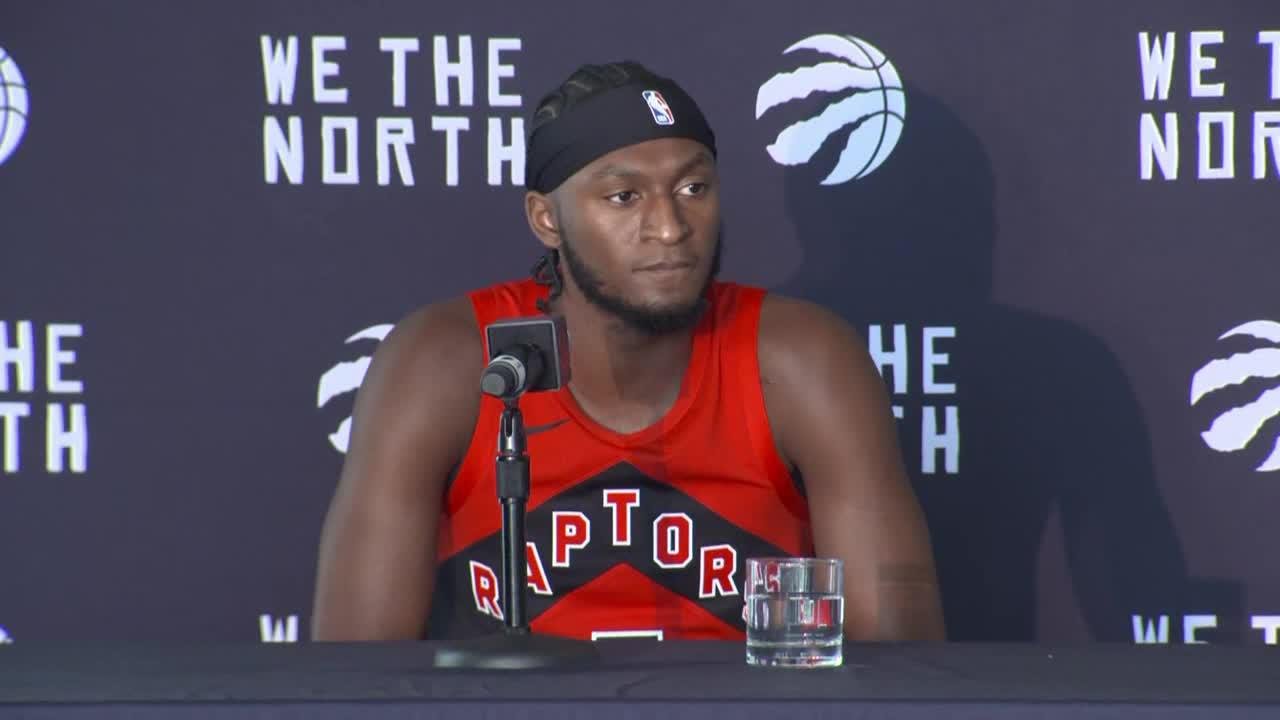
Immanuel Quickley arrived at Raptors media day with a clear-eyed take on what Kawhi Leonard's addition means for Toronto's offense. The guard didn't oversell it—Leonard makes the game easier because he operates in a different gravity well than the rest of the roster. When a two-way wing who can create his own shot and punish closeouts occupies defensive attention, it fundamentally changes the math for secondary ball handlers and catch-and-shoot threats.
Quickley's read is mechanically sound. Leonard's 47% three-point accuracy over his career, combined with his mid-range comfort, forces defenses to extend to the perimeter. That extension creates the very lanes and kickout opportunities that maximize guards like Quickley, who have thrived in high-pace, high-volume three-point systems. Last season, Quickley shot 37% from three on 7.2 attempts per game—the volume required a functional perimeter-based offense. Leonard's presence doesn't just add points; it removes a defensive body from Quickley's operating space.
The spacing argument also carries downstream effects on Toronto's playmaking architecture. With Leonard occupying a defender high on the floor, roll men and cutters find cleaner windows. Pick-and-roll actions—the backbone of modern NBA offense—gain efficiency when the roller isn't facing a scrambled help defense. Quickley, who averages 4.4 assists per game, benefits from defenses that can't afford to load the perimeter indiscriminately.
From a prop lens, this shift has measurable implications. Quickley's three-point volume and efficiency are primed to increase in a Leonard-anchored system because there's less defensive pressure per shot attempt. The market likely prices Quickley's lines based on his standalone track record rather than the tailwind effect of adding a 47% three-point shooter to the same floor. If Leonard stays healthy and participates in training camp and the preseason, Quickley's three-point makes and assist totals should see modest but consistent lifts. The edge is durable—it's rooted in spacing architecture, not a single performance spike—and should hold through the regular season as long as Leonard remains on the court.
That sustainability matters. Single-outlier edges fade within 48 hours when the market reprices. This one is built on a structural offensive upgrade, not a hot shooting night. Quickley's role expands in a specific way when Leonard is healthy, which is the only downside risk to pricing in the adjustment early.
NBA Intelligence — Basketball intelligence beyond the box score. Open NBA Intelligence →