Kawhi's Toronto Return Reshapes Raptors Ceiling—and Betting Markets
By Erik Schwartz ·
After two months of agreed terms, Kawhi Leonard finally landed in Toronto this week, completing a legacy trade that rewrites the team's offensive profile and creates immediate line volatility.
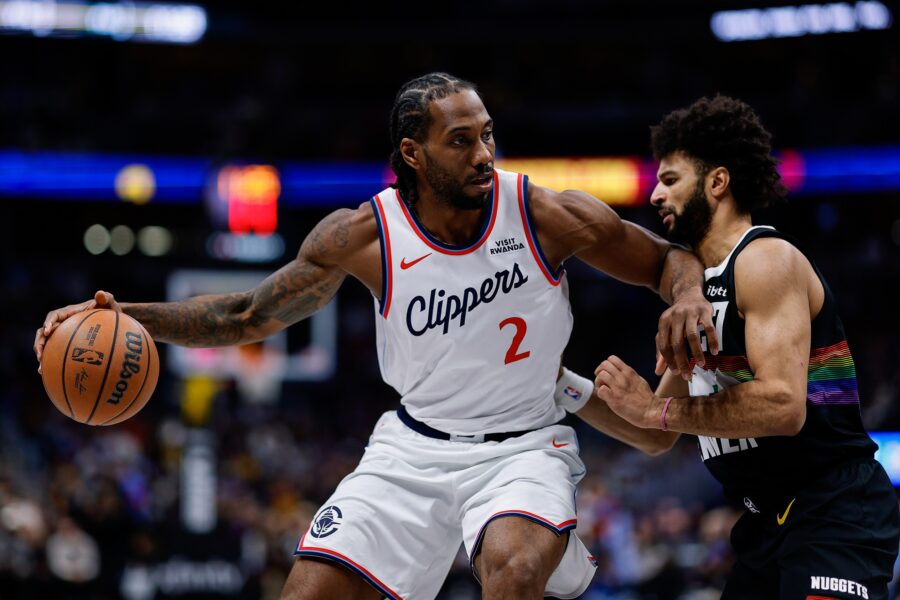
Kawhi Leonard is a Raptor again. The trade that was handshake-agreed on June 30 finally closed on Monday, 11 weeks later, after the NBA's punishment of the Clippers for salary-cap circumvention forced both teams to absorb the fallout without renegotiating. Los Angeles loses five first-round picks to the league and ships Leonard to Toronto alongside Brandon Ingram and Gradey Dick; the Raptors send back two firsts, a swap, two seconds, Ingram, and Dick. Neither franchise blinked when the penalty landed. Both had constructed the deal to survive exactly this scenario.
What matters now is what Leonard adds to a Toronto team that made the playoffs last season without a wing of his caliber. Leonard averaged 27.9 points per game for the Clippers last year—a career high—on elite efficiency, taking fewer touches than most perimeter stars of his tier. He shot 48% overall and 39% from three, moves that don't require high usage to generate volume. The fit is complementary by design: Scottie Barnes handles creation and spacing; Collin Murray-Boyles (the 2025 lottery pick) provides rim-running and energy. Leonard slots into a role where he can operate in mid-range spots, transition, and close games without asking the offense to restructure around him. Raptors coach Darko Rajakovic has already framed this as Barnes's team, and Leonard—who at 35 is chasing legacy and another Finals run—seems comfortable with that hierarchy.
The offensive ceiling just moved materially higher. Toronto ranked 18th in offensive rating last season at 114.8 points per 100 possessions. Adding a 27.9-ppg scorer on Leonard's efficiency (54% TS%) should bump that to at least 117-118, assuming modest lineup overlap and bench decay. That's a top-12 offense, possibly top-8 depending on how Barnes's playmaking scales with a primary initiator taking some ball-handler load. The Vegas opener for Raptors wins total will likely land between 48 and 51 games; early money has already moved toward the over on team totals given Leonard's insertion.
For props, the market is still repricing. Leonard's scoring line will open in the 25.5-27.5 range based on his 27.9 Clippers average, but that number should compress slightly once market-makers account for Toronto's slower pace (102.9 last year, bottom-10 in the league) and the fact that Leonard won't carry the same usage he did in LA. Expect his per-game scoring to settle around 24-25 ppg over a full Raptors season—still elite volume but not a true carry role. More valuable is the combination: Barnes assists will rise because Leonard is a gravity creator who spaces the floor; Murray-Boyles will see more lobs. This isn't a single-star upgrade. It's an architectural one. The market will price Leonard's individual output down slightly but undervalue the downstream assist inflation for Barnes and the ceiling rise for team totals.