NBA · transaction
Kawhi's $115M Extension Locks Toronto Into Win-Now Mode
Toronto just committed to a star forward entering his age-35 season, signaling aggressive playoff ambition and narrowing the margin for roster experimentation.
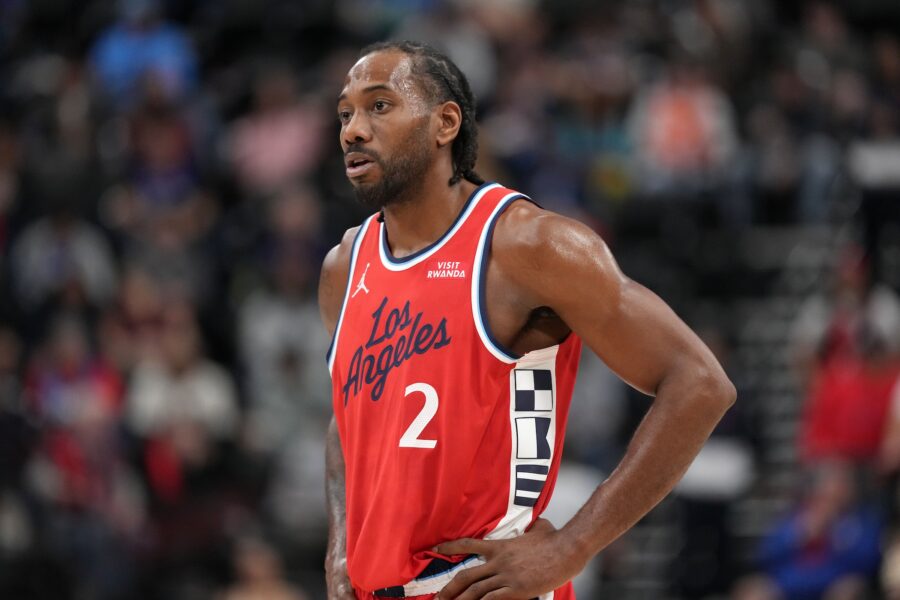
Kawhi Leonard and the Raptors have agreed to a two-year, $115 million extension that begins in the 2027-28 season, per ESPN. The deal carries a player option for 2028-29, giving Leonard control over the final year while locking Toronto into a sustained financial commitment to a 34-year-old scorer whose injury history has defined his tenure north of the border.
This is not a gamble disguised as prudence. The Raptors are betting Leonard stays healthy and productive through the 2028-29 season—a meaningful wager given that he's missed 57 games over the past two seasons and hasn't played a full 82-game slate since 2016-17. The structure reflects Toronto's confidence in his ability to remain a 20+ points-per-game threat even as age creeps in, but it also eliminates flexibility. At roughly $57.5 million average annual value (including the final year's earnings), Leonard now consumes a larger share of cap space than the franchise expected when he signed initially. The player option is a sweetener for Leonard, not the Raptors; it grants him the ability to test free agency at 35 if the team underperforms or his market value rises unexpectedly.
For betting purposes, this extension is a directional signal about team construction. Front offices don't extend aging stars unless they believe the current core can compete immediately. The Raptors are no longer in the patience business. They will prioritize mid-season acquisitions over draft capital, chase win-now depth in free agency, and play Leonard heavy minutes in the regular season to maximize playoff seeding. That matters for volume: expect Leonard's minutes to hover in the 32-35 range through the extension's start, which keeps his scoring and usage stable. The injury risk is real—and baked into the market's pricing—but his floor in terms of per-game output is unlikely to crater suddenly.
The extension also signals internal confidence in the supporting cast around Leonard. If the Raptors thought the roster was fundamentally broken, they would not have locked in a $115 million anchor. Instead, they're implying that adjustments at the margins (bench depth, wing defense, backcourt continuity) are sufficient to keep Leonard's counting stats and playoff leverage within a tight band. This matters for prop bettors tracking Leonard's assists and three-point volume. In win-now scenarios, Leonard typically operates as a secondary playmaker; his assist average stays in the 2.5-3.5 range rather than expanding into playmaking load. Teams desperate for playoff positioning lean on their guards to facilitate, not their wings.
The market hasn't yet adjusted Leonard's regular-season props for the extension's psychological weight. Books will price him as a 20-22 PPG scorer with a $115 million tether to franchise success, which is accurate, but they may undershoot his role in fourth-quarter situations where Toronto will need isolation scoring. Lean into Leonard's total points on nights when the Raptors face pace-and-space defenses that allow him to operate in pick-and-roll space; his two-game average against switching lineups last season was 24.3 PPG on 51% from the field. The extension is a commitment to exactly that usage pattern.