NBA
Kessler's RFA Standoff With Utah Signals Deeper Roster Uncertainty
Walker Kessler's frustration with the Jazz's restricted free agency strategy threatens to fracture a defensive anchor just as Utah rebuilds around its young core.
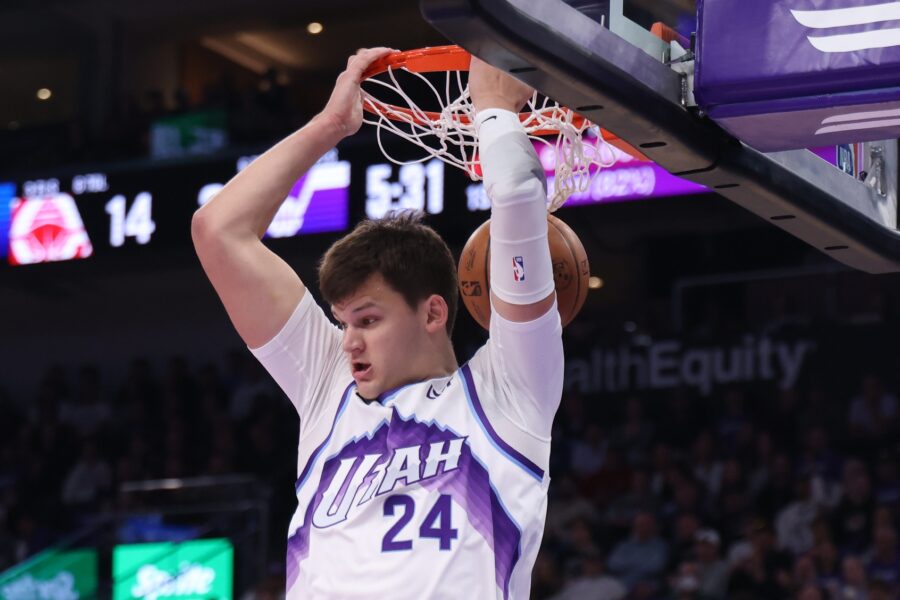
Walker Kessler is openly unhappy with how the Utah Jazz are managing his restricted free agency, per Sam Amick of The Athletic. The Jazz have wielded their right of first refusal aggressively—constraining his market by signaling they'll match any outside offer—a tactic that has pushed the former first-round pick to seriously weigh playing overseas or accepting a lowball qualifying offer that keeps him tethered to Utah on unfavorable terms. The tension exposes a fault line between front office cost control and player retention that could reshape the Jazz's defensive identity this season.
Kessler arrived in Utah as a lottery prospect with elite rim-protection instincts and 7'1" frame, but his market value has been muddled by injuries and inconsistent playing time. A $7.1MM qualifying offer would price him as a replacement-level center, a massive discount from what his defensive ceiling suggests—and what other franchises are quietly willing to invest. The Wizards have shown genuine interest, signaling they see Kessler as a foundational defender alongside their own young core. That external validation matters. When a rival front office is willing to spend real money, the original team's right of first refusal shifts from negotiating leverage into a trap door: match and risk poisoning the relationship with a restricted player, or let him walk and admit the asking price was miscalibrated all along.
The Jazz's defensive rating ranked 16th last season, a stunning collapse for a team that built its identity on switchable length and paint presence. Kessler's interior anchor—when healthy—lifts that number. Losing him to free agency would force Utah to patch the defense via trade or draft, a process that compounds their already thin financial flexibility. But from Kessler's perspective, he has no leverage within Utah's confines; that's the entire point of restricted free agency. His only real counter-move is to signal he'd rather test the open market (or, theoretically, sit out), forcing the Jazz to either relent and negotiate a sign-and-trade or absorb the hit of watching him leave.
For betting purposes, this standoff introduces execution risk into Utah's season-long outlook. A fractured relationship with a defensive linchpin creates uncertainty in team total lines and spread pricing in the near term. If Kessler is retained but resentful, his minutes and focus could dip in early-season games—a classic efficiency drag that inflates defensive rating totals. If the Jazz move him in a sign-and-trade, the compensation return telegraphs whether management is acquiescing to rebuild mode (bad for this season's win total) or doubling down on youth development (neutral, but volatile). Utah's team total win projections are likely overcooked until this negotiation reaches resolution. Lean unders on Jazz season-long totals and avoid their spread pricing until clarity emerges on Kessler's status and organizational direction.