Kuminga's Lakers Audition: Why the Starting Role Pitch Falls Short—and What It Means for LA's Wing Rotation
By Justin Erickson ·
The Lakers are pursuing Jonathan Kuminga with a starting opportunity, but his light market and their cap constraints create a standoff that could reshape Los Angeles' frontcourt minutes distribution.
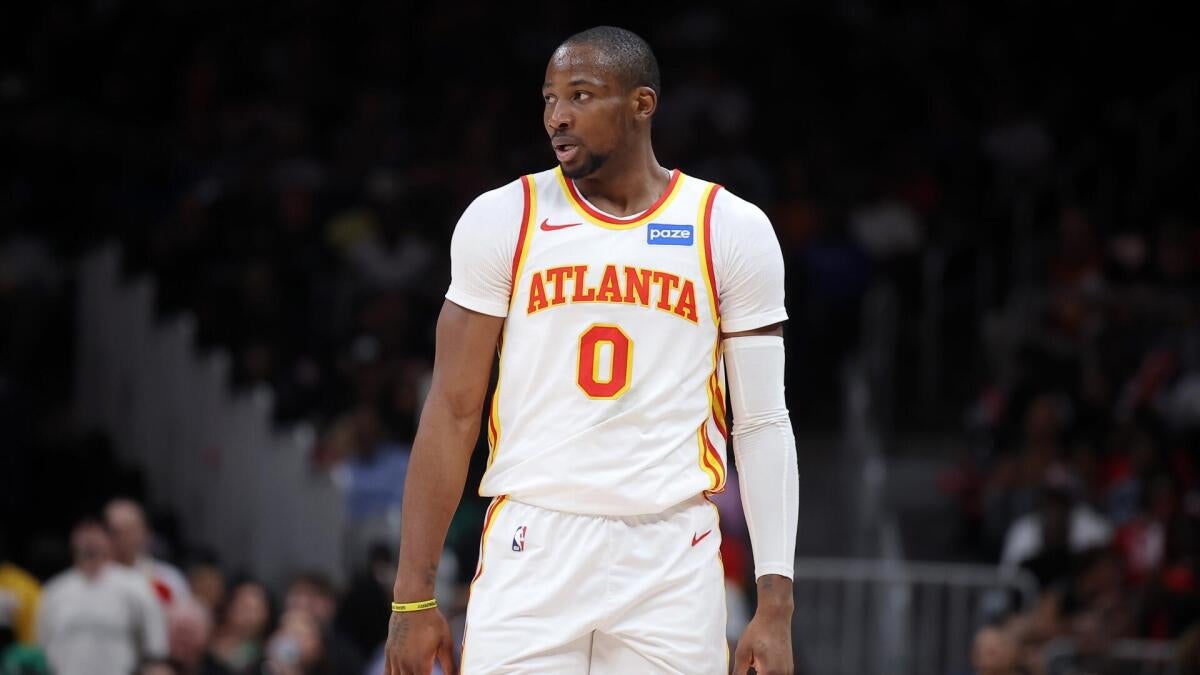
The Lakers have emerged as the most active suitor for Jonathan Kuminga this offseason, per ESPN, pitching the wing on the promise of a starting role alongside Luka Doncic, Austin Reaves, and newly acquired center Walker Kessler. That sounds clean on paper. In practice, Kuminga faces a thinner free-agent landscape than he did a year ago—the Hawks declined his $24.3 million team option, the Kings are cap-crunched, and the Suns filled their wing need with Miles Bridges—which should theoretically push him toward accepting LA's offer. Instead, Kuminga is holding firm, waiting to see if LeBron James' free-agency decision opens new doors. He's right to wait. The Lakers' pitch is speculative: a starting gig that lacks financial certainty and depends on fit alongside two perimeter-heavy creators in Doncic and Reaves. That's a role without margin for error.
LA's roster construction tells the real story. Pelinka has already committed salary to Walker Kessler, Sandro Mamukelashvili, Quentin Grimes, and Collin Sexton—four signings that consume the bulk of available cap space. Any deal for Kuminga has to be a bargain-bin contract, which means limited guaranteed money and no leverage for the player. The Hawks retain Bird Rights and could recycle Kuminga at a lower number. A sign-and-trade remains possible if another contender is willing to ante assets. The Cavaliers have also kicked the tires, though they're reportedly focused on re-signing James. Every team in the James sweepstakes—and there will be multiple suitors over the next 7 to 10 days—becomes a potential escape hatch for Kuminga if they miss on the superstar.
For the Lakers specifically, this creates a timing problem. They need a starting wing to round out the core, but they've left themselves little room to offer anything more than minutes and opportunity. Kuminga's reluctance to grab that offer now suggests he's priced the James decision into his calculus: if James goes elsewhere, a team suddenly armed with cap space might come calling with actual dollars attached. If James joins a contender like Cleveland, the market resets around secondary options. Kuminga's market is light, but it's not gone.
From a prop-betting angle, the unresolved status of Kuminga—and by extension, the Lakers' wing rotation—introduces volatility into LA's perimeter minutes. If Kuminga signs on a favorable contract (from the team's standpoint), his role solidifies as a starter, and both his scoring and three-point volume should tick up relative to Atlanta's reduced usage rates. But the longer this drags—and the James decision could take another week-plus—the more likely the Lakers explore alternate paths: promoting Grimes or Sexton into more aggressive roles, or wheeling one of their four recent signings in a package deal. Kuminga's market price falling further could actually benefit the Lakers by pushing him into a cheaper, longer-commitment deal, which would paradoxically secure his role. The clearest prop angle is defensive: avoid Lakers wing scoring props until Kuminga's status resolves. The minute he re-signs elsewhere or James' decision cascades into a trade, LA's rotation locks in and prop pricing becomes more reliable.