Jazz-Kessler Contract Stalemate Opens a Rare Center-Valuation Divergence
By Ty Whitney ·
Utah's $140 million offer to Walker Kessler sits rejected, signaling a fundamental disagreement about elite rim protection in the modern NBA that could reshape Utah's cap flexibility and Kessler's role next season.
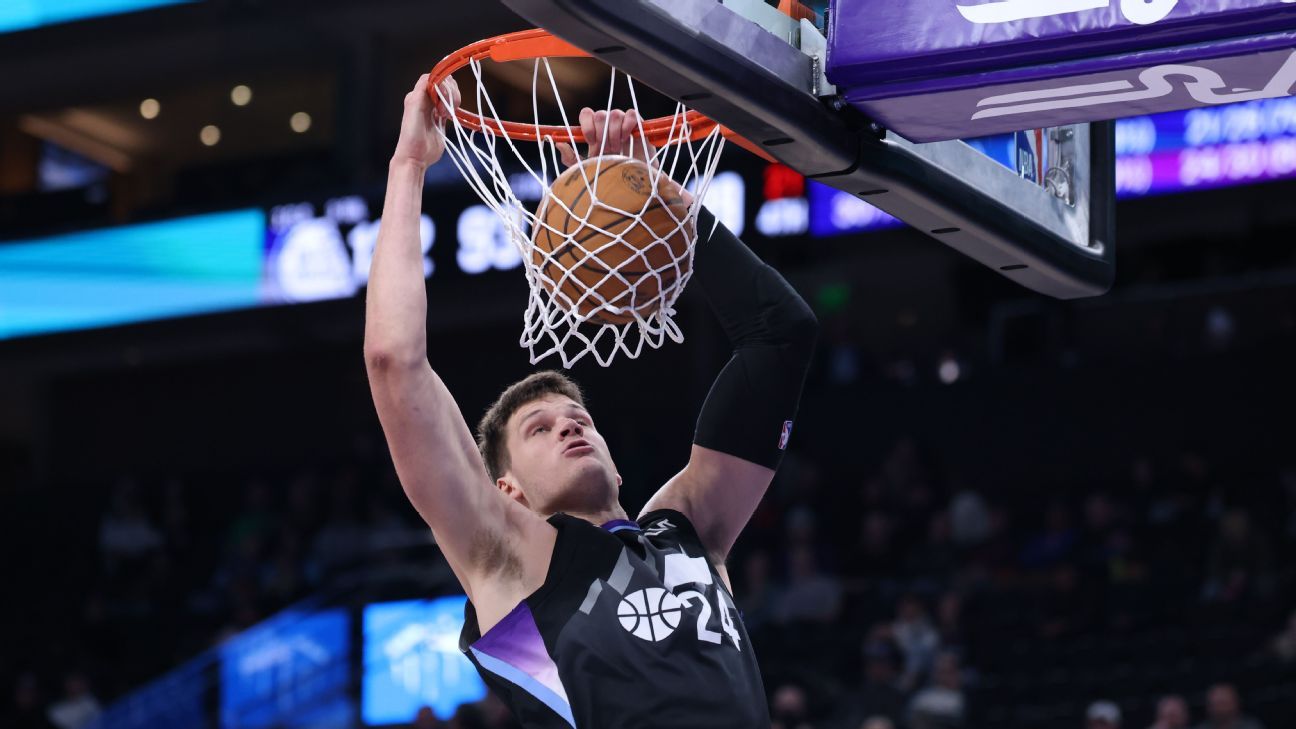
The Jazz and Walker Kessler remain far apart on a long-term deal despite Utah tabling a $140 million offer over five years, sources told ESPN. That number would represent the largest contract ever handed to a center who hasn't made an All-Star team—a ceiling-breaking valuation that underscores Utah's desperation to lock in a 7-foot-2 rim protector, yet apparently still undershoots Kessler's ask. The gap between $140 million and whatever Kessler and his representatives believe he deserves is the real story here: it reveals a market disconnect on how much defensive dominance at the five should command when minutes and usage keep compressing in NBA offenses.
Kessler's resume supports premium leverage. Last season, despite playing only five games before shoulder surgery, he ranked second in blocks (2.4 per game) and fifth in rebounds (12.2 per game) across the league in 2024-25. When healthy, he shot 66.3% from the floor while chipping in 11.1 points—not a high-volume offensive player, but efficient enough not to be a liability. The injury cost him the entirety of 2025-26, a year that could have cemented his All-Star case. That absence is the Jazz's counterargument: a center who can't stay on the court isn't worth frontier money, no matter how elite he looks in 30-game windows. By declining Utah's $140 million, Kessler is betting either that the Jazz will blink and bid higher before the restricted free agency window closes, or that another team will pursue an offer sheet the Jazz refuses to match—a calculated risk in a league where centers are increasingly tradeable rather than franchise cornerstones.
The Jazz's hesitation speaks to a deeper organizational calculation. Utah is not in a win-now window. The team owns the No. 2 pick in next week's draft and is managing a roster rebuild that includes sophomore guard Keyonte George, who erupted in 2025-26 to 23.6 points and 6.1 assists per game on elite efficiency (.609 true shooting). The Jazz are optimistic George can grow into a franchise player, but they're explicitly holding back on a rookie extension maximum until he repeats that production—a disciplined approach that suggests Utah won't panic into overcorrecting Kessler's value either. If Kessler hits restricted free agency, the Jazz retain matching rights and the leverage to let him walk if the offer sheet exceeds their ceiling. That's a position of strength disguised as indifference.
For prop bettors, Kessler's contract limbo creates a direct impact on minutes distribution and usage. If Utah and Kessler do reach a deal in the next 48-72 hours, expect Kessler's projected minutes and defensive-fouls-drawn roles to tick up in models for 2026-27, as a fresh contract typically correlates with increased role clarity and rotation consistency. If the standoff hardens into an impasse and Kessler enters restricted free agency, his draft-night value and preseason projection becomes murkier—teams may hesitate to construct rotations around a contested asset, lowering his game-to-game floor/ceiling variance. Monitor Jazz beat reporters for signals on extension talks after the draft (next Monday, June 23). Kessler's blocks, rebounds, and player-total props in October's preseason games will be early arbiters of how the Jazz intend to use him, especially if a deal hasn't been struck by then. If an outside team lodges a serious offer sheet in late June or early July, Kessler's offensive load (minutes per game, touches near the rim) could spike as a walk-away asset, widening his scoring upside in the short term before Utah's match decision clarifies his 2026-27 path.