NBA · roster-move
Walker Kessler's Free Agency Scramble Signals Utah's Depth Crisis
The Jazz center's restricted free agent tour reveals how urgently contenders view rim protection—and how little Utah's future hinges on keeping him.
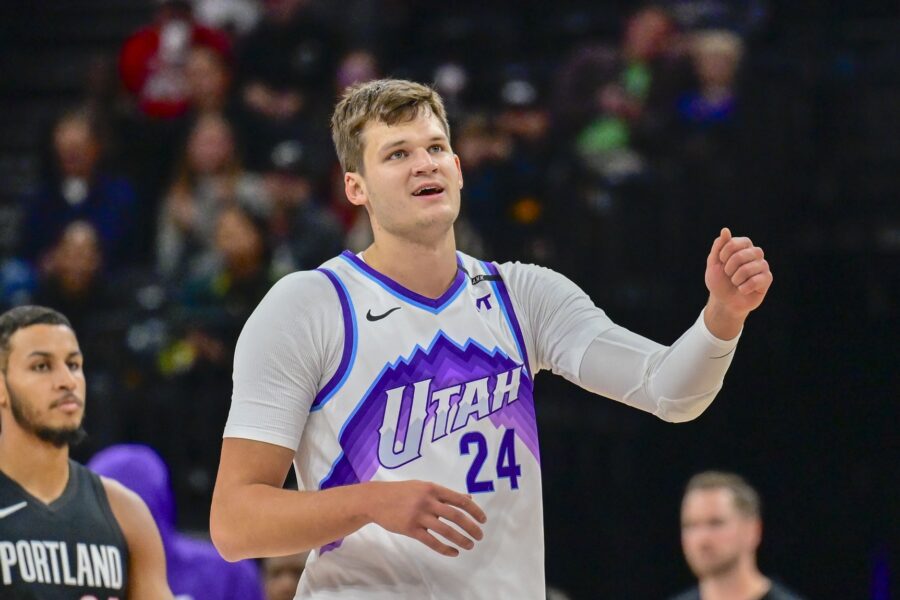
Walker Kessler has already fielded pitches from multiple suitors as free agency opens, with offers in the $30M-plus annual range including player options, per The Athletic. The Jazz retain the right to match any offer sheet, but the volume and structure of competing bids suggest a market that views the 23-year-old center as a bankable defensive asset in a league starved for switchable, athletic rim protectors. What matters more than Kessler's individual negotiations, however, is what his departure availability tells us about Utah's rebuild trajectory and how other franchises are pricing depth.
Kessler averaged 9.3 points, 7.8 rebounds, and 1.9 blocks last season in a limited role. Those raw numbers understate his value in the modern NBA—he shot 68% from the field, played 23 minutes per game off the bench, and moved laterally with uncommon ease for a 7-footer. Teams are bidding for the profile, not the volume. A $30M+ annual commitment for a backup center is unconventional, which means either Utah is losing him or Utah is paying above-market to keep a player they view as foundational to their next contention window. Neither outcome is ideal for a franchise still emerging from the Rudy Gobert trade.
The presence of player options in competing offers is the structural detail that matters most. That clause gives Kessler—or any free agent—a unilateral exit after year one if the market or his situation shifts. It also signals that bidders believe Kessler's value will rise, so they're willing to hand him control. Utah, if they match, would likely demand a straight deal without that luxury. That asymmetry could prove decisive if Kessler's camp sees multiple suitors willing to grant optionality.
From a roster construction lens, Kessler's near-certain departure (or overpayment retention) adds another layer to the Jazz's inventory problems. They've already moved pieces, reset payroll, and signaled a youth-first mandate. If they're forced to match $30M+ annually to keep a reserve big, that capital doesn't chase a third star. If they let him walk, they're confirming that depth defense isn't a priority next to rebuilding the core around their younger talent. Neither path accelerates contention, which means bettors should discount Jazz win-total props for next season and monitor their free agency moves for secondary acquisitions—a sign of franchise impatience that often leads to overextended contracts on mid-tier talent.
The betting angle isn't Kessler's individual line (he's a reserve, limiting per-game volume bets), but rather the cascading resource implications. If Utah matches a rich offer, they're constrained at next year's trade deadline. If they don't, they're conceding depth and signaling an extended retool. Either way, Jazz team totals and season win projections should price in organizational turbulence, not stability.