NBA · transaction
Williams' $44M Extension Signals Portland's Depth Bet—But Usage Risk Remains
Robert Williams III's three-year commitment to the Blazers anchors their frontcourt, but his injury history means his prop ceiling stays constrained.
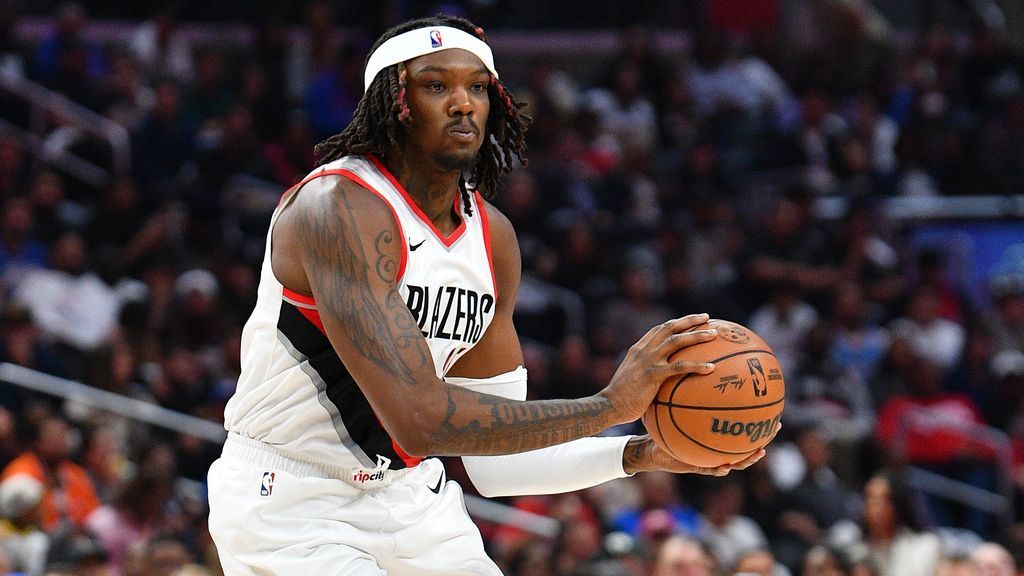
The Portland Trail Blazers locked Robert Williams III into a three-year, $44 million extension through the 2028-29 season, per ESPN reporting. The deal represents a modest bet on durability: Williams played 59 games this season after appearing in just 61 combined over the previous three years, then extended his availability through Portland's five playoff games. At 28, with extensive Finals experience from his Boston tenure, Williams gives the Blazers a proven rim protector alongside emerging centers Donovan Clingan and Yang Hansen.
The contract value itself tells the market story. Forty-four million across three years ($14.7M average) sits well below starter money for a center with Williams' defensive credentials—it's a floor-spacing reserve's rate. This reflects what everyone already knew: talent at the rim has never been the issue. His career 72% field goal percentage and 1.6 blocks per game are elite anchors. The real friction has always been getting him on the court. His career high in games played remains 50 games, achieved only three times. Even in the most promising season in recent memory (59 games), that's still 23 games missed to injury or load management—roughly one in four nights unavailable.
Portland's structure—three centers under contract with a crowded backcourt after the Ja Morant trade—suggests Williams will operate in a limited role rather than a volumetric one. He will likely split time with Clingan, the prospect the franchise prioritizes for development. That rotation compression is where the betting mechanics emerge. Williams' per-game production last season (6.7 points, seven rebounds, 1.5 blocks) came on 28.4 minutes per game. Those are backup-level totals despite elite efficiency. For prop purposes, his point and rebound lines will be set relative to recent volume, not his per-minute ceiling. If Portland reduces his playing time below 26 minutes per game to manage workload or prioritize younger options, his props compress further—not due to injury, but by design.
The prop implication is directional but not explosive: Williams' scoring and rebounding projections sit at discount levels already, priced for availability risk. The market hasn't underestimated his durability ceiling; it's fully incorporated the likelihood of missed time. A bettor taking unders on his point total (likely 8–10 range) or rebound total (10–12 range) is not getting an edge—the line reflects his injury history accurately. Any over angle would require either a surprise boost in minutes allocation or a multi-week healthy stretch that contradicts his career pattern. That's a variance bet, not a structural one. The extension's $44M value actually confirms the market's skepticism: a fully healthy, full-season version of Williams would command $15M-plus annually. Portland paying less validates the durability discount already baked into his nightly props.