NBA · transaction
Portland's Guard Redundancy Problem: Why the Blazers' Morant Trade Sets Up Forced Moves That Will Reshape Their Closing Lineup
The Blazers insist they're keeping Jrue Holiday despite acquiring Ja Morant, but roster math and frontcourt need suggest the guard logjam is window dressing—and Donovan Clingan's untouchable status reveals where Portland's real priorities lie.
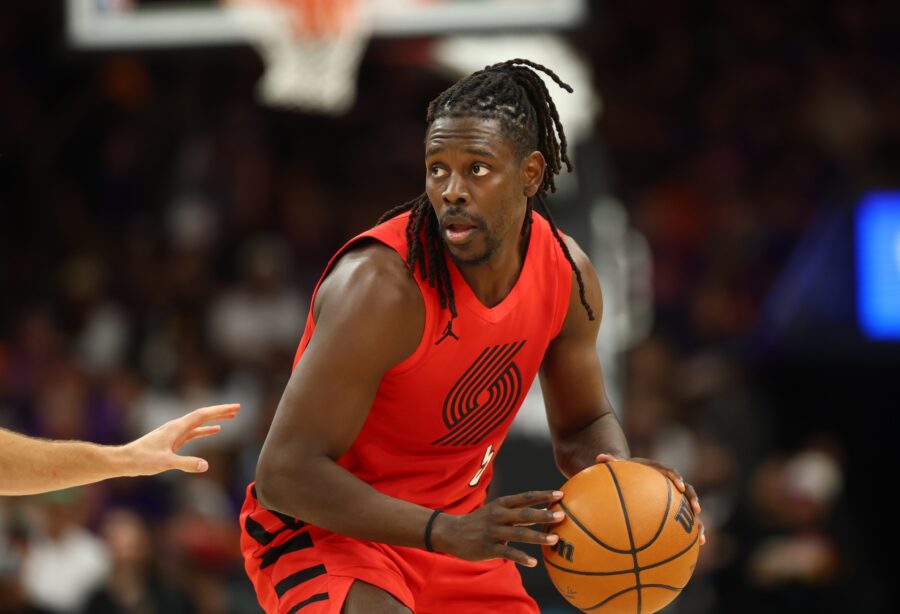
Portland's public messaging on Jrue Holiday feels like a negotiating tactic dressed in conviction. Per The Stein Line, the Blazers are telling rival teams they plan to retain the two-time All-Star guard despite just trading for Ja Morant, creating an obvious four-guard rotation that Jason Quick of The Athletic reports the team claims can coexist. The mechanics don't hold up. Moving Holiday to shooting guard and small forward may sound workable in a front-office presentation, but it ignores the construction problem Holiday's salary creates when the Blazers have genuine frontcourt holes they need to fill.
The real tell is what's not moving. Donovan Clingan, the 2024 lottery pick and defensive anchor at center, is described by sources as "essentially off limits" in trade talks. This isn't coy—it's a declaration of value hierarchy. Portland surrendered Jerami Grant and Kris Murray to acquire Morant because the team viewed that deal as a "no-brainer," according to Quick. But Grant was always the logical salary relief valve in any significant deal. The Blazers are banking that Morant's star ceiling justifies the fit risk, which is a gamble. Morant has injury durability concerns and, as Bill Oram of The Oregonian noted, a track record of on-and-off-court volatility that mirrors destructive patterns from Portland's past. The fit with Damian Lillard remains untested.
The frontcourt pressure is mounting. Robert Williams is likely to leave in free agency, pursuing around $15 million annually elsewhere. The Blazers need power forward and center help, and Clingan—still on a rookie deal with reasonable cost control—is the foundation they've chosen to build around. That calculus means Holiday's $13.1 million salary becomes the most obvious chip to unload, despite the public insistence otherwise. The team's assertion that all four guards can coexist is less about basketball wisdom and more about timing: they haven't found a trade partner willing to absorb Holiday's money yet, or they're waiting for the market to soften at the deadline. Deni Avdija, the primary offensive initiator last season with a career year behind him, becoming a secondary ball-handler after running the offense is a roster construction choice that doesn't make sense unless Portland is planning to pivot again.
For prop purposes, the uncertainty around Portland's final rotation creates dangerous forecast conditions. Morant's role, minutes, and co-star dynamics with Lillard are unresolved. Holiday's playing time is contingent on trade talks that may move him mid-season. Clingan's usage and touch rates depend on frontcourt additions that haven't materialized. Any prop bets keyed to these three guards' scoring, assists, or shot volume should be treated as speculative for the first 4–6 weeks of the season. The Blazers are likely to make at least one more significant roster move before the trade deadline; that move will reweight usage patterns across the backcourt. Holiday's assist rate and scoring volume, Morant's minutes and threes attempted, and even Lillard's assist distribution will shift based on who fills the power forward void. The market is pricing these players as if their October roles will hold through April. That's not true.
Bettors should avoid aggressive totals on Holiday and Morant scoring props until the roster stabilizes and we have at least 10 games of data showing how the guard hierarchy actually operates on the floor. The team's stated plan to retain Holiday conflicts with its frontcourt needs and salary constraints. When public statements and roster math diverge, roster math wins.