NBA · injury
Robert Williams III Locks In Portland Deal as Clingan's Backup Solidifies
Williams' three-year, $44 million re-sign with Portland signals the Trail Blazers' confidence in their frontcourt depth, but durability questions linger for a player who has missed significant time across his career.
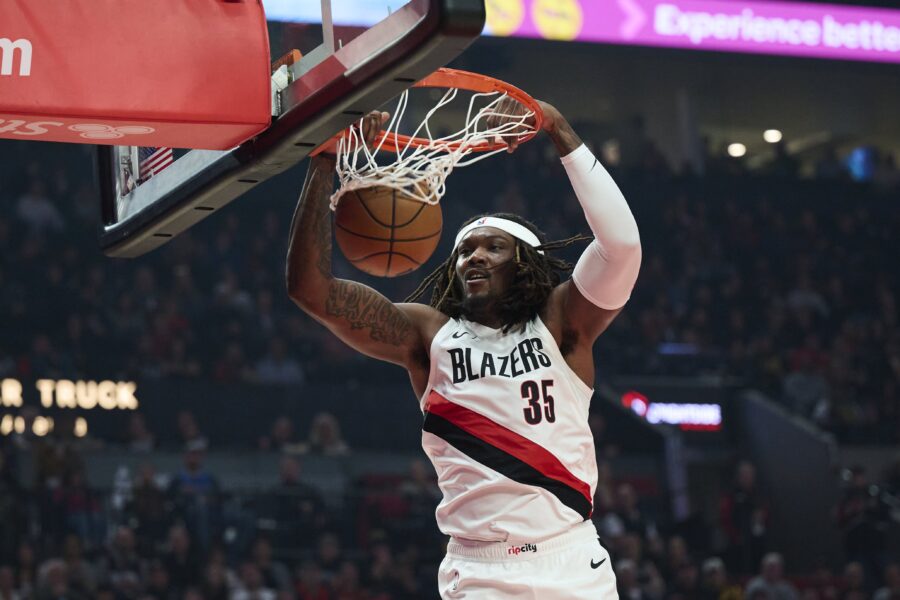
Robert Williams III has agreed to a three-year, $44 million contract to remain with the Portland Trail Blazers as Donovan Clingan's primary backup at center, per ESPN. The 28-year-old managed to appear in 59 games this season—a relative win given his injury history—averaging 6.7 points and 7.0 rebounds. The deal locks him into Portland's rotation for the next three seasons and signals the franchise's willingness to commit roster continuity around their young franchise centerpiece.
Williams' market value has always been constrained by durability. Over his career, he has battled knee injuries, missed stretches of games, and never established himself as a true full-time starter despite flashing talent on both ends when healthy. His 59-game season in 2025-26 represents a modest improvement in availability, but the baseline expectation remains cautious. At $14.7 million per year, the Blazers are paying for a capable reserve, not a star—a valuation that reflects Portland's understanding of his injury risk premium. The contract structure suggests the team views him as a rotation piece rather than a cornerstone, which is realistic given his production and game logs.
The prop implications flow directly from role and durability. Williams' rebounds-per-game projection will anchor around 6.5-7.0 for next season, tied to his health and the number of games he actually plays. The critical variable is games played, not per-game rate. In seasons where he appears in 60+ games, his rebounding floor sits around 420 total rebounds; in shorter campaigns (40-50 games), that number drops to 280-320. Market-setters will price his season-long totals assuming something in the 55-60 game range based on his recent availability trend, but that assumption itself is a weakness: a single lower-body setback compresses his total output dramatically. His points-per-game line will likely sit around 6.5-7.0, which tracks his recent average. Neither projection carries outsized edge; both are fairly priced if you assume health. The angle exists only if you have conviction about games played—either that his health trajectory improves (lean overs on season totals) or that the 59-game sample is a outlier before regression (lean unders).
For daily and series props, Williams offers limited leverage. His backup role means he rarely accumulates the volume to hit high thresholds in single games. A 10-rebound night is possible but not predictable; it depends on Clingan's minutes and foul trouble. The real consideration is reduced opportunity: if Portland's lottery position or coaching changes alter Clingan's role, Williams' opportunity set expands. Until then, he remains a low-leverage supplementary play. Bettors should treat his props as secondary stack fills only when game flow (blowout, heavy reserves) or specific matchups (teams that crash the glass, expose smaller defenders) create inflated volume windows. His durability profile makes him a fade for long-term prop positions unless you have a specific injury-report alert that shifts his games-played baseline materially.