NBA
Morant to Portland Signals Grizzlies' Full Reset and a Backcourt Bottleneck for Blazers
Memphis dismantles its young core after playoff disappointment, while Portland's guard depth now borders on unplayable.
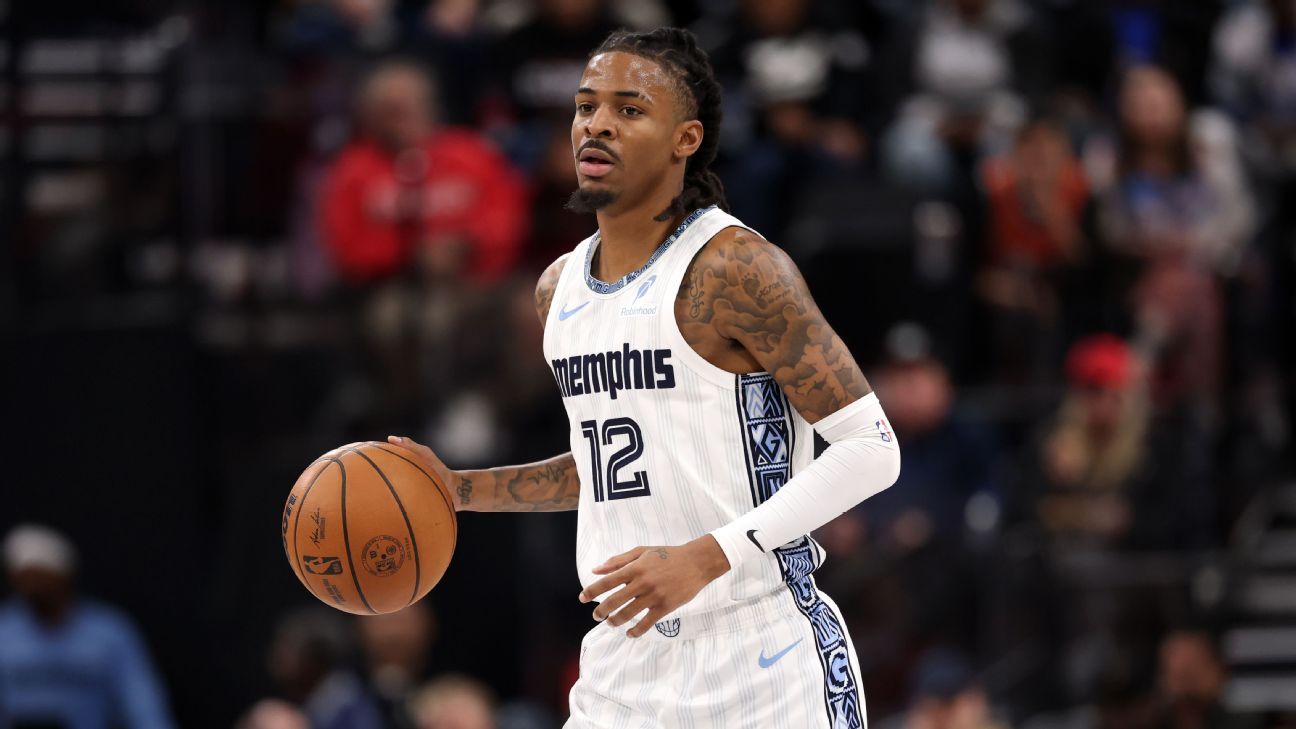
The Memphis Grizzlies traded Ja Morant to the Portland Trail Blazers on Monday for Jerami Grant and Kris Murray, closing the book on a three-year experiment that never delivered a second-round exit. With this move, the Grizzlies have now shed all three pillars—Morant, Desmond Bane, and Jaren Jackson Jr.—since getting swept by Oklahoma City in the first round last April. Memphis is cashing out early on a young core once viewed as a tier-one long-term asset. The market signal is stark: one playoff series victory in four appearances with this roster convinced ownership that the ceiling had been reached.
Morant's departure reflects both his injury attrition and conduct complications. In three seasons since his 2023 All-Star selection, he appeared in only 79 games, sidelined by a combination of shoulder and elbow surgeries, league-issued suspensions stemming from firearm incidents on social media, and a heated sideline clash with coach Tuomas Iisalo last November. Last season, his offensive efficiency cratered to career lows—19.5 points on 41.0% shooting and 23.5% from three in just 20 games. The Grizzlies explored a trade before the February deadline but found minimal takers. By the time there was seller's remorse, Morant was unavailable. Portland's acquisition of Morant, conversely, represents a calculated gamble on a 26-year-old whose ceiling remains elite—career 22.4 points and 7.4 assists per game—even as his recent floor has collapsed.
But the Blazers' guard room is now functionally overstuffed. Portland already employed Jrue Holiday and Damian Lillard (who re-signed on a three-year deal after being waived by Milwaukee), plus young depth in Scoot Henderson and Shaedon Sharpe. Morant arrives into a backcourt where minutes are already rationed. Lillard and Holiday will command 60-plus minutes per night combined; that leaves Henderson, Sharpe, and Morant competing for the remaining backcourt slot in a four-guard-plus-wing rotation. Deni Avdija, the breakout star headlining Portland's recent playoff push, operates primarily at small forward, which eases some congestion. Still, the Blazers have constructed a roster that rewards high-volume usage for guards, and there aren't enough possessions to service all of them at efficient rates.
For prop bettors, this reshuffles two teams' usage hierarchies in opposite directions. Morant's minutes in Portland will almost certainly fall below his career average of 29 per game, capped by the Holiday-Lillard tandem and the need to integrate Avdija's scoring duties. His point prop should reflect that constraint; expect lines to open in the 16–20 range rather than his pre-injury career 22+ baseline. Grant, departing Portland, clears a trade exception and opens floor time, but at 32 years old, he was already a rotation player rather than a centerpiece. The real repricing happens with Holiday and Lillard's assist totals: Morant's introduction as a secondary pick-and-roll engine reduces their on-ball usage by roughly 3–5 percentage points. Holiday's assist line at 5.5–6.0 per game becomes a fade candidate early in the season; Lillard's distribution role will shift toward spot-up passes and kick-outs rather than high-volume primary playmaking. Memphis's new era, anchored by Cameron Boozer (No. 3 overall pick in June 2026), has minimal betting impact until Boozer matures into a major role. The trade-off favors unders on Portland's guard assist totals for the first 15 games while defenses adjust to the Morant-Holiday-Lillard spacing puzzle.