NBA · transaction
Morant's Portland Reset: Image Rehab Meets Guard-Saturated Backcourt
Ja Morant says his trade to Portland is a chance to rebuild his reputation, but playing alongside Lillard and Holiday in a guard-heavy offense complicates his scoring volume and isolation opportunities.
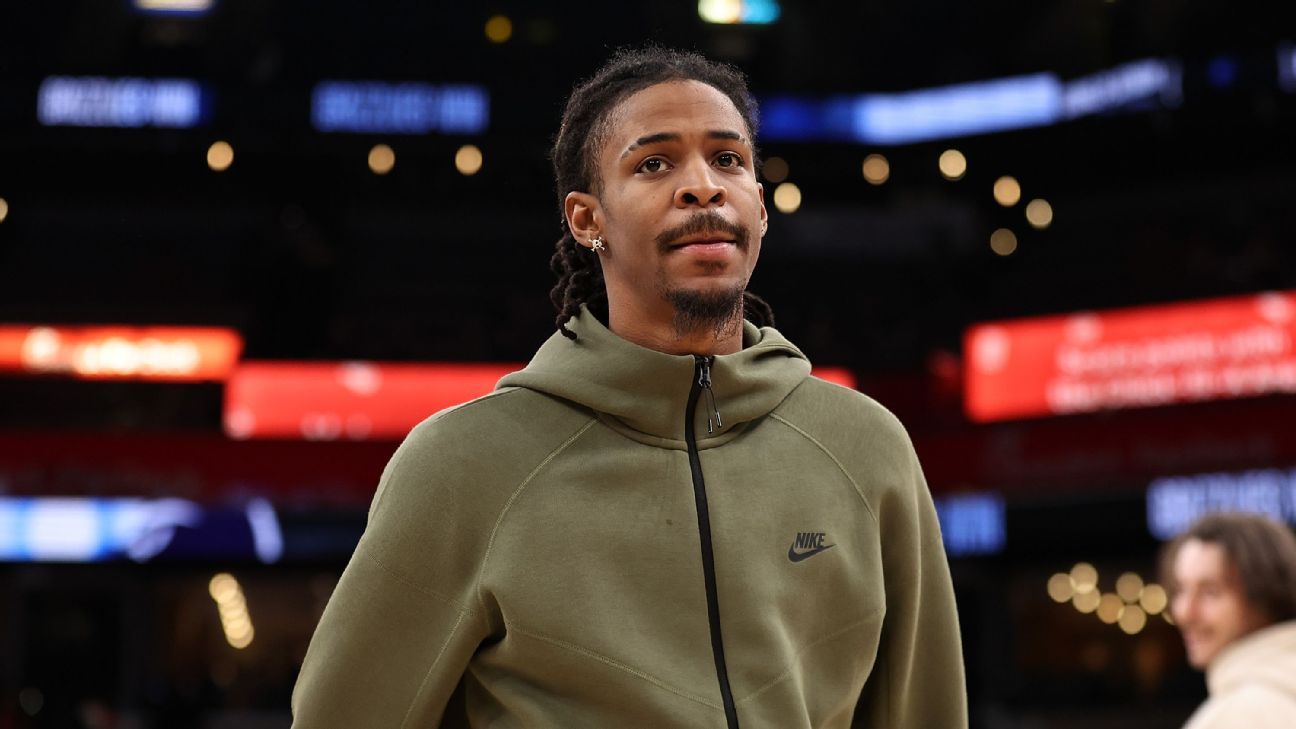
Ja Morant addressed the media Saturday at Summer League in Las Vegas, his first public comments since the Grizzlies traded him to Portland in June for Jerami Grant and Kris Murray. The 26-year-old framed the move as a reset—a chance to prove that the suspensions and incidents that defined his Memphis tenure (an eight-game ban in March 2023, a 25-game suspension to open the 2023-24 season, and a one-game suspension in November 2023) are behind him and that his "bad guy" reputation is a misconception. "It's like starting all over again," Morant said, emphasizing his maturity and changed mindset. That narrative is understandable. It's also incomplete.
The structural reality of Portland's backcourt is the constraint Morant will navigate for the next two seasons. The Blazers already invested a franchise supermax in Damian Lillard and added Jrue Holiday on a three-year deal this summer. Scoot Henderson and Shaedon Sharpe round out a guard rotation that offers neither the spacing nor the offensive isolation opportunities that defined Morant's Memphis role. In Memphis, Morant averaged 25.1 PPG over his seven-year tenure, often operating as the primary ball handler and shot creator. Portland's offense does not require—and may not accommodate—that volume. Lillard will handle the closing burden; Holiday provides secondary creation and playmaking. Morant's assist rate and scoring efficiency may improve in a less-demanding role, but his per-game scoring totals face downward pressure from minute allocation and usage rate compression.
The fit is not catastrophic. Morant's speed and mid-range craft complement Holiday's off-ball versatility, and his penetration creates kickout opportunities for the Blazers' emerging wings. But the unit is guard-heavy in an era when spacing and interchangeable wing-ball-handling matter. That scarcity of offensive flexibility—combined with Portland's defensive inconsistency—may limit the team's ceiling in a Western Conference that includes Denver, Oklahoma City, and the Lakers. For Morant specifically, prop bettors should expect a correction downward on his season-long scoring line. His Memphis baseline of 24-26 PPG is no longer operative. Portland's offensive pecking order, Lillard's usage, and Holiday's presence project a 20-23 PPG range for Morant. The market may initially over-correct on nostalgia and narrative (fresh start, new team, emotional reset); books could over-price his first-week scoring props as sharp money chases the Grizzlies-era production benchmarks. That gap between historical Morant and Portland-era Morant is the edge. It persists across the season.
Assists offer a secondary angle. In Memphis, Morant's playmaking fluctuated (5.5 to 7.8 APG depending on season), but he was the primary facilitator. In Portland, Holiday and Lillard both handle creation; Morant becomes a secondary playmaker. Expect his assist line to contract from 6.5-7.0 range down to 5.0-5.5 range. That's a durable edge—not a one-game spike or a market mis-pricing of a single outlier night, but a structural shift in role and offensive hierarchy that will hold across 82 games. Sharper books may already account for this. Softer books or early-week numbers will still be pricing him as a Memphis focal point rather than a Portland complementary guard.
The narrative of redemption is real. The math of positional fit and offensive bandwidth is realer. Take unders on Morant's scoring props early, particularly in Week 1 when the narrative noise is loudest and the line still carries Memphis-era expectations.