MLB
Cabrera's Return Carries Workload Risk—Cubs Rotation Clarity Still Weeks Away
Edward Cabrera takes the mound Sunday after 52 days sidelined by hamstring and adductor strain, but pitch-count limitations and a cluttered rotation leave his upside capped in the short term.
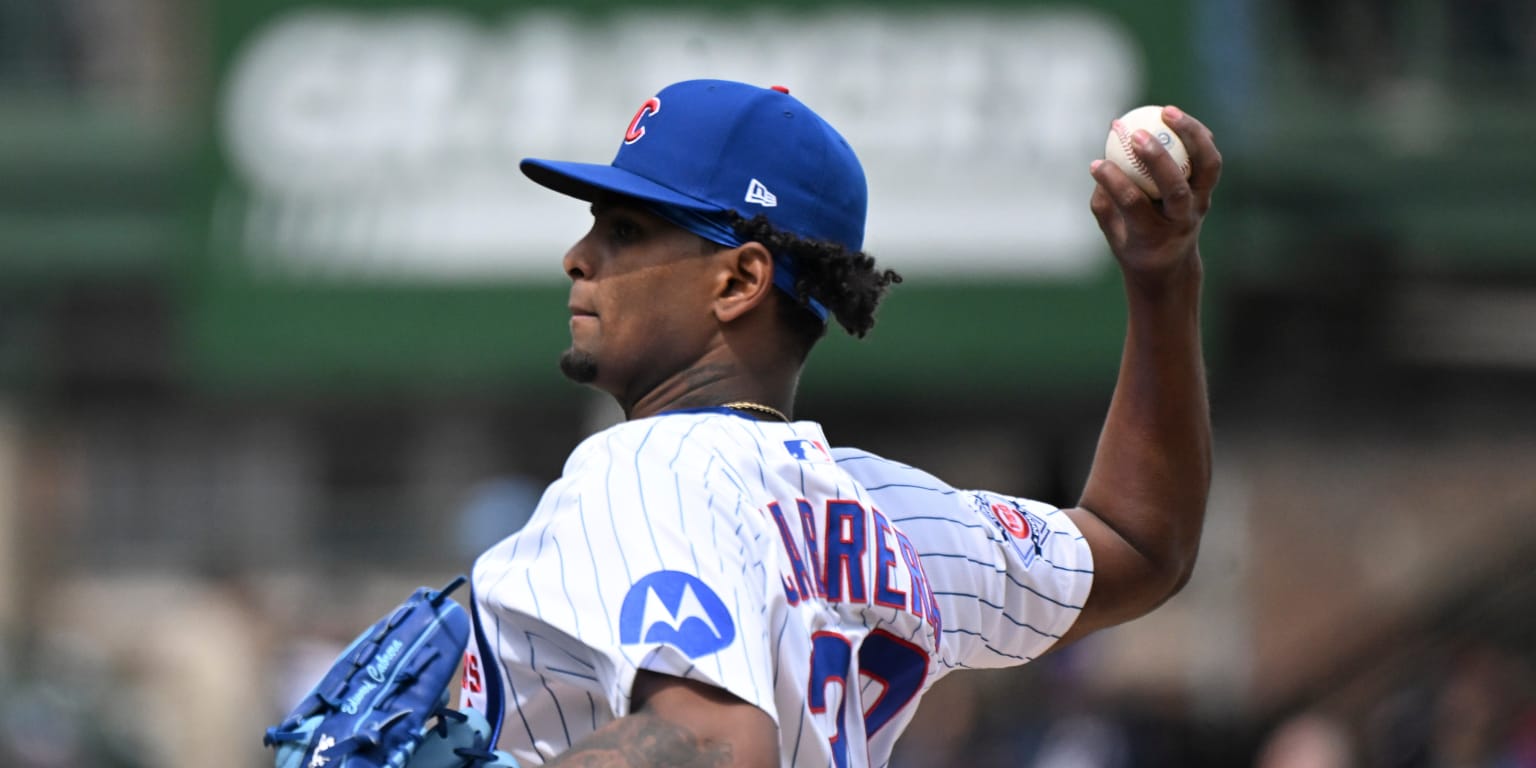
Edward Cabrera returns to Cubs' rotation on Sunday against the Cardinals, marking his first appearance since a June 23 start against the Mets left him with a left hamstring and adductor strain. Manager Craig Counsell has signaled a "normal" level of caution for the righty's workload in his first game off the 15-day IL, a qualifier that matters when assessing prop exposure over the next two weeks.
Cabrera's rehab progression shows technical competence—he spun five hitless innings in his most recent Double-A Knoxville outing on Tuesday, struck out seven, and built to 64 pitches across three minor league starts. Over his last two rehab appearances, he has 15 strikeouts and one walk across nine innings. That's clean control work. But the real story is what happens in big-league competitive environments after a 52-day absence. Cabrera's last seven starts before the injury carried a 7.55 ERA; he'd already battled a blister issue before the hamstring flare. The injury didn't arrive in isolation—it arrived as part of a pattern of durability questions. His 5.10 ERA across 14 starts this season, despite 65 strikeouts in 72.1 innings, reflects both the control issues (29 walks) and the environmental variance that high-velocity arms can experience when returning from leg injuries.
The Cubs' rotation mathematics also complicate his immediate ceiling. Chicago added Kevin Gausman, Clay Holmes, and retained Matthew Boyd, Shota Imanaga, and David Peterson in a five-man framework. Counsell has explicitly ruled out a six-man rotation as a long-term tool, meaning one of these arms will be omitted from at least one turn. Cabrera's Sunday appearance has already bumped Imanaga's start to Monday. With team off-days on Thursday and August 27, the Cubs have flexibility to manage workload, but that flexibility applies to the entire roster—not just Cabrera. A blister, a hamstring, or any soft-tissue concern could resurface, and the Cubs now have better depth to absorb an absence than they did in June.
For prop purposes, the angle centers on strikeout volume and innings pitched—not direction, but threshold risk. Cabrera's historical K rate sits at 8.1 per nine innings this season, solid but not elite. Against a Cardinals lineup that carries a .234 average against high-velocity right-handers over the past 30 days, the matchup is neutral to slightly favorable. But "normal caution" on pitch counts likely caps him at 80-90 pitches maximum, a constraint that typically yields 5-5.5 innings and 4-5 strikeouts if he's efficient. If the line opens at Cabrera over 5.5 Ks, the edge favors the under on the basis of workload ceiling and return-from-injury volatility, not talent decline. If the line respects the workload and sits at 4.5 Ks or lower, there's no edge to chase. The real value sits in avoiding aggressive overs on volume props during the first four starts off the IL; after that, if durability questions fade, normal models resume.
The Cubs' broader rotation decision—which starter gets benched in a five-man frame—may not arrive until mid-September. For bettors, the clarity that matters arrives only after Cabrera proves he can repeat clean outings without setback. Until then, treat him as a short-term innings constraint, not a talent re-entry.
MLB Intelligence — Baseball intelligence beyond the box score. Open MLB Intelligence →