Cabrera's Velocity Returns in Minor League Rehab; Cubs Rotation Depth Enters New Phase
By Ty Whitney ·
Edward Cabrera struck out eight in four scoreless innings on his second rehab outing, signaling he could rejoin the Cubs rotation before September while Kevin Gausman and Clay Holmes reshape the staff's playoff identity.
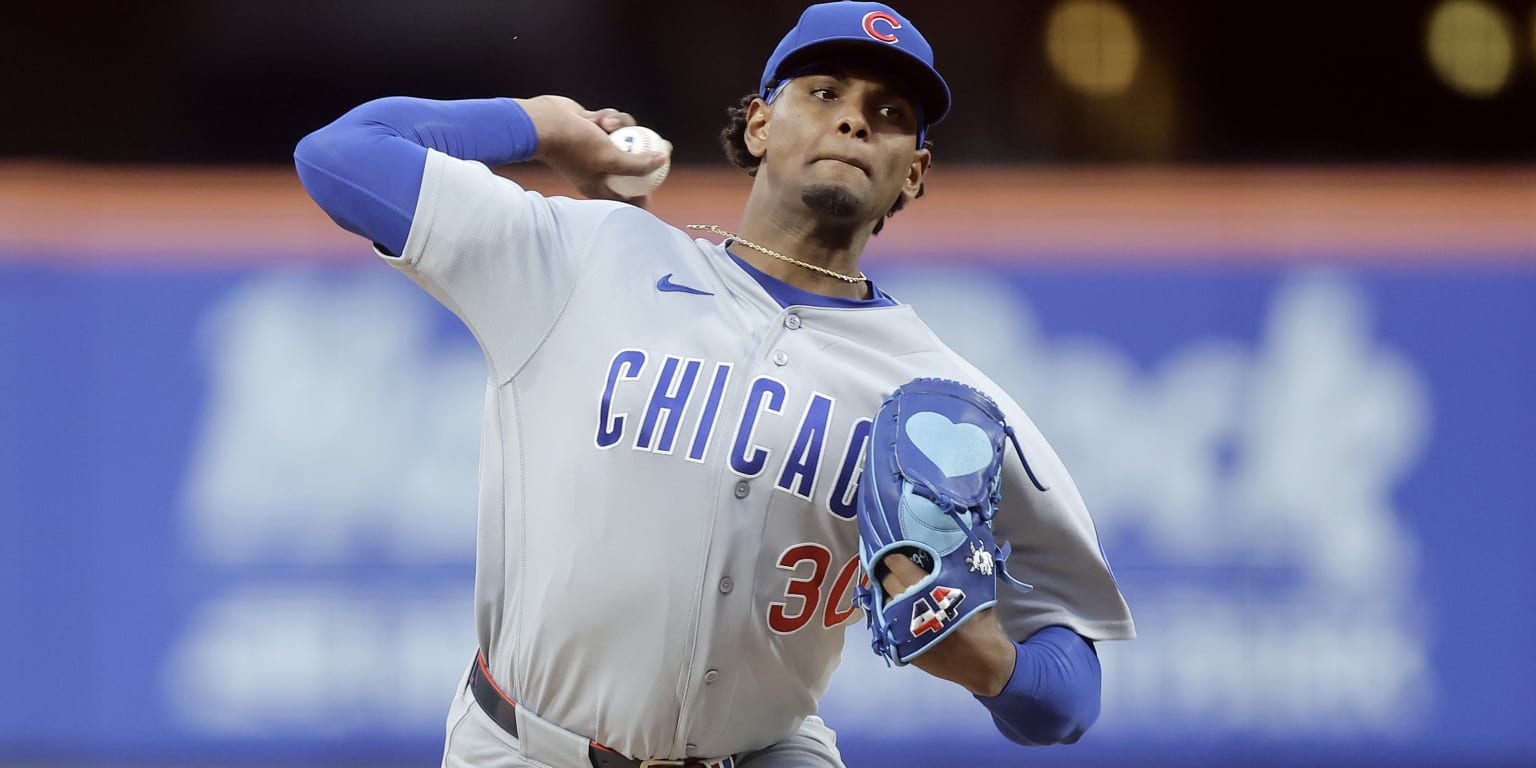
Edward Cabrera took the mound for Iowa on Wednesday in his second minor league rehabilitation assignment, delivering the kind of performance that justified the Cubs' trade-deadline aggression: eight strikeouts across four innings, one hit allowed, zero walks, and fastballs sitting at 97.4 mph. The hard-throwing right-hander is working back from a left hamstring and adductor strain sustained in late June—just over five weeks ago—and his velocity has already returned to the 97-mph territory he found in early June before the injury forced him off the field.
Manager Craig Counsell has signaled a minimum three-rehab-start protocol, positioning Cabrera for a potential return sometime during Chicago's August 14–19 homestand against the Cardinals and White Sox. That timeline matters. The Cubs entered the Trade Deadline with rotation depth as an ongoing vulnerability, but they addressed it decisively: Kevin Gausman and Clay Holmes arrive as established veterans, with Gausman making his Cubs debut Friday in Kansas City. The addition of Baxton Garrett to Triple-A adds another layer. With Matthew Boyd, Shota Imanaga, and David Peterson already on the roster—all recent All-Star tier or close to it—plus Javier Assad pitching well and Colin Rea offering veteran floor, the Cubs suddenly have the kind of rotation competition that breeds quality starts in October. Cabrera's return won't displace Gausman or Holmes, but it creates a sixth-starter hedge and forces internal competition that Counsell has explicitly embraced.
Cabrera's 2025 season with Miami (3.53 ERA, 150 strikeouts in 137⅔ innings) set the baseline. His first seven Cubs starts this season carried a 3.27 ERA; the next seven ballooned to 7.55 after a blister on his middle finger derailed him in May and early June. But when he returned before the hamstring injury, his fastball velocity climbed north of 97 mph—a marked improvement over his earlier campaign average. Wednesday's outing confirmed that velocity stuck. The eleven swinging strikes (five on his four-seamer alone) and 8-strikeout output on 55 pitches across four innings projects cleanly: Cabrera is not returning as a reduced version of himself.
For bettors, the prop angle turns on his strikeout rate. Cabrera's 2025 K/9 was 9.8; his 2026 Cubs rate sat at 10.1 before injury. Wednesday's 18-strikeout pace (8 K in 4 innings) tracks well above both thresholds and suggests that when he does return—likely within the next 10 days—sportsbooks may underprice his strikeout props if they're anchored to his pre-injury Cubs average rather than his velocity-driven peak performance. The injury was a hamstring strain, not a shoulder or elbow issue, meaning velocity retention is the real diagnostic, and he's already shown it. His next outing will push him toward 70 pitches; if that clears without incident, activation follows shortly after. Early lines on Cabrera's strikeout props once he rejoins the majors will reflect recency bias (his injury and absence) rather than the mechanical truth: his heat is back, and his swing-and-miss profile is intact.
The Cubs' pitching ecosystem has shifted. Rea moves to the bullpen; Assad may follow. Gausman and Holmes will eat high-leverage innings. Cabrera slots into the rotation pecking order competing against Assad, Peterson, and Imanaga for starts. But if he pitches anything like Wednesday's performance, his strikeout line should trade at a premium to his season-long average—and early books often fail to adjust for velocity-recovery signals hidden in low-volume rehab games.