MLB · lineup
Cubs Rotation Depth Play: Cabrera's Return and the Deadline Pitching Gamble
Edward Cabrera clears his final rehab hurdle with a dominant outing while the Cubs' three-pronged deadline pitching investment takes shape—a pattern that reshapes September variance.
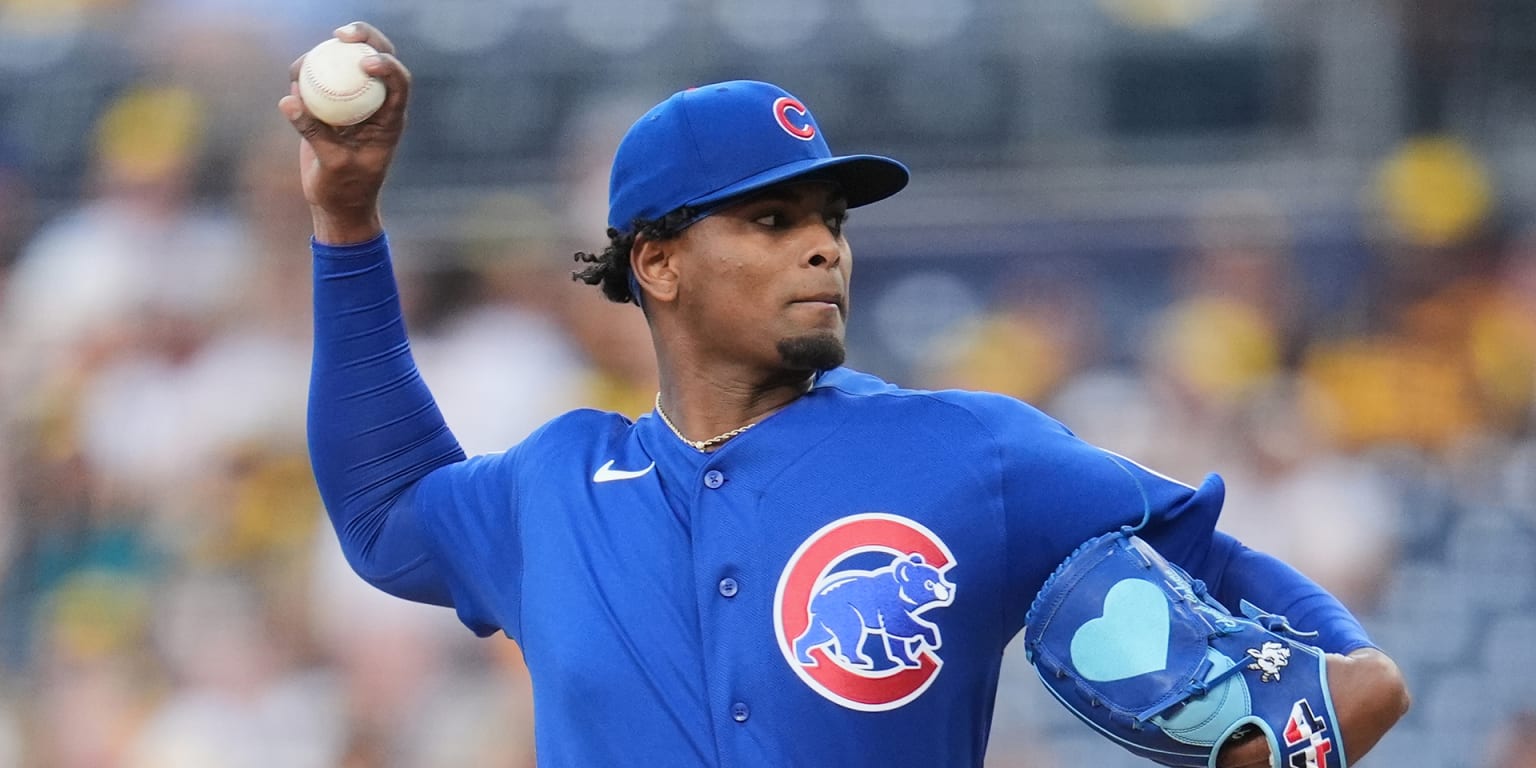
Edward Cabrera's third and final minor league rehab start arrives Tuesday in Knoxville, with the hard-throwing right-hander tracking toward an active roster return within days. Per the Cubs' announcement, Cabrera has already progressed through two rehab outings, the most recent yielding four innings, eight strikeouts, zero walks, and just one unearned run at Triple-A Iowa on Wednesday. His fastball sat 97 mph with peak velocity at 99 mph, generating 11 swinging strikes—a functional profile that suggests he's past the blister and hamstring strain that cost him nearly two months.
What matters for the Cubs' September push: Cabrera arrives into a rotation that GM Jed Hoyer bolstered with Kevin Gausman and Clay Holmes at the trade deadline, additions designed to bridge the gap through October. The depth chart now includes Matthew Boyd, Shota Imanaga, David Peterson, Javier Assad, Colin Rea, and Braxton Garrett—a left-handed reclamation project acquired from Miami who has posted a 2.90 ERA in 77⅔ innings this season at Triple-A Jacksonville after missing all of 2025 to Tommy John surgery. Garrett sits behind the rotation hierarchy as a bulk-innings outlet and insurance policy, but his presence reflects an organizational calculus: this team believes it can weather injury volatility through the final six weeks.
Cabrera's timeline matters because his early Cubs tenure split sharply. His first seven starts carried a 3.27 ERA; his next seven devolved to 7.55 ERA before the injuries intervened. Manager Craig Counsell explicitly framed the return window as a reset: "We think we can get a good version of Cabby going for the last six weeks or so of the season, and not having as much mileage under him sets it up to be a good six weeks." Translation: Counsell is banking on a lower-workload, high-leverage Cabrera rather than a workhorse fourth-or-fifth starter.
For prop bettors, the rotation depth recalibration tilts the Cubs' September injury surface area. With Gausman and Holmes on board, the burden on secondary starters to carry high-leverage innings against competitive opponents has narrowed—which cuts two ways. First, Cabrera and Garrett will face fewer spot starts against division leaders; their matchups tilt toward lower-leverage stretches and nail-downers in blowouts. Second, fewer forced high-velocity innings from unstable arms reduces variance in individual outing quality. Cabrera's strikeout rate in his first seven Cubs starts (8.1 K/9) fell to 5.2 K/9 in his injury-plagued stretch—a decline traceable to usage pattern and fatigue, not stuff decay. With Gausman and Holmes absorbing the Thursday-night war games, Cabrera's next strikeout prop will lean toward his pre-injury version. Look for strikeout totals on Cabrera's return start to open aggressive (leaning into the Wednesday rehab dominance and 99-mph heat); expect sharp money to shade unders as the market recognizes that the Cubs will not require him to strike out 10 hitters in a low-pressure mid-September outing against Kansas City.
The broader Cubs team-total picture firms slightly. Counsell's construction—pairing a fortified rotation with a patient Cabrera ramp—suggests the Cubs view September as a margin-of-victory game, not a pure-survival slog. Team totals for games where Gausman, Holmes, or a peak Cabrera take the ball should compress toward baseline. Conversely, games where Rea or a forced Garrett start land should inflate slightly, as offensive support becomes the primary variable. This volatility favors bettors who track starter assignment and spot games where the Cubs' run-scoring surface flattens.