MLB
Cubs Lock in Balanced Postseason Roster With Gausman, Boyd Leading Pitching Core
Chicago's Wild Card roster leans offensive depth over bullpen depth, signaling confidence in starter velocity and a willingness to ride front-line arms through October.
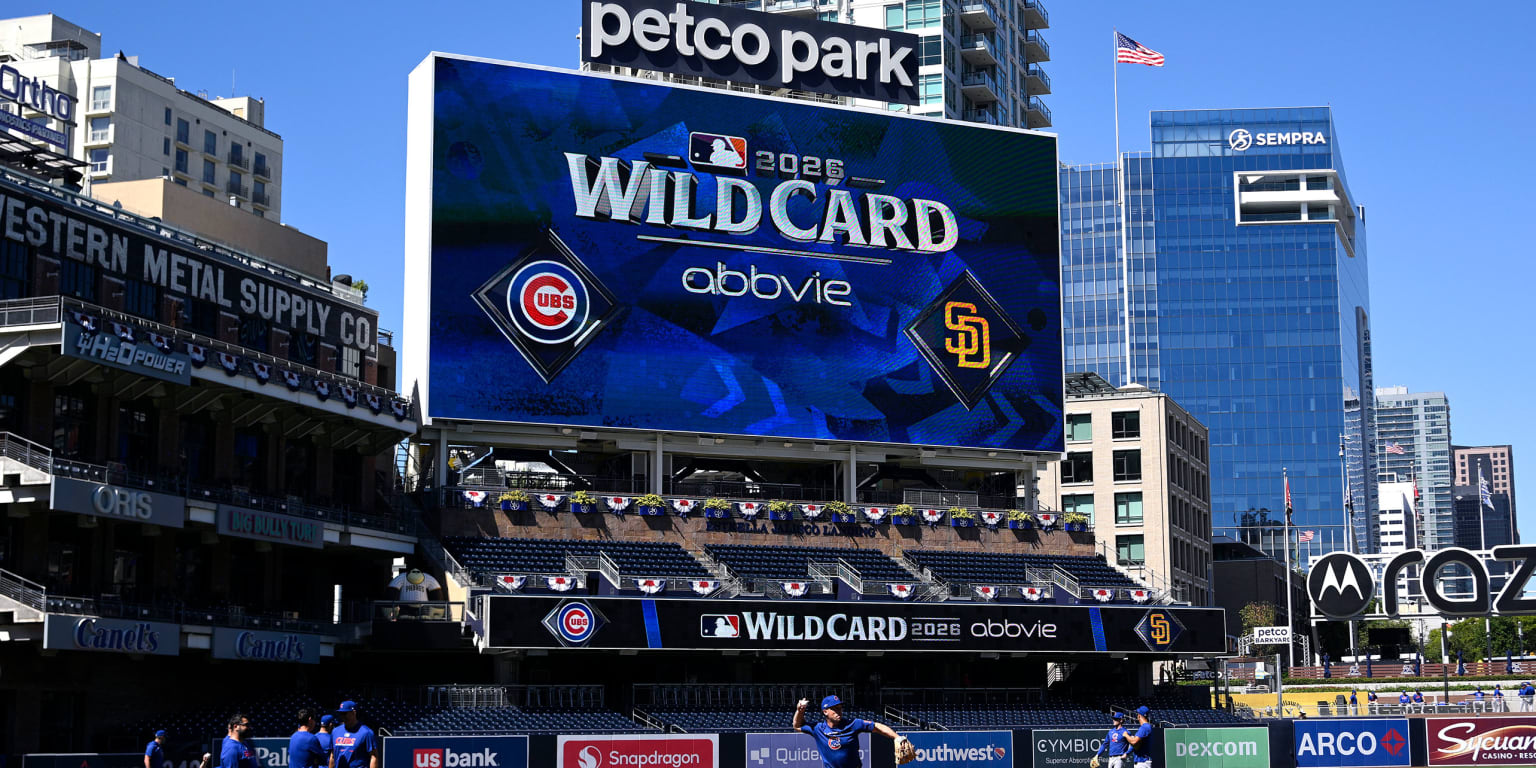
The Cubs have submitted their 26-man roster for Tuesday's Wild Card Series opener against San Diego, anchoring the staff with Kevin Gausman and Matthew Boyd as the primary starters and deploying a pitching mix weighted toward established rotation arms over high-leverage relievers. The roster includes 12 pitchers, two catchers, six infielders, five outfielders, and one infielder-outfielder, with Game 1 set for 10 p.m. ET on Peacock and NBCSN.
The pitching construction reveals a strategic preference: Gausman and Boyd anchor the top, with Shota Imanaga and David Peterson providing depth on the left side. Clay Holmes and Ryan Rolison round out the primary relief options, but the roster leans heavily on starting-caliber arms—Ryan Zeferjahn, Jacob Webb, and Javier Assad—that function as bulk innings bridges rather than high-velocity closing weapons. This setup prioritizes starter durability over ninth-inning specialization, a posture that assumes both the Cubs' front-line starters can sustain velocity deep into games and that the Padres' offense will not force extended bullpen usage.
Offensively, the roster presents a familiar profile: Nico Hoerner, Alex Bregman, Dansby Swanson, and Pete Crow-Armstrong represent established bats with proven postseason composure. Michael Conforto, Seiya Suzuki, and Tyrone Taylor provide secondary power and speed. The bench includes Michael Busch, Gabriel Arias, Pedro Ramírez, and Matt Shaw—high-variance depth players who can swing the series if forced into extended at-bats. The 5-outfielder deployment (Crow-Armstrong, Happ, Conforto, Suzuki, Taylor) signals that the Cubs expect to compete on scoreboard length rather than lean on defensive specialty roles.
From a betting lens, the roster construction carries two immediate implications. First, the offense-heavy balance and reliance on Gausman and Boyd means Cubs moneyline betting in Games 1 and 2 is essentially a bet that both starters deliver at elite velocity—not a bet that the overall depth is superior to San Diego's. Any injury or early exit from either Gausman or Boyd in the series opener would substantially alter the matchup calculus. Second, the bullpen thinness (only six traditional relievers, with Holmes the sole clear shutdown option) elevates the leverage on team total overs in games where the Cubs fall behind early; they will have limited runway to chip back via bullpen collapse. The Cubs finished the regular season averaging 4.7 runs per game; against a Padres team with a bottom-five bullpen ERA, that total should be competitive, but the Cubs' own bullpen floor is lower than the roster configuration suggests. Backing Cubs team total unders at 4.5 or lower carries intermediate edge if the betting markets have not yet priced in the bullpen risk.
MLB Intelligence — Baseball intelligence beyond the box score. Open MLB Intelligence →