NHL
Ovechkin at 929: The 1,000-Goal Quest Demands Consistency, Not Heroics
At 41 and entering what may be his final season, Ovechkin sits 21 goals from 950 and needs a sustainable pace to chase the millennium mark—but the market is underpricing his reliability.
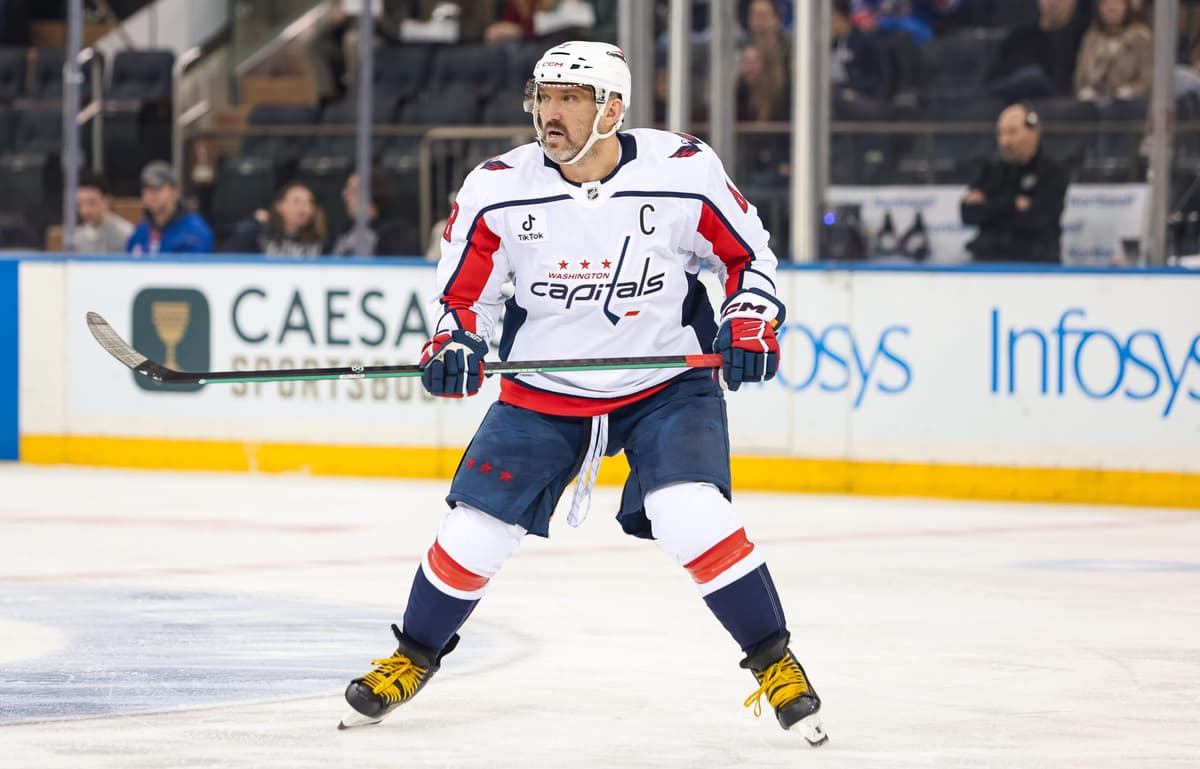
Alex Ovechkin re-signed with Washington on a one-year deal at $4.25 million cap hit, and he enters the 2026-27 season with 929 career goals—21 shy of 950, and 71 short of the 1,000-goal threshold that would cement the greatest goal-scorer in NHL history. At 41, the Great 8 is no longer a 40-plus-goal threat; last season he posted 32 goals and 64 points across 82 games, a 0.390 goals-per-game rate that held his shot percentage steady at 13.1 percent, dead-on with his career average.
The conversation around his production hinges on workload redistribution. Washington added multiple depth wingers—credible, complete 5-on-5 players who will absorb ice time and offensive burden away from Ovechkin. His even-strength minutes have declined five consecutive seasons, a structural trend that accelerates as the roster deepens. Yet Ovechkin remains the franchise's de facto power-play anchor; he will monopolize man-advantage touches and remain the net-front option when space opens. That dual reality—shrinking 5-on-5 leverage, preserved special-teams leverage—creates a floor.
Bet365 has priced his 2026-27 goal total at 28.5, a line that brackets analyst commentary: Carter Hutton projects 30 goals, while Tyler Yaremchuk, citing shot percentage stability and last season's 32-goal finish, leans toward a repeat of that output. The market's 28.5 floor reflects erosion concerns—age, linemate upgrades, minute reduction—but it may underestimate the durability of Ovechkin's scoring approach. He does not depend on volume shooting at even strength; he lives in the offensive zone's high-leverage slots where conversion rate matters more than attempt frequency. His 13.1 percent shot percentage is not an outlier to regress—it is his career baseline, reinforced across 1,573 regular-season games.
The edge surfaces when you separate 5-on-5 goals from power-play goals. Ovechkin's power-play touch remains elite; assume he maintains a 0.35 to 0.40 goals-per-game rate there while his 5-on-5 decline steepens due to minute compression. If he plays 75-80 games—a reasonable expectation at his age—and allocates roughly 60 percent of his ice time to even strength and 15-17 percent to the power play, a 30-to-32-goal range becomes more probable than the 28.5 market line suggests. The key variable is games played, not percentage; durability over 80 games at his current efficiency produces an over on 28.5.
For prop-betting purposes, the real edge lies in isolating his power-play goal line from his even-strength output. Fade the combined total at 28.5; the power-play floor alone likely accounts for 12-14 goals, leaving only 16-17 from 5-on-5—a depressed floor given his historical clip and the fact that he will still see premium ice in that context. Lean the over on his season goal total in the 29-31 range when the number stabilizes after opening odds adjust.
NHL Intelligence — Hockey intelligence beyond the scoreboard. Open NHL Intelligence →