Ovechkin's Ice-Time Squeeze: How Washington's Depth Reshapes Star Usage
By Justin Erickson ·
The Capitals added elite wingers without subtracting minutes—and Spencer Carbery may need to bench Ovechkin's even-strength work to keep his scoring threats fed.
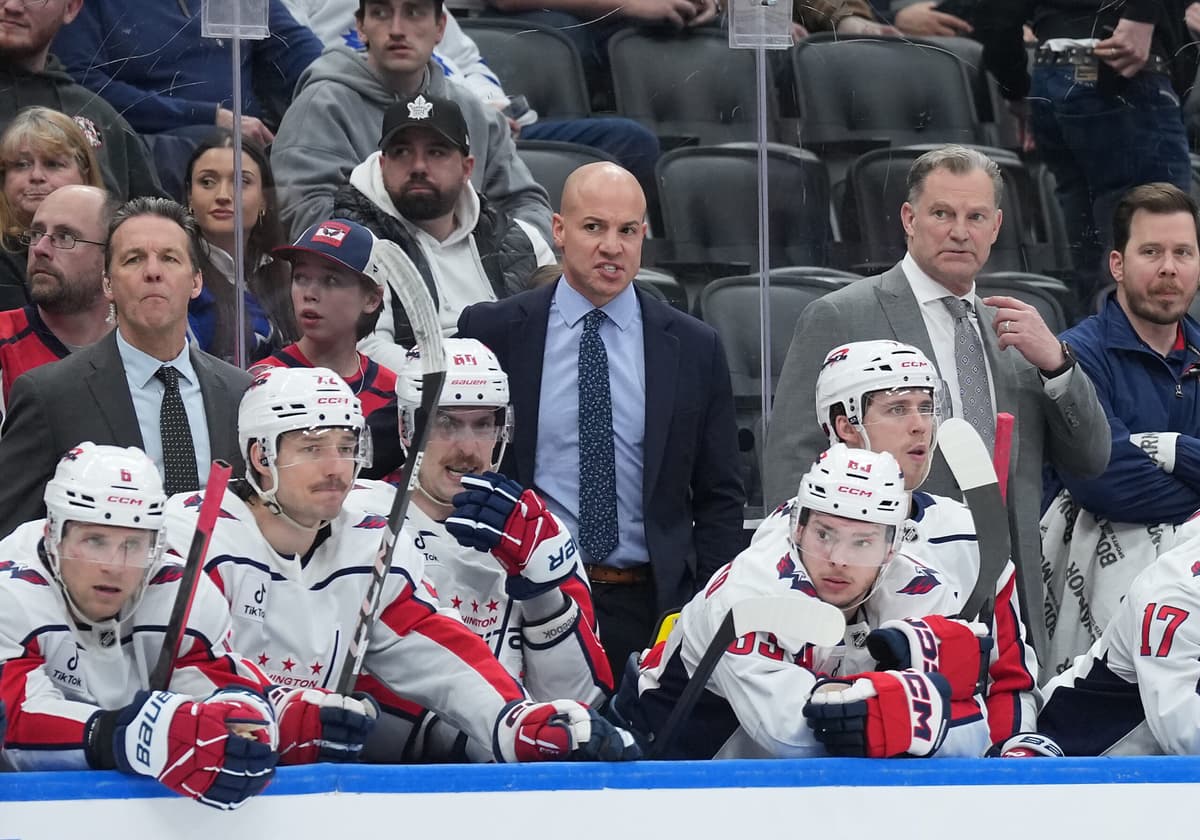
Washington's front office spent the offseason in demolition mode. After missing the playoffs entirely last season, the Capitals acquired Jordan Kyrou and Alex Tuch to pair with existing talent that includes Tom Wilson, Ryan Leonard, and Aliaksei Protas—a winger group so loaded that there simply aren't enough shifts to distribute evenly across 82 games. The structural problem is straightforward: Alex Ovechkin remains in the mix, meaning five legitimate 30-goal threats now compete for limited offensive deployment.
Coach Spencer Carbery faces a choice that no coach enjoys making. Ovechkin historically plays the full two minutes of every power play, a leverage situation that's non-negotiable in Washington's system. But if Carbery keeps Ovi anchored on the top line at even strength while Kyrou, Tuch, Leonard, and Protas all demand offensive minutes, the roster's theoretical depth becomes a practical liability. The math doesn't work: you can roll four scoring lines, but you can't give all five guys top-six ice time without starving the depth.
Former NHL video coach Steve Peters framed the solution bluntly during a Daily Faceoff discussion: Ovechkin's even-strength role may have to shrink so that younger, speedier players like Kyrou and Tuch get the volume they need to justify their acquisition cost. This isn't about declining skill—Ovechkin can still score on limited touches—it's about opportunity cost. Every shift Ovi takes at even strength is a shift a 25-year-old with fresher legs doesn't. Injuries will provide some relief, but the Capitals can't bank on a season-long injury carousel to solve a roster-construction problem.
For prop bettors, this creates a specific angle on Ovechkin's touch distribution. His power-play point total will likely remain stable—Washington isn't removing him from that leverage situation—but his total points prop becomes volatile. If Carbery actually reduces his even-strength minutes to 15-16 per game (down from his historical 17-19), Ovechkin's shot volume declines, and his assists per game compress because he's not cycling through linemates. A points total that opened at 1.5 per game or higher on the strength of his name recognition may be overpriced if the Capitals' depth-balancing strategy actually takes hold. The book hasn't fully priced the real possibility that Ovechkin becomes a specialist, not a workhorse.
The volatility is highest in early October, when depth management decisions crystallize. By November, if Ovechkin is genuinely limited to power-play work, the market will reprice. The edge is strongest on opening lines and week-one betting before usage patterns stabilize.