Ovechkin at 40: One More Year Signals Washington's Playoff Bet, Not a Victory Lap
By Ty Whitney ·
The Capitals' franchise anchor signs a prove-it deal on the eve of a retooled roster push—but his declining assist rate and the team's recent struggles create a harder offensive load.
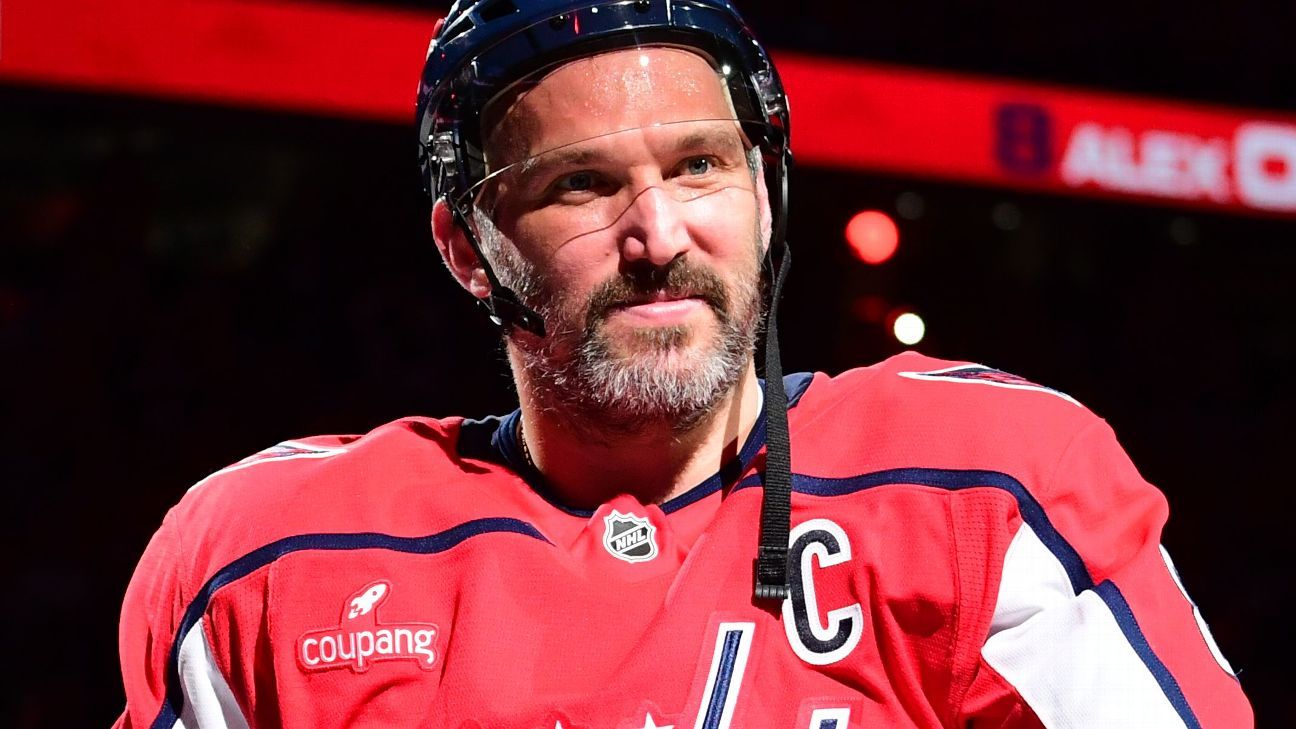
Alex Ovechkin is staying. The Washington Capitals announced Thursday that their 40-year-old captain has signed a one-year contract worth $4.25 million in average annual value, with incentives that could push the total to $9 million if he plays at least 10 games. It's his 22nd season with the franchise—the only team he's played for in the NHL—and it lands squarely in the middle of a significant roster overhaul. The Capitals missed the playoffs last season by two points and finished fifth in the Atlantic Division, a rare drought in the Ovechkin era.
What makes this signing worth examining isn't the headline contract but the machinery behind it. Ovechkin played all 82 games last season and tallied 32 goals and 32 assists—a 1-to-1 ratio that masks a structural shift in his offensive profile. His goal-scoring rate remains elite; he averaged 0.39 goals per game, among the best marks of his career. But his assist total (0.39 per game) has compressed significantly from his peak years, when he regularly flirted with 50+ assists and operated as a primary facilitator on the top line. The Capitals have since added players like Boone Jenner and Trevor Tuch via trade and signing—explicit signals that Washington's front office is shifting from a pure Ovechkin-centric attack to a more distributed offensive model. That's smart roster construction for a 40-year-old left wing, but it also means fewer secondary scoring opportunities flowing through his stick.
The contract structure itself reveals organizational confidence with a built-in hedge. The $1 million base salary front-loads financial flexibility, while the $3.25 million signing bonus locks in the guarantee. The $4.75 million games-played bonus is the real tell: it assumes Ovechkin will suit up regularly but hedges against a catastrophic injury or decline that sidelines him. Given his age and the team's desperation to stay competitive, that's a prudent design. Washington needs Ovechkin's finishing ability to drive bottom-line goal volume, not his playmaking.
For prop purposes, this setup creates a bifurcated angle. Ovechkin's shot volume and goal-scoring efficiency will remain elevated—he'll still be the focal point of net-front operations and power-play looks. His 2025-26 season saw 3.8 shots per game; that metric is durable across aging superstars because teams design schemes around their best finishers. Lean on Ovechkin to exceed 0.35 goals per game if the Capitals clinch a playoff spot and he maintains consistent linemates. Conversely, his assist total is now a fade. With Jenner and Tuch creating their own looks and Washington's depth taking on more offensive burden, Ovechkin's assist rate should stabilize in the 0.35-0.40 range—a 20-25% dip from his historical peak. Any season-long props pricing him at 40+ assists carry execution risk; the distribution of offensive work has changed even if the raw goal total hasn't.
The playoff miss last season also matters for lineup construction and leverage. If Washington falters again early in 2026-27, Ovechkin's usage rate could spike in a desperate run, actually inflating his shot volume beyond his standard baseline. Conversely, if the Capitals pull clear of the wildcard conversation, his ice time will normalize. Watch the team's standing at the All-Star break; that's your signal for whether Ovechkin becomes a volume play or a selective finishing play.