NFL · injury
Bradford's IR Move Opens Seattle's Guard Competition—and Tests Line Stability
The Seahawks' right guard injury forces a depth-chart battle mid-season, reshaping offensive line continuity just as Seattle's pass protection metrics matter most.
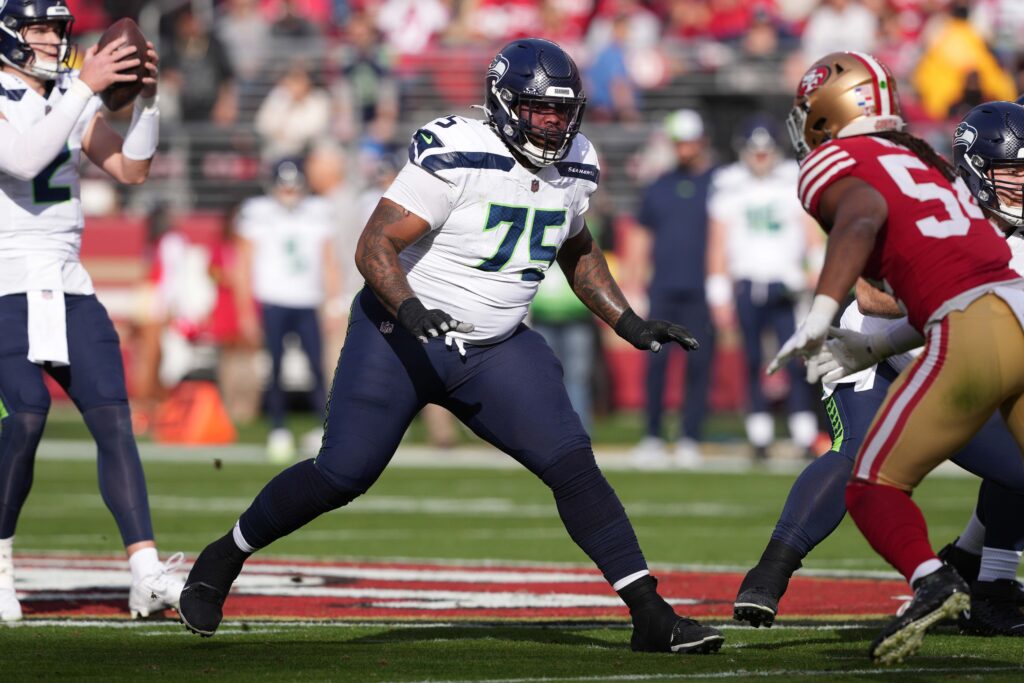
The Seahawks placed right guard Anthony Bradford on injured reserve Wednesday following hip and knee injuries that forced him to sit out Week 2's win over Arizona. Bradford will miss a minimum of four games—through Week 6—opening the starting role to internal competition between Beau Stephens and Mike Haynes, both of whom logged snaps in the Arizona game. The move signals Seattle's confidence in its depth but also introduces volatility in a unit that directly controls quarterback hit rates and window timing.
Bradford, a 335-pound veteran, has been a fixture in Seattle's run scheme and pass-protection assignments. His absence removes a known quantity from an offensive line already managing communication cadence early in the season. Stephens and Haynes both showed competence in limited action, but rotating starting guards mid-season typically creates timing disruption—especially in pass protection, where linebacker reads and coverage shifts depend on consistent pre-snap assignments. Seattle's offense runs through a Geno Smith–to–DK Metcalf rhythm that hinges on clean pockets. A guard rotation introduces marginal uncertainty in pass-blocking angles and chip assignments that don't show up immediately in box scores but compound in pressure rates.
Rodney Thomas, signed from the practice squad to fill Bradford's roster spot, is a depth safety who won't impact offensive line play directly. The real leverage sits with Seattle's passing volume and quarterback pressure exposure over the next four weeks. If Stephens and Haynes prove seamless in protection, the unit sustains efficiency. If communication breaks down or run-blocking suffers, Smith's time-to-throw extends, and defenses get more opportunities to generate sacks and quarterback hits. Seattle's Week 3 opponent and remaining schedule through Week 6 will tell whether this is a managed transition or an early-season pain point that bleeds into yardage and touchdown metrics.
For bettors, the frame matters. Seahawks team passing totals and Smith's individual yardage lines are now priced with baseline guard rotation risk already baked in—that happened at market open Wednesday. The edge isn't on overs just because depth changed; it's on whether Stephens or Haynes prove BETTER than Bradford in pass protection. If either starter reduces quarterback pressure below Bradford's season-average rate (a measurable shift in ESPN's Next Gen Stats data), Smith gets cleaner windows and completion rates and yardage climb. Conversely, if the rotation creates false steps or busted assignments, pressure spikes and Smith's lines compress. Monitor early Week 3 performance before locking multi-week plays; a dominant or disaster-level outing from the new starter will trigger sharp line adjustments before Week 4.