Lock's Game Plan: Conservative Ball Movement Signals Seattle's Turnover-First Framework
By Justin Erickson ·
Drew Lock's Week 1 relief appearance—short routes, zero turnovers, modest yardage—hints at the Seahawks' identity with Sam Darnold sidelined, and that game shape reshapes quarterback prop expectations for Week 2 against Arizona.
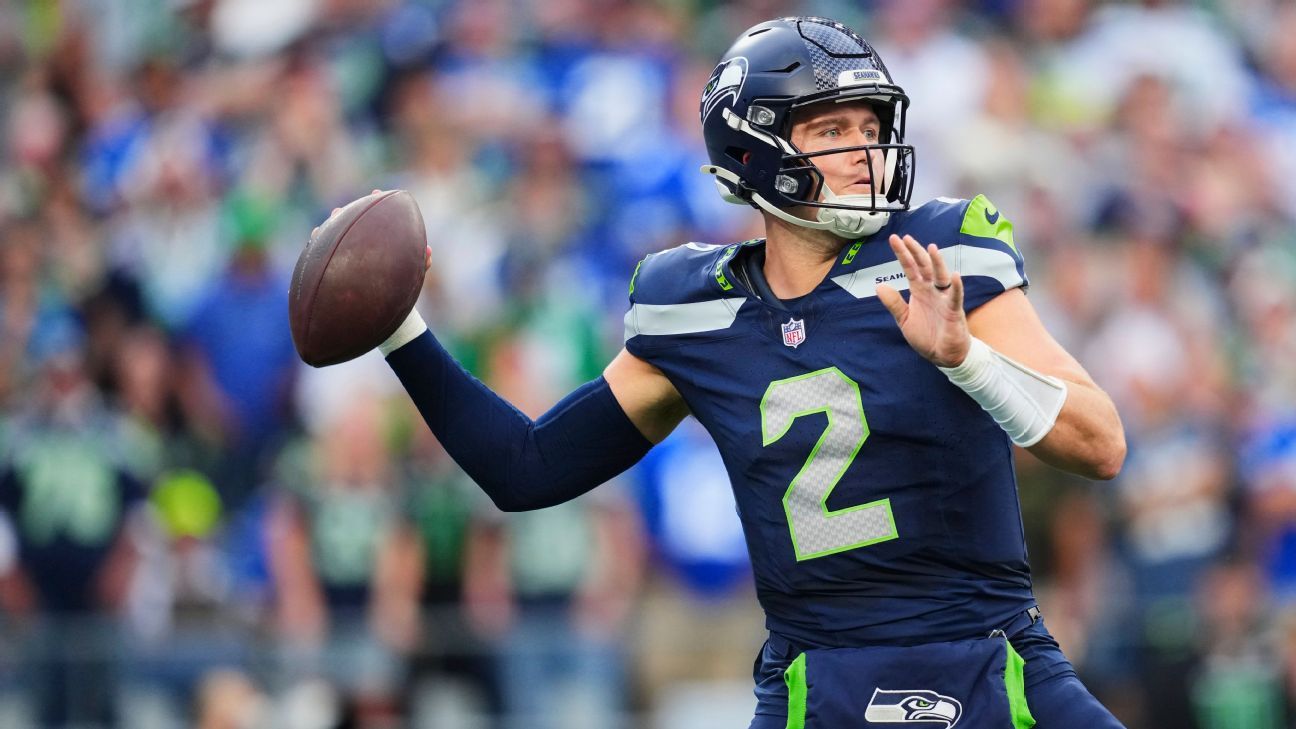
Drew Lock stepped in after Sam Darnold's glute injury ended Week 1 early, and the veteran backup delivered exactly what Seattle needed: a 13-10 win over New England with no turnovers. Lock completed 16 of 22 passes for 187 yards and one touchdown, operating a possession-heavy offense that prioritized ball security over volume. His average throw traveled just 6.0 yards past the line of scrimmage—25th among all Week 1 starters and 2.0 yards shorter than the QB median—a stark signal of Seattle's offensive philosophy when forced to pivot at quarterback.
Darnold remains sidelined (ruled out for Sunday's Arizona matchup but avoided injured reserve), which means Lock gets another start against a Cardinals defense ranked outside the top 10 in passing yards allowed. The Seahawks' framework, however, suggests Lock won't be asked to exploit that vulnerability through volume. Instead, coach Mike Macdonald is leaning into Seattle's elite defense—ranked first in scoring last season—and a gameplan built around turnovers and field position. Lock himself framed it clearly: "Taking care of the football" is the mandate, not pushing the ball downfield. That philosophy is not temporary; it's the team's stated approach to the position until Darnold returns.
The constraint here runs deeper than game script or matchup. Lock's efficiency metrics in that limited sample (72.7% completion rate, 8.5 yards per attempt, one TD and zero INTs) look clean in isolation, but the context matters—Seattle was content running short routes, leaning on Seahawks skill-position talent to generate yardage after the catch rather than demanding air yards from the pocket. Against Arizona, expect a similar recipe: short-to-intermediate progressions, run-game support, and a defense-first identity that doesn't require heroic passing volume from the backup.
For prop bettors, this reframes Lock's ceiling and floor. His passing yards total will likely be capped in the 200–230 range, far below what raw yardage lines might suggest given Arizona's defensive ranking. The touchdowns prop, meanwhile, carries elevated variance—one in limited volume makes him either a floor-play (conservative efficiency continues) or overdue (the math swings hard in Week 2). The real edge is fading any aggressive passing-yardage or touchdown-volume expectations pegged to "Arizona's weak secondary." Seattle's offensive identity under Macdonald is turnover avoidance first, big plays second. That hierarchy won't shift until Darnold is back.
The market will likely price Lock's yardage line assuming a standard Week 2 starter workload. But Seattle's game-management blueprint and Lock's own public comments signal a narrower band. Unders on his passing-yards prop carry value if the line sits at 230 or above; the mechanism—Seattle's conservative route trees and reliance on defense—is persistent, not a Week 1 anomaly. Pass-TD overs carry elevated risk; expect touches to flow through Seattle's receiving corps on shorter patterns, not vertical shots that generate touchdown opportunities.