Week 2 QB Carousel: Backup Thrust Creates Volatility in Pass-Game Props
By Ty Whitney ·
Three teams pivoting to backups after Week 1 injuries inject uncertainty into early-season passing markets when sharp money typically targets consistency.
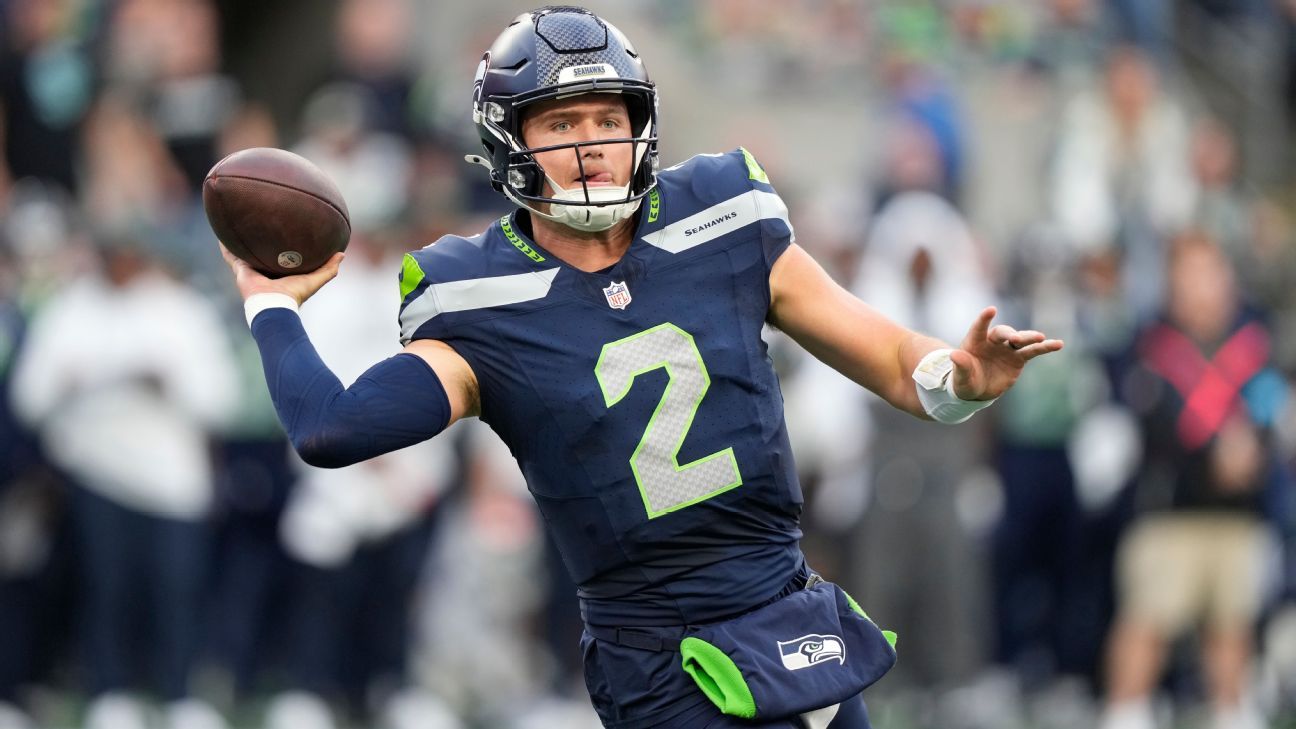
The 2026 NFL season's opening week delivered a trio of unexpected quarterback transitions. Seattle, Minnesota, and Atlanta all turned to backup signal-callers—with Atlanta reaching down to a third-stringer—forcing teams into unscheduled offensive reconstructions heading into Week 2. Per ESPN reporting, league insiders Fowler and Graziano have been canvassing sources to assess the durability and depth of these situations.
Backup quarterback play introduces a structural volatility that markets price in slowly. A team that loses its starter mid-week faces a 4-to-5-day adaptation window before kickoff, but books cannot simply widen passing-yards bands without telegraphing their uncertainty. Backup QBs historically complete 2-4% fewer passes and lose 15-25 yards per game in their first starts compared to season average; some of that gap narrows if the backup has previous starting experience or if a team's play-calling simplifies. The key variable for prop bettors: whether the backup's receiving corps was built for the starter's arm talent. If the scheme doesn't track the new quarterback's velocity and accuracy profile, target depths shrink and interception risk spikes. Atlanta's move to a third-stringer is the most extreme case and carries maximum downside volatility.
For Los Angeles, Week 1 losses by both the Rams and Chargers created a different kind of market dislocation. Bad results after strong offseason acquisitions tend to trigger two market moves: sharp money fades the losing team (covering defensive efficiency expectations), while public money chases the underperforming star players to "bounce back." This creates a mismatch. The Chargers' passing game, in particular, came into 2026 with upgrade expectations at receiver; if Week 1 execution was poor due to scheme integration rather than talent mismatch, Week 2 passing props could remain overvalued as the market assumes regression toward the pre-season forecast. Conversely, if the Rams' passing game showed scheme problems (not talent problems), their passing-yards totals may be genuinely too high entering a short week, creating an early fade opportunity.
The prop-betting mechanics here trace through two channels: (1) backup QB transitions narrow effective target depth and increase variance in completion percentage and yards per attempt, creating volatility for both passing-yards over lines (which assume starter-level efficiency) and receiving-yards for high-volume targets (who lose separation if the QB holds the ball longer or misses timing); (2) the LA teams' Week 1 failure to convert elite talent and capital investment into output leaves open the question of whether Week 2 lines price in scheme adjustment or assume correction. If adjustment is real, passing props for those teams trade rich. If it's just variance, they trade fair to cheap. The early intel from Fowler and Graziano's sourcing will telegraph which interpretation the sharps are pricing. Seattle and Minnesota situations are most acute for fading over passing-yards props on their backups in Week 2, given the typical 15-25 yard efficiency drop against fresh defenses.
Watch for line movement on Seahawks and Falcons passing totals in the first 24 hours post-news; that movement will tell you whether the public is already pricing backup discount or whether there's still an edge in underestimating the gap. Minnesota's situation may be cleaner if the backup has established experience. The Chargers and Rams passing props warrant skepticism if they're priced for continuity—they're not in continuity.