NFL · transaction
Gibbs Extension Signals Detroit's Commitment to Offensive Continuity
The Lions are moving toward a long-term deal with their lead back as Robinson and Taylor secure their own extensions, reshaping the 2026 RB market.
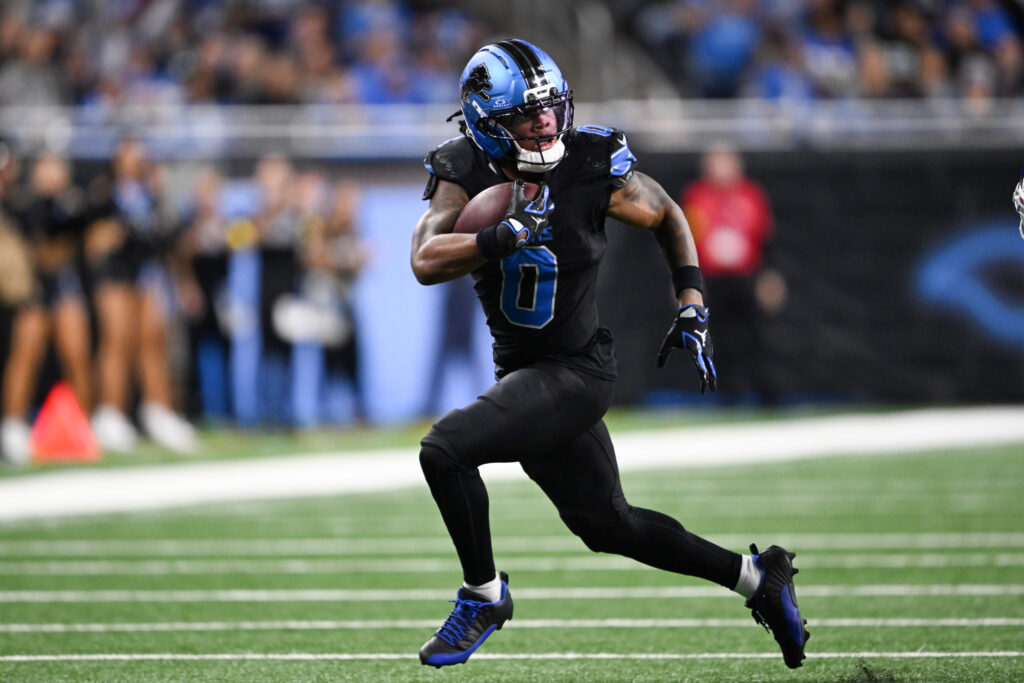
Jahmyr Gibbs stands as the final major running back to reach an extension agreement this offseason, with the Lions nearing terms on a deal that would lock in their primary ground threat beyond the current season. Bijan Robinson inked an agreement with Atlanta earlier this week, and Jonathan Taylor secured his third Colts contract on the same day, leaving Gibbs as the last domino in a tier-one RB extension cycle that has reshaped the market's floor for elite backs.
The Lions' push to extend Gibbs now—while he still carries a 2027 fifth-year option on his rookie deal—reflects Detroit's confidence in his health and production trajectory. Gibbs arrived in Detroit as part of the Kyle Campbell trade with Miami, and has emerged as a central piece of the Lions' run-game architecture. The franchise is signaling that it views him as a multi-year cornerstone of the offense, willing to absorb the incremental cost rather than risk free agency or another negotiation cycle in 12 months. For comparison, Robinson and Taylor both secured nine-figure commitments; wherever Gibbs' number lands, it will anchor the upper bound for mid-tier backs seeking second contracts.
For Detroit's offense, early extension stability can matter. Gibbs' availability and durability across a full season directly impacts Ben Johnson's play-calling flexibility and red-zone equity. A back handling 180+ touches in a season operates as both a ball-carrier and a receiver in that system, which means Gibbs' involvement on third-down and goal-line situations carries real leverage for pass-catchers and tight ends competing for volume. If Gibbs is locked in long-term, the Lions can confidently allocate touches without worrying about a mid-season holdout or negotiation distraction derailing the offense's rhythm.
From a betting standpoint, early clarity on backfield composition removes optionality from the market. Gibbs' receptions per game—he averaged 4.8 last season—become more predictable in a stable offense. If the extension includes guarantees that ensure he stays healthy and engaged through 2027 and beyond, his receiving floor in any given game becomes a more durable prop target than it would be under a lame-duck option year. Teams that front-load extensions for injury reasons sometimes see minute increases in late-game usage, which historically correlates with higher reception totals in blowouts and late-season rest situations. Detroit's early move also suggests confidence that Gibbs won't carry injury risk into the 2026 season—a signal the market hasn't fully priced.
The extension conversation also reshapes how oddsmakers will price Detroit's offensive ceiling this year. If Gibbs is fully committed and guaranteed money flows, his baseline snap count and touch allocation become more predictable. This matters for team total unders, which often hinge on whether a franchise commits to continuity or experiments with committee approaches. Detroit is choosing continuity, which typically drives higher efficiency and lower variance in scoring projections—less favorable for overs, but cleaner for props tied to individual workload.
NFL Intelligence — Football intelligence beyond the final score. Open NFL Intelligence →