Gibbs' Holdout Enters Week Two: What Robinson's Record Deal Means for Detroit's Cap Math
By Erik Schwartz ·
Bijan Robinson's $51M guaranteed extension sets a new market for elite backs, but Dan Campbell's calm demeanor masks real urgency—a Gibbs deal delayed is a Gibbs contract inflated.
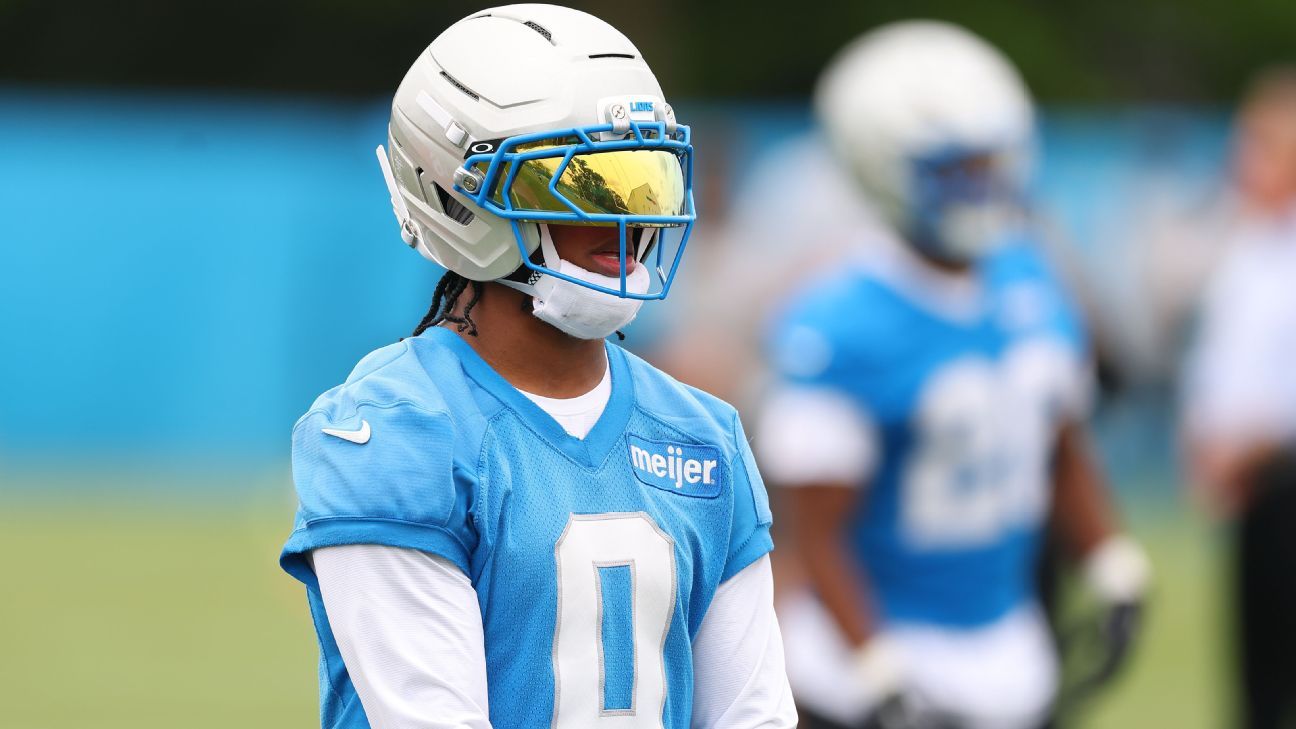
Jahmyr Gibbs has now missed five consecutive training camp practices, and the Robinson precedent just reshuffled the negotiating table. Atlanta locked up its star back Tuesday with a three-year extension anchored by $51 million guaranteed—the richest package ever given to a running back at the extension stage. Detroit coach Dan Campbell claims the deal is "certainly not gonna hurt" his team's talks with Gibbs, but that's the diplomatic answer. In contract markets, a fresh ceiling becomes the new floor. Gibbs' camp is watching Atlanta's move with the same intensity as bookmakers watching line movement at market open.
The framing matters here. Campbell is managing optics—he wants Gibbs back at practice and doesn't need to broadcast panic. Gibbs' own words are more telling. Asked directly if a new deal was a precondition for his return, he said "It's not about that" but immediately pivoted to non-answers. That's the language of someone whose agent just got handed a fresh $51M data point to argue with. Gibbs completed a conditioning test last week and has no structural injury, per Campbell; he's healthy enough to chat with Amon-Ra St. Brown and Jameson Williams on the sideline. This is a contract negotiation operating under the cover of a medical hold-in.
Gibbs' resume makes the Robinson comp feel low. He holds the NFL record for most touchdowns in a player's first three seasons (49 total). His dual-threat profile—elite route-running, 4.35-flat speed, lethal in space—belongs in a tier above most of his peers. Williams publicly stated Gibbs should be the league's highest-paid back; the film, not the stats, is the argument. Detroit paid a first-rounder to acquire him two years ago, signaling internal conviction that he's worth premium capital. That conviction is about to get tested at the negotiating table. A Robinson extension at $51M guaranteed effectively removes any argument for Gibbs to accept less. His agent will cite the Falcons' investment and demand parity or a premium. The risk for Detroit isn't that Gibbs walks—he's under contract through 2027—but that the deal eventually required to keep him balloons beyond what the market looked like two weeks ago.
For bettors, the prop leverage lies in Lions rushing volume. Gibbs' absence means increased workload for David Montgomery, whose upside is contingent on when (not if) Gibbs returns. Early preseason prop sheets may be pricing Robinson's market ceiling into Gibbs' expected 2026 production, assuming a late-August resolution. If this holdout stretches into September—uncommon but not impossible in extension disputes—Montgomery's carry load stabilizes higher, and Gibbs' early-season rushing yards and TD upside compress. Watch the camp calendar. If Gibbs is still absent by the final preseason game, expect public statements from Detroit acknowledging "lingering negotiations." That's code for a deal that's going to cost more than the initial projection. Take unders on Gibbs' first-game rushing props if his return date remains fluid past August 20. The Robinson anchor has already shifted the baseline; delayed Gibbs availability will shift the volume allocation next.
Campbell's relaxed tone can't hide the reality: Robinson just made Gibbs' next contract more expensive. Detroit will pay it—the question is how much extra.