NBA
Thunder's Bench Shooting Can't Sustain in San Antonio: Spurs Forced to Game 7
Oklahoma City has relied on historic outlier shooting from role players to survive the absence of Jalen Williams and Ajay Mitchell; the Spurs' home-court edge and defensive discipline flip the variance script in Game 6.
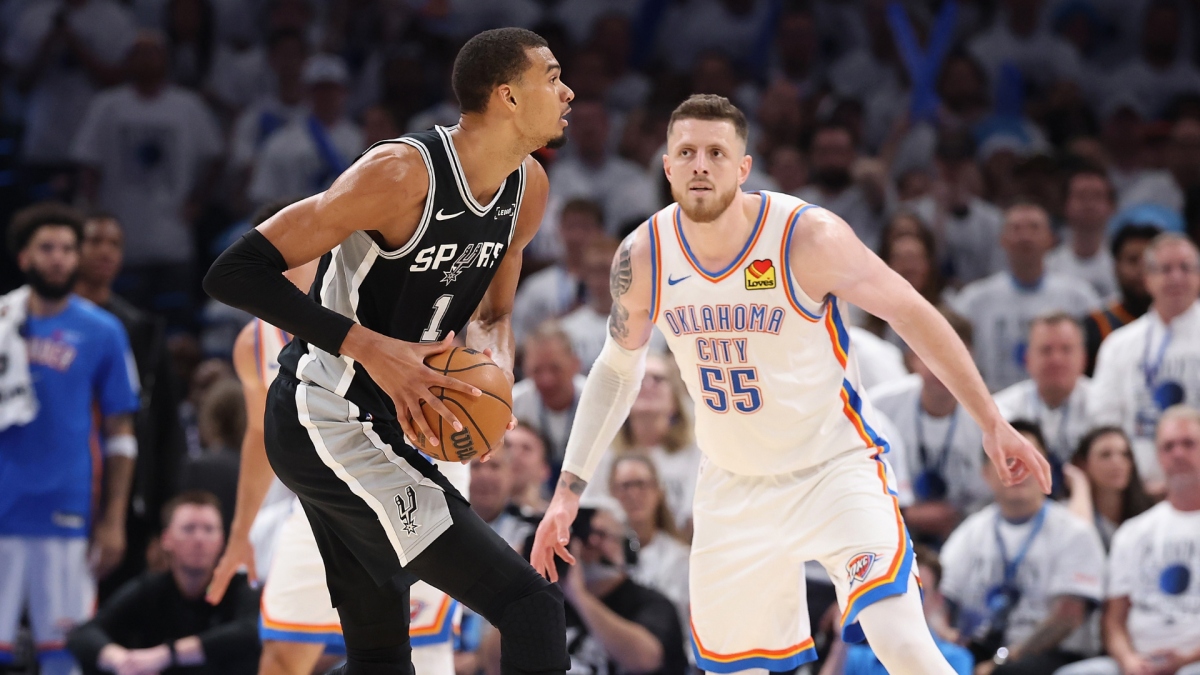
Oklahoma City arrives in San Antonio up 3-2 in the Western Conference Finals, one win away from a second consecutive Finals appearance. But the Thunder's path has narrowed considerably: Jalen Williams and Ajay Mitchell, their second and third primary shot creators, remain compromised, and the offense has pivoted toward a dangerous dependency on bench perimeter shooting that defies playoff history.
The math is stark. In Game 3, Oklahoma City's bench hit 14-of-29 from three (48%). In Game 5, they went 8-of-15 (53%). Those aren't sustainable margins in a seven-game series—they're upper-tail variance events. Alex Caruso's 58% three-point mark across this series is historically elite, the kind of output that corrects sharply within a small sample. Meanwhile, the Spurs shot just under 30% from deep in both road wins, suppressing their own variance while facing an opponent in flux. San Antonio demolished Oklahoma City 103-82 in Game 4 at the Frost Bank Center, holding the Thunder to 18% shooting from distance, a floor that becomes far more likely when role players return to hostile arenas without rhythm or preparation time.
Victor Wembanyama's Game 5 performance—a departure from his otherwise dynamic series presence—underscores a deeper current: San Antonio's defense tightens at home, and its half-court execution flows naturally in the Frost Bank Center. De'Aaron Fox and Dylan Harper, though managing injuries, operate in a familiar environment. The Spurs' interior defense, anchored by Wembanyama's length and switchability, will be magnified when the Thunder must hunt shots without their wing creation. Shai Gilgeous-Alexander remains the offense's engine, but isolation creation cannot replace the secondary playmaking that Williams and Mitchell provide.
For bettors, the price-in is incomplete. Spurs -3.5 reflects market uncertainty about home-court advantage and role-player variance, not the structural reality of Oklahoma City's offense collapsing once outlier shooting regresses. The under on 219.5 carries genuine value: the Thunder's bench will normalize toward 25-35% from three when forced to execute in an unfamiliar gym against a physical, switching Spurs defense. When both teams shoot closer to their season averages—not the high end of their playoff range—pace and spacing compress, and totals fall naturally into the 210-215 band. Game 4's 185 total was an outlier; 215-220 is the equilibrium when San Antonio's defense absorbs shot volume at home.
The Spurs will force Game 7. The Thunder's injury depth, combined with a bench reliance on unsustainable shooting percentages, cannot survive a return to the road against a fully-engaged home team. San Antonio's -3.5 closing line is a steal; the under on 219.5 is the sharper angle, but it will move quickly once public action recognizes that role-player shooting regression is mathematically certain, not speculative.