SGA's Efficiency Collapse Against Wembanyama Defense Reshapes OKC's Offseason Puzzle
By PropBetEdge Editorial Team ·
Shai Gilgeous-Alexander's shooting splits cratered in a Game 7 loss to San Antonio, exposing a structural weakness that will haunt Thunder prop pricing all offseason.
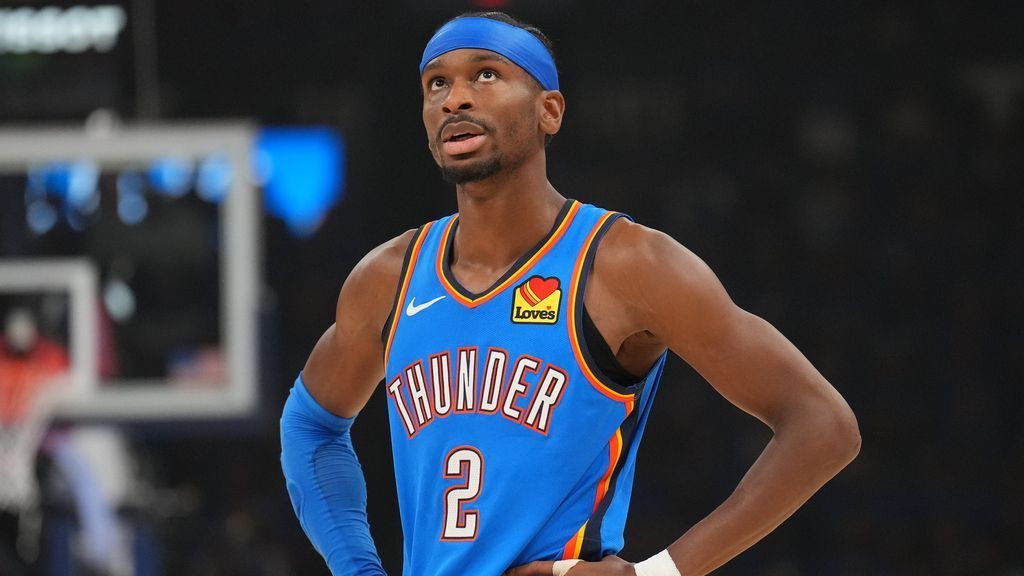
Shai Gilgeous-Alexander won his second straight MVP award, then called his season a failure. The Thunder fell to the Spurs in seven games—an upset that hinged on one defensive scheme: San Antonio funneled every offensive action toward Victor Wembanyama, forcing Gilgeous-Alexander into heavily contested midrange attempts while cutting off his drive-and-kick opportunities. The result was brutal. His regular-season shooting line (31.1 PPG on 55.3% FG, 38.6% from three) collapsed to 25.9 PPG on 40.9% FG and 28.6% from three across the series, a 14.2-percentage-point drop in field-goal efficiency despite winning playoff accolades.
The context is critical: Jalen Williams, Oklahoma City's second scoring option and primary floor-spacing wing, appeared in only 54 minutes across seven games due to a left hamstring aggravation. Ajay Mitchell, the backup point guard, was unavailable for stretches. Without secondary scoring to punish overhelp or create scoring gravity elsewhere, San Antonio's defense became a one-man closing mechanism—Wembanyama on the backline, Stephon Castle pestering the ball-handler, and a collapsed paint that made mid-range floaters the only available real estate. Gilgeous-Alexander's 35-point Game 7 (on 21 shots) masked the underlying inefficiency; he was working harder for every bucket against a coordinated defensive wall.
The playoff exposure matters for offseason wagering. Teams now have a tactical blueprint: load the weak side, protect the rim with an elite defender, and force Gilgeous-Alexander into mid-range creation. That's not a personnel issue unique to San Antonio—it's a scheme that any competent coaching staff can run. The Thunder's front office must address secondary creation and shooting. If they don't, opposing defenses will employ the same template next season, and Gilgeous-Alexander's scoring efficiency will carry a ceiling he didn't face in the regular season.
For prop bettors, this creates a specific angle heading into next season: Gilgeous-Alexander's points totals will likely open higher than they should, anchored to his MVP-year regular-season average of 31.1 PPG. But the playoff sample—however painful for the Thunder—is now part of the evaluation. Markets typically underweight defensive scheme shifts because they require film study; books price based on season-long volume. If Oklahoma City fails to upgrade wing creation and spacing, expect a 2-3 PPG compression on Gilgeous-Alexander's totals by November, as sharp action recognizes that the Spurs' defensive blueprint will be replicated. Early-season overs on his point total at 30+ PPG carry risk, particularly in matchups against teams that can field a rim-protecting big and wing defenders. The edge is visible now, before the market fully adjusts to the new defensive ceiling.
Gilgeous-Alexander's own comments—that he "failed" and will "learn the most"—suggest the Thunder will pursue meaningful additions. If they land a legitimate second creator, the angle fades, and his scoring efficiency returns closer to 54% FG. But if the offseason passes without an upgrade to backcourt creation or wing spacing, the playoff defense becomes repeatable, and the prop compression becomes inevitable.