Thunder's Repeat Bid Derailed by Spurs in Game 7; Injuries Expose Offensive Brittleness
By PropBetEdge Editorial Team ·
Oklahoma City's depth collapse against San Antonio reveals a structural weakness that will haunt their offseason—and reshape how books should price their guards next season.
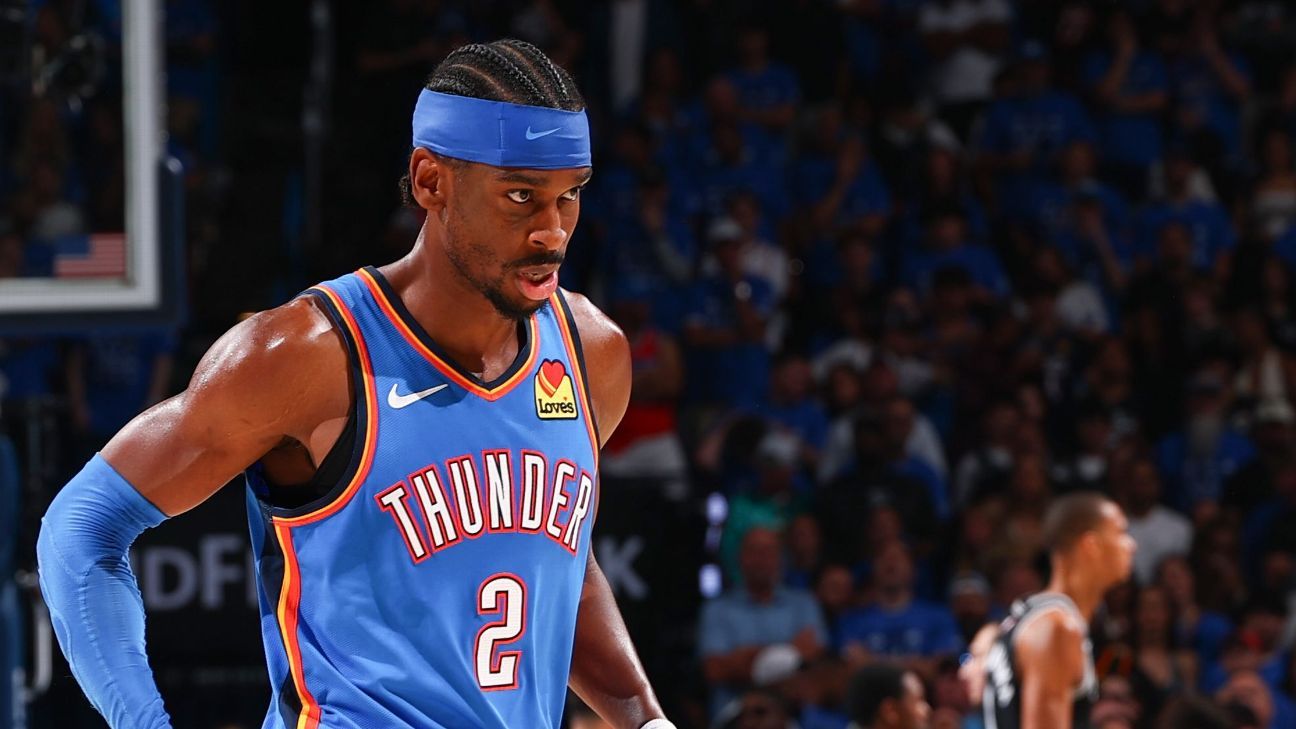
Victor Wembanyama and the San Antonio Spurs ended the Thunder's championship reign with a 111-103 Game 7 victory in the Western Conference Finals, advancing to face the Knicks for the title. The result itself carries less weight than the mechanism behind it: Oklahoma City entered the series as the league's most talented roster by regular-season record (64-18), yet lost primarily because injuries to Jalen Williams and Ajay Mitchell collapsed their offensive architecture into a one-man isolation offense run entirely through Shai Gilgeous-Alexander.
The injury sequence mattered more than the final scoreline. Williams aggravated a left hamstring in Game 2 and played only 10 total minutes across the remaining five games. Mitchell—the primary engine that had carried the offense in the second round against the Lakers—suffered a calf strain in Game 3 and never returned. With both creators sidelined, Gilgeous-Alexander faced a Spurs defense specifically built to lock down high-volume iso scorers. The result was predictable: Gilgeous-Alexander shot below 40% from the floor in four straight games, and the Thunder's offense devolved into mid-range pull-ups and contested threes. Game 7 was the exception—Gilgeous-Alexander went 12-of-21 with 35 points and nine assists—but even a 35-point Game 7 effort wasn't enough when no one else could create offensive chaos.
This loss exposes a real structural question for next season. The Thunder built their identity on multi-creator versatility: Gilgeous-Alexander, Williams, Mitchell, and role men like Luguentz Dort all capable of generating their own offense or running the pick-and-roll. Against the Spurs' switching, layering defense, that versatility was supposed to create mismatches that the Thunder could exploit. Instead, the absence of two creators made the system brittle. Gilgeous-Alexander became readable—defenders knew every possession would run through him—and even a 64-win team can't overcome that much offensive isolation.
For prop bettors, the lesson cuts across multiple angles. Gilgeous-Alexander's assists prop will likely be repriced lower for next season's regular-season lines because the Thunder clearly cannot sustain their ball-movement offense when key creators go down. His scoring volume should also be reassessed downward; a team that loses Game 7 with its star player forced into 36+ usage rates has a fundamental depth problem. Williams' health becomes a hard cap on Thunder upside—if he's injury-prone (the hamstring flared twice in one series), his overs on combo props become liability bets when you can't predict his availability. More broadly, any Thunder team total overs next season should arrive with a health-adjusted floor baked in. The regular-season record masked how thin the actual offensive rotation was. Books will likely price Thunder win totals and player props as if the roster is deeper than it actually is, which creates an underlay on overs across the board until the team demonstrates it has genuinely addressed the second-creation problem.
Gilgeous-Alexander's post-game comments—"try to get over the hump"—signal that the front office understands the issue. But understanding a problem and solving it are different propositions. The Spurs proved they're a structural match for Oklahoma City, winning four of five regular-season meetings and beating them twice in the playoffs. Next season, when the Thunder are priced as a 65-win contender again, remember that this Game 7 loss happened because two rotational players went down. That fragility will price into every player prop that depends on supporting cast health.