NBA · roster-move
LeBron's Free Agency Freeze Is Cascading Through the Market—and It's Creating Prop Volatility
The Lakers' roster construction hinges on LeBron James's decision, and the uncertainty is rippling through wing and center valuations league-wide.
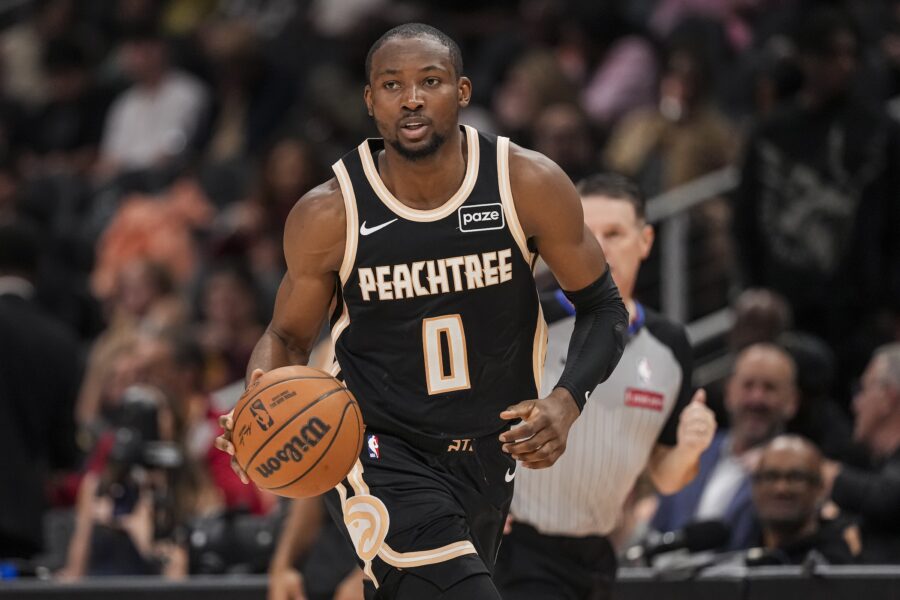
LeBron James has not yet made his free agency decision, and the delay is creating a bottleneck that extends far beyond Los Angeles. Per Marc Stein and Jake Fischer, the Lakers are actively pursuing Jonathan Kuminga as a wing complement, but multiple contenders—Cleveland, Milwaukee, Atlanta—are holding their own moves hostage waiting to see whether James re-signs or leaves. This is not a minor front-office coordination problem; it is a structural drag on market pricing across three position groups: wings, centers, and combo roles that could fit either category.
The Kuminga situation exemplifies the cascade. Atlanta declined his $24.3MM team option on Monday (July 1), placing him in free agency as a restricted free agent, but the Hawks remain interested in a sign-and-trade. Cleveland—with Kenny Atkinson, who has prior experience working with Kuminga from his Golden State assistant days—would like to add him, but the Cavaliers refuse to commit until they know whether LeBron is coming. The Lakers, meanwhile, are treating Kuminga as a priority, which could displace their ability to keep Rui Hachimura. This is a three-way chess match disguised as free agency, and all three teams are playing in real time. Meanwhile, Kuminga himself has leverage he would not normally possess: any uncertainty about where his suitors will land translates into a bargaining chip he can deploy against each rival.
On the center front, LA's acquisition calculus fractured overnight. After trading DeAndre Ayton to Washington on Friday (July 3), the Lakers pivoted immediately to depth. Andre Drummond, a veteran they were monitoring, agreed to a deal with New York later that same day. The remaining targets—Kevon Looney (New Orleans), Jonas Valanciunas (Denver, on a salary with only $2MM guaranteed through July 8)—are secondary options, which suggests LA is comfortable with less marquee reinforcement if LeBron re-ups. The Knicks, by contrast, are treating big-man depth as a near-term competitive necessity and are cross-shopping Moussa Diabate (Charlotte, $2.5MM expiring) and Looney as apron-friendly fill-ins.
The prop betting implications are real but time-sensitive. Kuminga's minutes, scoring, and assist volume will be entirely dependent on landing spot—Lakers usage patterns diverge sharply from Hawks or Cavaliers. A Lakers Kuminga would operate in a more efficient secondary role (15–18 PPG range with lower usage); a Cavaliers Kuminga could see 20+ PPG usage in a higher-volume perimeter system. Until LeBron decides, any prop market pricing Kuminga is trading on partial information, making overs and unders on his season totals volatile and prone to sharp repricing the moment James announces. Center props—particularly for Looney or Valanciunas—carry similar binary risk: one signing could mean 20+ MPG and a team-total over play; another could reduce them to 8–10 minutes off the bench. The books know this uncertainty exists, which is why early-posted lines on these players are typically wider (higher juice) than usual. The real edge here is not in betting the outcome now; it is in waiting until the LeBron announcement to lock in the repriced lines once the market's uncertainty premium evaporates.
Washington's acquisition of Ayton should be read as a two-big lineups expansion play, not as a flag for an Anthony Davis trade. The Wizards intend to pair Ayton with Alex Sarr and Anthony Davis in frontcourt rotations. This does not move any AD needle directly, but it does suggest Washington is not in the market for a third star, which reduces trade-floor chatter and stabilizes AD's own prop expectations. For bettors tracking Davis totals (PPG, RPG, assists), this removes one layer of destabilization risk.