Kuminga's Sign-and-Trade Stalemate Tests Three Contenders' Deadline Creativity
By Justin Erickson ·
Jonathan Kuminga remains unsigned as Cleveland, Los Angeles, and Atlanta circle without agreement on terms or assets—a delay that could reshape lineup construction for three title contenders and shift usage patterns by season start.
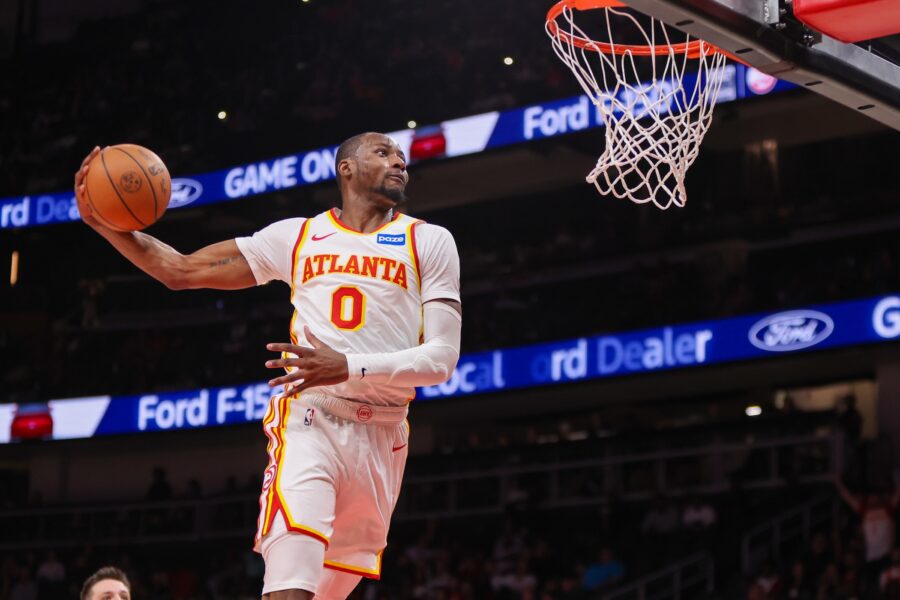
Jonathan Kuminga is still unsigned as free agency enters late July, and the impasse tells a clearer story than any single team's bid. Per Jake Fischer's reporting, Cleveland continues its pursuit of the 22-year-old wing despite adding Mario Hezonja, but cannot construct a sign-and-trade package the Hawks find compelling. The Lakers view Kuminga as a potential starter and remain engaged, yet talks have stalled over contract structure—Kuminga is refusing to be "boxed into" a three-year deal with unfavorable terms, and any sign-and-trade is statutorily required to run at least three years. Atlanta's leverage lies in Jarrett Allen, whom the Hawks covet but the Cavaliers show no appetite to move, leaving Cleveland unable to sweeten a Kuminga offer that Hawks GM Landry Fields might actually consider.
The mechanical roadblock is straightforward: Kuminga holds the asset power in this negotiation despite being unsigned. He and his representation know the Lakers remain interested as a starter candidate, which gives them floor-setting leverage against Cleveland's mid-level intensity. The Hawks, meanwhile, would prefer Allen's youth and defensive ceiling to salary-dump candidates like Max Strus or Dennis Schröder. Cleveland's reluctance to surrender draft capital to move either guard, combined with their unwillingness to part with Allen, has created genuine gridlock. The longer Kuminga remains in free agency, the more likely one of three scenarios unfolds: Cleveland pivots to a different wing target, the Lakers agree to Kuminga's preferred structure, or Atlanta loses leverage and accepts a less-appealing Cavs offer by early August.
The Hawks' interest in a Jarred Vanderbilt swap with the Lakers has gained no traction—Fischer reports the two franchises have not engaged in "meaningful" negotiations—which removes a potential third-party arbitrage route. This matters for lineup construction across all three teams. Cleveland still views itself as a Finals contender even without Kuminga; adding a wing on a shorter, cheaper deal (Hezonja) suggests they're comfortable with their current depth. The Lakers need Kuminga as a starter-level wing to round out their depth chart alongside LeBron James and their other offseason moves. Atlanta's posture is purely acquisitional—they want to improve rather than shed salary, which is why Allen holds more appeal than a cost-cutting trade.
For betting purposes, the stalemate's resolution carries indirect but measurable implications for player usage once the season tips. If Kuminga lands in Cleveland, he enters a rotation already featuring Donovan Mitchell, Evan Mobley, and Jarrett Allen—likely a sixth-man or small-ball wing role off the bench. If he reaches Los Angeles, he plays starter minutes and sees a heavier offensive diet. If talks collapse and he signs a shorter-term deal elsewhere, both teams adjust their depth-chart expectations downward. The Hawks' pursuit of Allen is particularly telling: it signals they envision a timeline where Trae Young operates in a more traditional point-guard role, with Allen as a vertical spacer and defense anchor. Until Kuminga signs, projection uncertainty on these three rosters' assist, rebound, and scoring distributions remains elevated. Scouts and sharp oddsmakers are pricing this uncertainty into season-opening lines, but once the signing occurs—expected within days or a week—one of these teams will face immediate line adjustments based on newfound rotation clarity.