Harden's Cavs Extension Clears the Path—and Solves Cleveland's Salary Problem
By Ty Whitney ·
James Harden is signing a multi-year deal to stay in Cleveland, removing the last roster uncertainty and giving the Cavaliers the cap flexibility they need to chase upgrades.
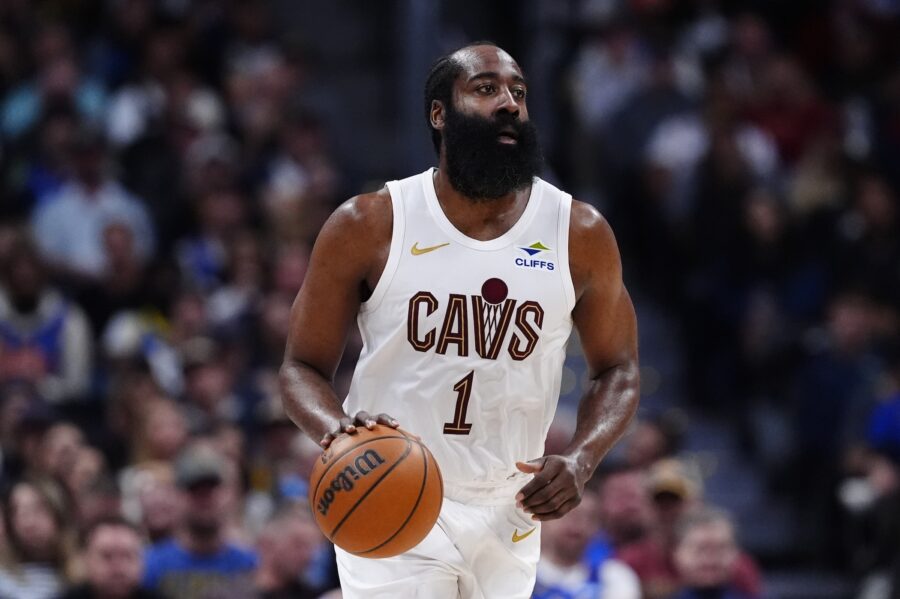
James Harden declined his $42.3 million player option in late June with a concrete understanding: Cleveland would reward him with a longer-term contract that locks him in as the franchise's co-star. That extension is now imminent, sources indicate, and it serves a dual purpose—stability for Harden and crucial salary-cap maneuvering for a team that failed to improve after being swept by New York in the Eastern Conference finals.
The LeBron James free-agency circus obscured a harder truth: the Cavaliers' core wasn't addressed. James ultimately chose to reunite with Kyrie Irving elsewhere, a decision framed publicly as roster fatigue but rooted in something more specific. Siegel's reporting suggests that the Cavs' refusal to trade Evan Mobley for Jaylen Brown—a deal that might have shifted the franchise's trajectory—cost them a generational player. The verdict from LeBron's camp was blunt: this roster, minus Dean Wade and Keon Ellis, looks too familiar. Harden stays, but the organization's window is narrowing unless they act.
Now comes the recalibration. A two- or three-year Harden deal structured at the right AAV opens the second apron for trades. The Cavs have identified Jonathan Kuminga as a target—the Hawks have him in sign-and-trade territory, with Kuminga seeking $14–18 million annually. Dennis Schröder, valued at $14.8 million this season and $15.5 million in 2027–28, is Cleveland's most tradeable chip. The Cavs' confidence in second-round pick Meleek Thomas, who earned first-team All-Summer League honors as a combo guard, suggests they view Schröder as redundant. Cameron Johnson (Denver) remained too expensive; Herbert Jones (New Orleans) carries an "exceptionally high" asking price. Kuminga is the realistic swing target.
From a prop perspective, Harden's contract length reshapes his usage trajectory. A two- or three-year extension signals the Cavs expect him to remain an offensive centerpiece—drives, pullups, playmaking—without the load-management uncertainty that haunted his final years in other markets. If Kuminga lands in Cleveland, Harden's assist volume could compress slightly as a younger, more mobile wing handles secondary creation duties, but his points and three-point attempts should hold steady or increase given the team's offensive reorientation around perimeter scoring. The near-term prop universe for Harden remains stable; the real shift arrives if the Cavs finalize a Kuminga deal within the next two weeks, which would signal a team doubling down on spacing and wing depth rather than interior dominance.
The broader Cavs bet: this summer's trades and signings will telegraph whether Cleveland is chasing parity or a contender's peak. Harden signing long-term is table stakes. Who joins him determines whether his assist and point totals trend up or sideways into another quiet playoff run.