NBA
Cavs Face Historical Odds Down 2-0, But Shooting Correction Opens a Prop Edge
Cleveland's offensive process was sound in Game 2 despite a 16-point loss; if they tighten three-point shooting, the margin compresses fast enough to trigger series props before the market reprices the comeback risk.
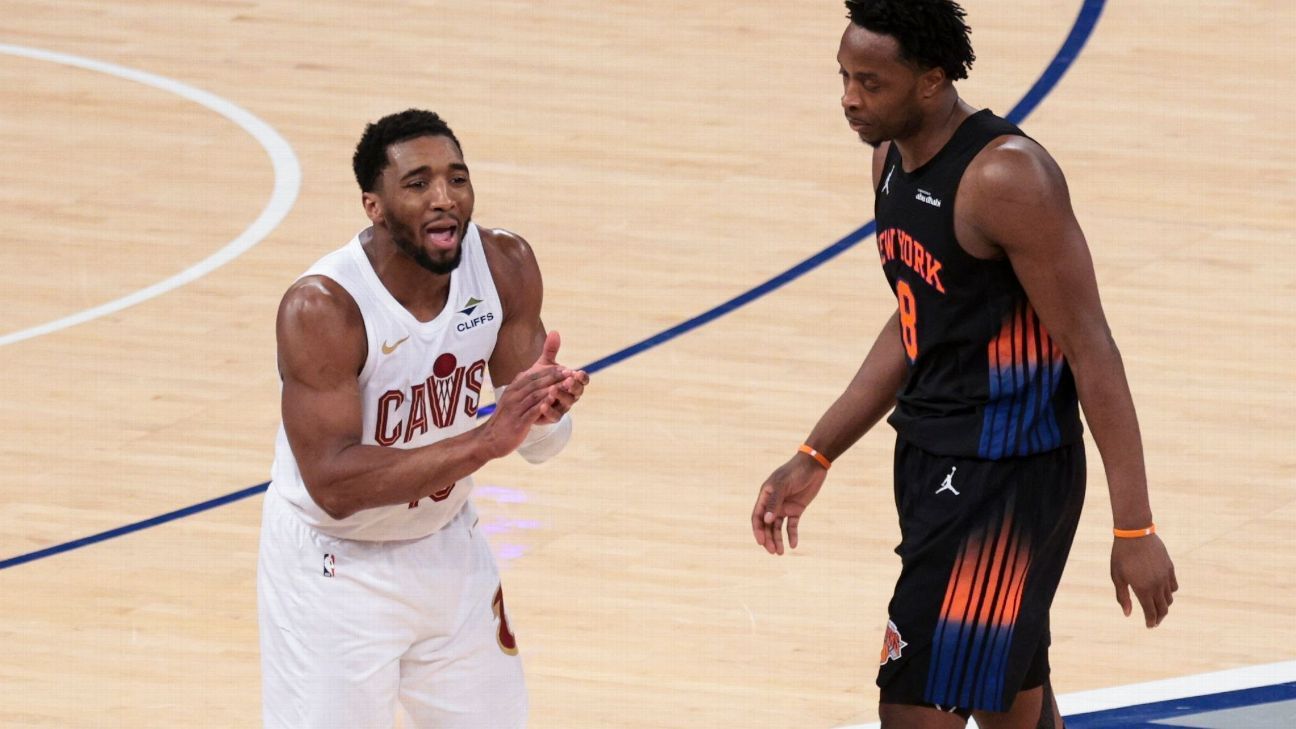
The Cleveland Cavaliers fell 109-93 to the New York Knicks in Game 2 of the Eastern Conference Finals on Thursday, dropping into a 2-0 hole that looks cavernous on paper. Only two teams in NBA history have clawed back from multiple 2-0 deficits in a single postseason—the 2020-21 Milwaukee Bucks (who won the title) and the 2020-21 LA Clippers (who lost in the conference finals). Yet inside Cleveland's loss lives a specific technical failure that, if corrected, dramatically shifts the series trajectory and the math behind series-price betting.
The Cavs shot 9-for-26 from three-point range (34.6%) in Game 2, a collapse that contradicts their season identity and masked an offense that flowed cleanly otherwise. Coach Kenny Atkinson and Donovan Mitchell both emphasized the same point postgame: the process was right. The team generated open looks. The conversion simply didn't follow. Cleveland's season three-point rate sits at 38.2%, and their playoff average through Game 2 is 36.1%—both well above Thursday's shooting percentage. This is the opposite of a systemic failure; it's variance compressing toward the mean, not away from it. The margin in Game 2 was 16 points. Subtract four or five made threes—realistic regression to season norm—and the final score reads 101-93 or 98-93. That's a four to seven-point swing in a single game, and it changes every series-level prop calculation.
The Knicks' defensive scheme hasn't fundamentally shifted between Game 1 and Game 2. They've continued to switch aggressively and live with corner threes, a coverage that Cleveland can exploit if the shot-makers simply connect at their historical rate. Jarrett Allen noted the team's comfort with adversity—they've played two Game 7s already this postseason—and that institutional familiarity matters for series momentum. The narrative that the Cavs are "out of it" after Game 2 is premature because it's rooted in shooting variance, not scheme or player failure.
For prop betting, this creates a durable edge on series prices and Cleveland's game-by-game team totals over the next two games. The market has likely adjusted the Cavs' team total downward after a 93-point outing, potentially pricing them around 99-101 for Game 3 at home. But their season offensive rating is 115.2 points per 100 possessions; their Game 2 pace-neutral output was closer to 110-111, dragged down purely by three-point shooting. If Cleveland hits threes at 37-38% in Game 3 (their recent floor), they eclipse 108 points in a home game against a Knicks defense that has shown vulnerability to high-volume, pace-and-space offenses. The line movement from Thursday to Friday will be marginal because the box score looks dire. The mechanism—a pure shooting miss, not a systemic breakdown—hasn't yet been priced by the broader market.
Series-level props also tighten. The Knicks' series price likely extended after Game 2, but if Cleveland wins Game 3 at home (a 47-50% probability if three-point shooting normalizes), the series swings back to a near-toss-up or slight Knicks edge. Books haven't yet fully weighted the correlation between Game 2's shooting miss and the elevated likelihood of a Game 3 correction. That edge is persistent over the next 48 hours, then fades as the market reprices the Cavs' actual comeback probability. Play it early.