Hart's Breakout Game Exposes Cavs' Perimeter Defense; Knicks One Win From Finals
By Erik Schwartz ·
Josh Hart's 26-point playoff career-high and an 18-0 third-quarter run have the Knicks one victory away from the Finals, but the Cavaliers' Game 3 desperation and Hart's shooting variance create a sharper prop angle than the headlines suggest.
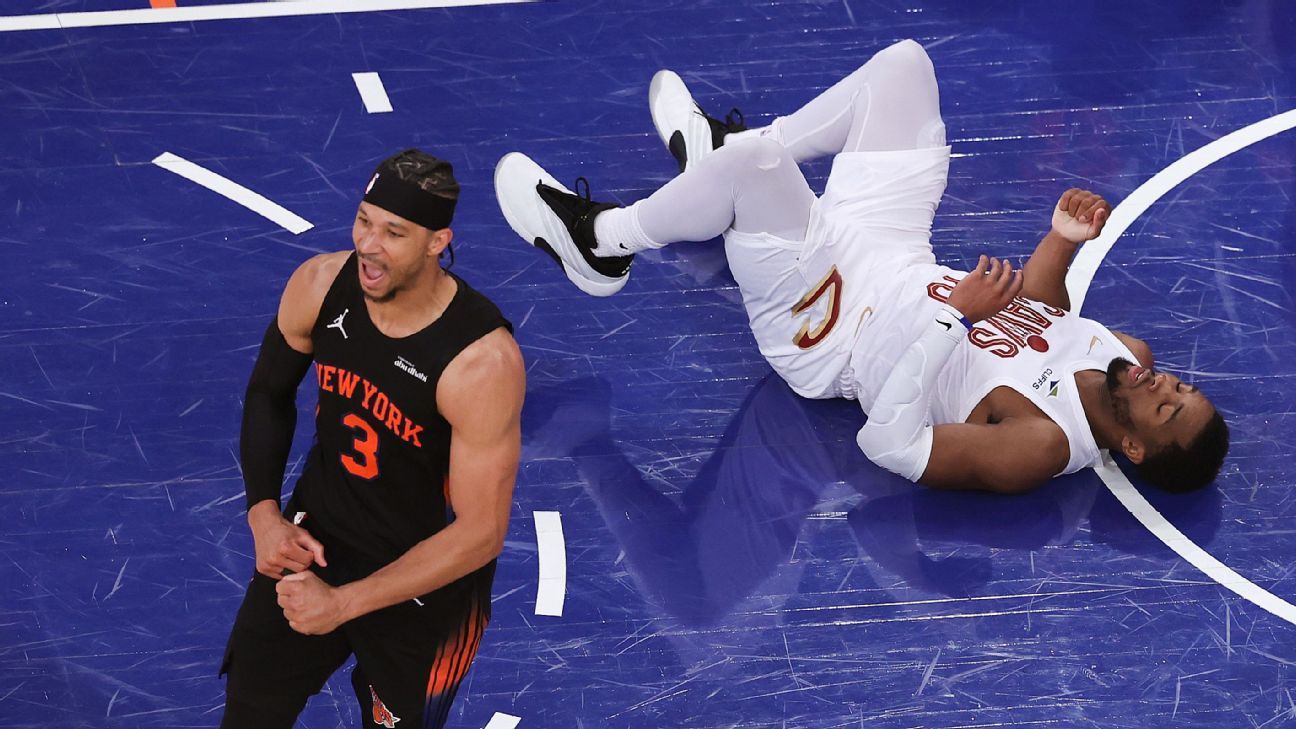
The Knicks dispatched the Cavaliers 109-93 in Game 2 of the Eastern Conference Finals, moving one win away from their first championship round appearance since 1999. Josh Hart led the charge with a playoff career-high 26 points, Jalen Brunson orchestrated 14 assists, and an 18-0 third-quarter run converted what could have been a competitive series into what looks like a coronation. New York extended its postseason winning streak to nine games—the longest since Boston's 2024 title run—and crowd chants of "Knicks in four" filled Madison Square Garden in the closing minutes.
But the mechanics of Hart's explosion and the Cavaliers' defensive approach tell a more complicated story. The Knicks' forward was benched in Game 1's clutch moments despite New York's comeback win, playing only three combined minutes in the fourth quarter and overtime. The Cavaliers, reading that tape, appeared to construct a Game 2 game plan that left Hart open on the perimeter—a calculated gamble to pack the paint and dare him to shoot over contested looks. Hart punished them, but that strategy reflects a team in crisis: Cleveland has now fallen into 2-0 holes in consecutive playoff rounds. The precedent is grim. Only twice since the NBA's modern era began have teams recovered from multiple 2-0 deficits in a single postseason (2020-21 Bucks and Clippers), and both required extraordinary circumstance. The Cavaliers, despite Donovan Mitchell's 26 points and James Harden's 18, lack the depth to manufacture that miracle.
Hart's 26-point game is the headline, but it's also the variance play. Over this nine-game winning streak, Hart has functioned as a third scoring option behind Brunson and Mikal Bridges, not a primary scorer. His season scoring average sits at 11.2 points per game; a 26-point playoff outing is an outlier created by the Cavaliers' specific perimeter-gamble defense. Game 3 in Cleveland will feature a team playing with survival desperation, and defensive schemes built on panic rarely repeat. The Cavs will tighten their perimeter coverage, contest Hart more aggressively, and force him back into the role that won them nine straight games—movement player and floor-spacer, not primary bucket-getter.
For bettors, Hart's individual point total carries elevated variance heading into Game 3. The market may price his Game 2 performance as a permanent elevation in his output, but the causal mechanism—Cleveland's intentional abandonment of perimeter defense—won't persist. Hart's assists and three-pointers made present more sustainable edges, as do Brunson's assist props (14 dimes in Game 2 on a team operating with clean spacing and rhythm). The sharper angle is fading Hart's total if it moves above 16-17 points in early Game 3 action; the floor beneath that number carries more fundamental support. Brunson's assists prop, by contrast, becomes more reliable the further the Knicks extend their lead, and Madison Square Garden's desperation mentality (down 2-0, one loss from elimination for Cleveland) typically produces early bench rotations that collapse interior defenses into easier pick-and-roll conversions.