MLB · transaction
Lombard and Ramos Give Yankees Fresh Offensive Weapons at the Deadline
New York's trade-deadline acquisitions debut Tuesday with both in the lineup, but lineup construction questions linger around their true offensive ceiling in pinstripes.
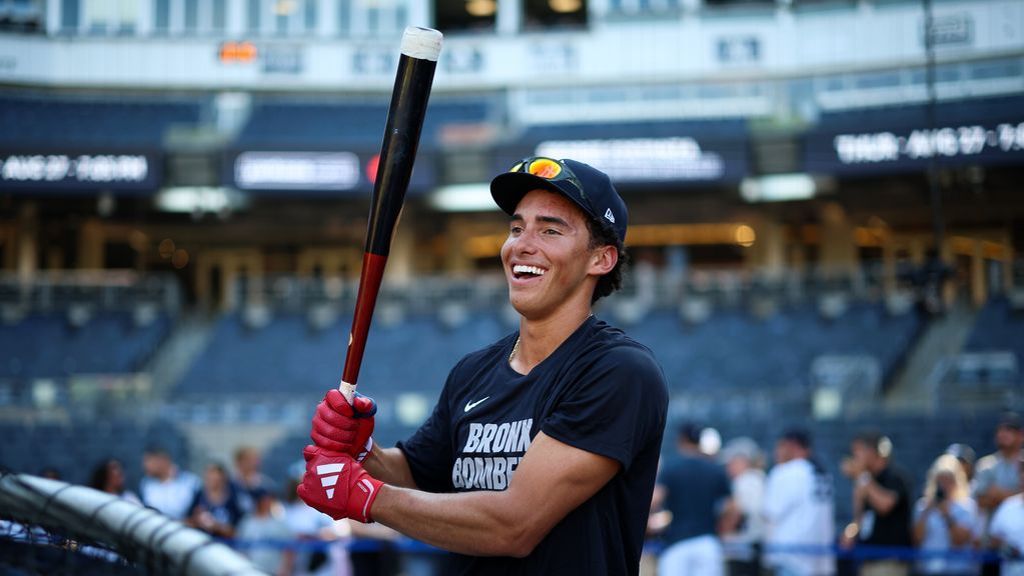
George Lombard Jr. and Heliot Ramos both entered the Yankees lineup on Tuesday night against St. Louis, arriving through separate paths but with a shared mandate: bolster a lineup that had stalled in the second half. Lombard, New York's 2023 first-round pick, was called up directly from Triple-A Scranton/Wilkes Barre after the organization held firm on his trade value when Detroit and Baltimore pursued him for Tarik Skubal and Adley Rutschman. Ramos came via trade from San Francisco, where he was performing below the offensive bar expected of a veteran outfielder in a contending window.
Lombard's pedigree is real, if incomplete. He entered this season hitting .312 across 20 games at Double-A Somerset before a promotion to Triple-A, where he cycled through a left-finger injury that cost him nearly a month. That injury context matters: he returned to post a .377 average over his final 14 games at Scranton, including a 4-for-5 night with three RBIs against Iowa on Sunday. Manager Aaron Boone's framing—"checked a lot of boxes" and "continued to get better throughout the year"—reflects prospect momentum, but minor-league performance against Triple-A pitching is a different animal than AL East righties. Batting eighth as the designated shortstop on debut is a measured introduction, not a confirmation that the 23-year-old can sustain big-league production.
Ramos carries a more troubling profile. He posted a .264 mark with nine homers and 34 RBIs across 74 games for the Giants—a 94 wRC+ that screams misalignment with his cost and opportunity. His lone defensive plus comes via left-field stability: 111 chances without an error after committing nine miscues there last season. But offensive regression doesn't reverse through a uniform change. Ramos hit fourth in his Yankees debut, signaling the organization's optimism around fresh context and presumably a fuller at-bat allocation. That bet has foundation only if park factors or lineup construction shift his plate approach. AT&T Park is a hitter's graveyard; Yankee Stadium favors righties primarily, and Ramos bats from the left. The park upgrade exists, but it's marginal.
For prop construction, neither addition reshapes the Yankees' offensive ceiling in a way that moves aggregate team totals significantly. Lombard is a replacement for Anthony Volpe (optioned to Triple-A), a depleted shortstop who dragged on offensive production all season; the upgrade exists but carries downside risk if the prospect struggles against velocity. Ramos replaces depth outfielders in the rotation—there's an offensive uptick, but not the kind that transforms 4.5-run team totals into consensus overs. The more durable angle concerns Lombard's strikeout profile in the majors. Minor-league strikeout rates of 20-24% are survivable at Double-A but spike when facing 95-98 mph fastballs he hasn't faced consistently. If Lombard's K rate climbs to 28-32% (a realistic regression band for young shortstops adjusting to MLB velocity), the Yankees' team K total as a collection of hitters tilts toward elevated run-per-inning risk. Watch his first 10 at-bats against division starters; if he chases below the zone on off-speed pitches, that pattern will persist into prop pricing.
The deadline market priced in these moves with full knowledge of both players' limited 2026 track records. Lombard's retention value was publicly debated; Ramos cost San Francisco's mid-tier return package rather than a rentier's premium. Neither player is undervalued in the aggregate. The angle, if one exists, centers on single-game variance: Lombard's debut performance (hits, RBIs, K's) carries outsized weight if he's viewed as a 40/60 call-up. That volatility fades after three weeks of big-league data. Don't overweight opening-night prop lines; by September, the market will have accurate models on both.
MLB Intelligence — Baseball intelligence beyond the box score. Open MLB Intelligence →