MLB
Lombard's MLB Debut Reshuffles Yankees Shortstop Calculus—and Early Betting Positioning
George Lombard Jr.'s explosive first week has forced a shortstop succession question the Yankees hadn't fully answered, creating volatility in team offensive prop markets and futures positioning.
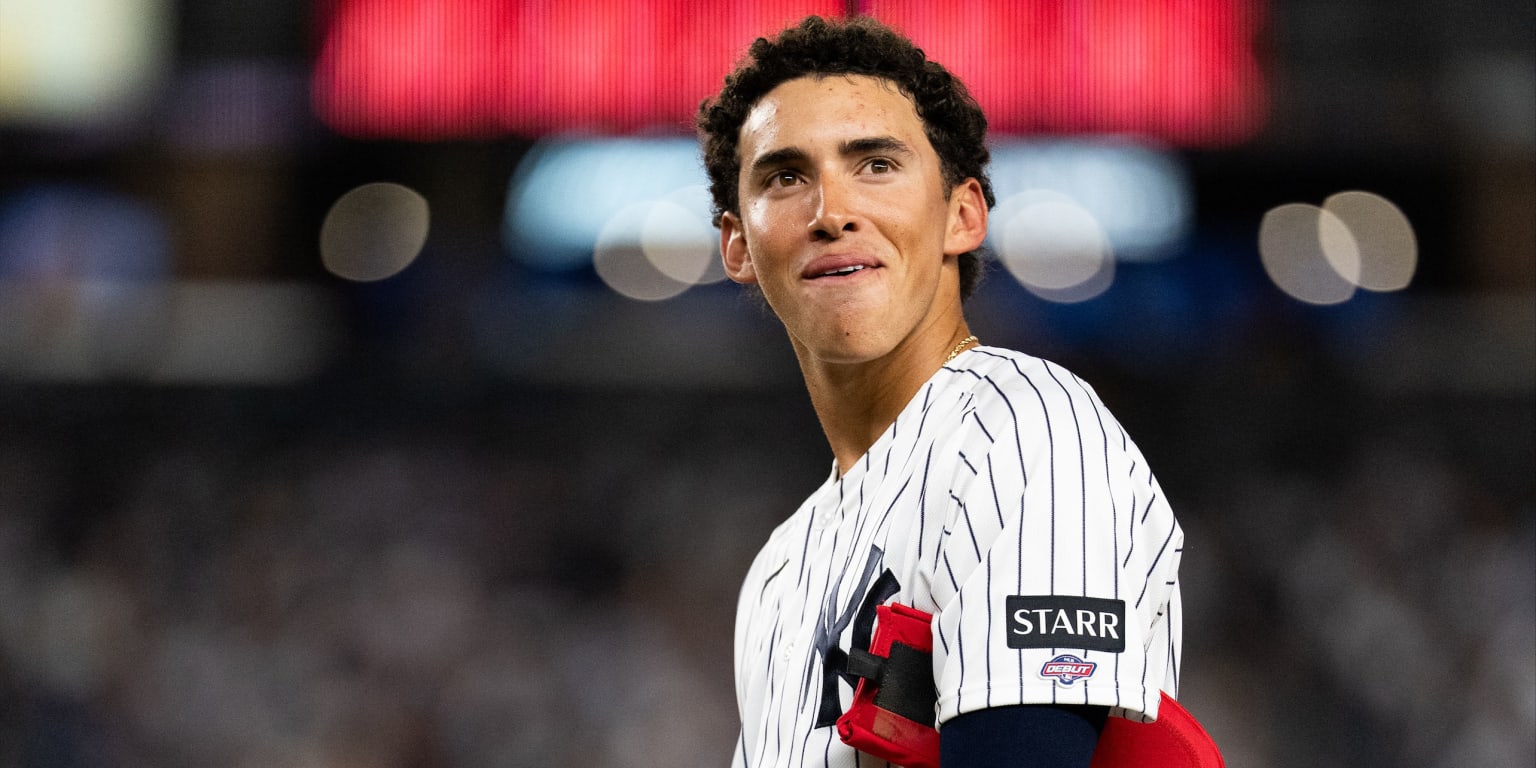
George Lombard Jr. hit a home run in his second Major League plate appearance this week, becoming the 14th player in Yankees history to homer in his debut and the first since Jasson Domínguez in September 2023. The 21-year-old prospect has displaced Anthony Volpe at shortstop, sending the former highly-regarded prospect back to Triple-A Scranton/Wilkes-Barre. General Manager Brian Cashman framed the move as a calibrated decision: Lombard arrived at his call-up leading all qualified Yankees minor leaguers in on-base percentage (.411), doubles (24), and tied for third in OPS (.909), markers the front office weighted heavily enough to accelerate his timeline and make the Volpe demotion.
Lombard carries a pedigree that transcends statistics. His father, George Lombard Sr., played Major League Baseball and now serves as bench coach for the Detroit Tigers—a foundation that shows up in his approach to pressure. Speaking in late February during spring work, the shortstop described acknowledging expectations while compartmentalizing them, a maturity his manager Aaron Boone emphasized in describing his defense as operating "like a puma," loose and instinctive. Boone highlighted the ease of Lombard's throws and the athleticism that underpins his glovework; the addition of functional strength over the offseason had left room in his frame to fill in, and he had done so deliberately. Cashman called Lombard's defense "plug and play"—a shorthand for a prospect whose contributions on that side were never the constraint.
The market signal here is structural. Detroit demanded Lombard in any trade discussions around pitcher Tarik Skubal at the Trade Deadline; the Yankees declined, valuing his long-term position upside over a short-term rental upgrade. That refusal—and now his promotion—tells you the organization believes in the positional ceiling. Lombard will play shortstop regularly, and the organization is betting against the conventional wisdom that minor-league performance always requires a larger sample at the big-league level before lineup stability follows. He is penciled in, not auditioned.
For betting purposes, this creates two vectors. First, the Yankees' offensive run production models shift. Lombard's .411 OBP in the minors and his gap power (24 doubles in the upper minors) suggest a distinct profile from Volpe's straight-line speed game. If Lombard maintains even 85% of that minor-league OBP in the majors—a conservative assumption for a bat-first shortstop with plate discipline—the Yankees' team on-base percentage rises, which dampens strikeout totals and tightens the margin on unders in team-total games. Conversely, his power indicators (.909 OPS is driven by extra-base production in a controlled offensive environment) could push team-total overs if he stabilizes in a regular lineup spot over the next 3-4 weeks. The volatility, however, is the edge: the market priced Volpe's upside into these team totals; Lombard's debut has created a real competing outcome that sportsbooks are only now repricing. That repricing window closes in 24-48 hours once Lombard's game log becomes available for advanced modeling.
Second, monitor Lombard's individual prop ceiling. Shortstops with OBPs above .410 in the minors and high walk rates (60 walks in a limited sample) typically carry longer at-bat counts. His 60 walks in the minor-league sample is a 36% walk rate by plate appearance—not sustainable at the big-league level, but a marker that he doesn't chase. If sportsbooks price Lombard walks or strikeout totals as an afterthought (treating him as a young call-up with minimal data), the walk proposition could carry edges: a disciplined 21-year-old with a minor-league OBP .411 and elite pitch recognition will not bottom out to 3-4 walks per game. The strikeout line is the more durable play. Expect books to slot his K rate closer to league-average shortstops (around 8.2 per 27 plate appearances); if Lombard's plate discipline translates, his actual rate could run 10-15% lower, creating fade value on strikeout overs if they price him as a typical young infielder.
MLB Intelligence — Baseball intelligence beyond the box score. Open MLB Intelligence →