Lombard's debut velocity and the Yankees shortstop pipeline question
By Justin Erickson ·
George Lombard Jr. homered in his MLB debut Tuesday night, but early rookie performance tells you almost nothing about sustainable offensive value.
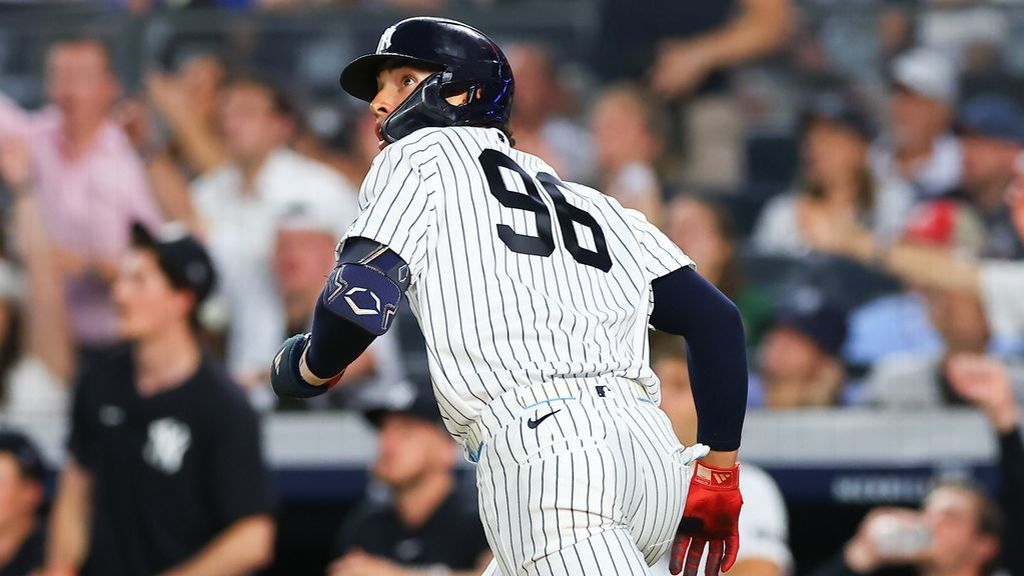
George Lombard Jr. stepped into Yankee Stadium on Tuesday night and delivered a moment his family will frame: a solo home run off Cardinals starter Hunter Dobbins in his second plate appearance, exit velocity 100.2 mph, the kind of first-game flourish that sends highlight packages into rotation. He became the third-youngest Yankee to homer in a debut. The timing layered narrative on top—his younger brother Jacob crushed a homer in his own professional debut the same evening, 1,000 miles south in Single-A ball, nearly identical exit velo (99.9 mph), same launch angle (33 degrees), both off hanging breaking balls. The family story matters to the franchise and sells tickets. For betting purposes, it matters far less.
Lombard's profile is genuine. The 21-year-old shortstop showed plus glovework Tuesday—a backhand stop and off-balance throw to spark a double play in the second inning. Top prospects don't materialize from hype alone; they arrive with measurable tools, and Lombard has them. But one plate appearance of offensive output, even a 100-mph exit-velo dinger, contains almost zero predictive power for season-long offensive production. The Yankees haven't suddenly unlocked a new offensive weapon because Lombard homered in game one. What they've unlocked is a position need (shortstop depth) and a timeline question: does Lombard profile as an above-average offensive contributor by September, or is this a development arc that plays out over 2027?
The betting market will face a real decision point in the coming weeks if Lombard remains in the lineup. Books will offer him prop lines—hits, home runs, RBI—and the market's first instinct will be to anchor on that debut homer, to shade overs on power and contact props. This is a classic newcomer effect. Rookie debuts with memorable moments (home runs, diving catches, walk-offs) trade at a premium because recency and narrative carry weight with casual bettors. The counter is process. Lombard will face major-league fastballs and changeups for the first time in meaningful volume. His swing path, pitch recognition, and mental approach will compress under velocity he hasn't routinely seen. Over his first 50 plate appearances—roughly two weeks—expect his batting average and power output to regress toward league-median rookie rates unless he's genuinely a 70-tool prospect, which even top-five overall picks are not.
The angle isn't "fade Lombard props because he's a rookie." The angle is narrower: if Lombard's early prop lines reflect heavy weight on that debut homer (overs at market-standard juice on HR, RBI, hits through his first week), the fade becomes the trade. The market is pricing in a highlight reel; the reality will be a learning curve. His actual baseline offensive production—once the smoke clears and he's faced 100-plus pitches from major-league arsenals—will almost certainly fall below where opening-week prop lines are shaded. Wait for the market to overextend on the rookie hype, then target unders on volume and power props over his first 10-15 games as a Yankee.