MLB · callup
Sale's Extra Rest Becomes Braves' Playoff Insurance as Mahle Debuts in Bronx
Atlanta's calculated rotation management—spacing Sale's starts to maximize health into October—creates a measurable edge on his velocity and control metrics.
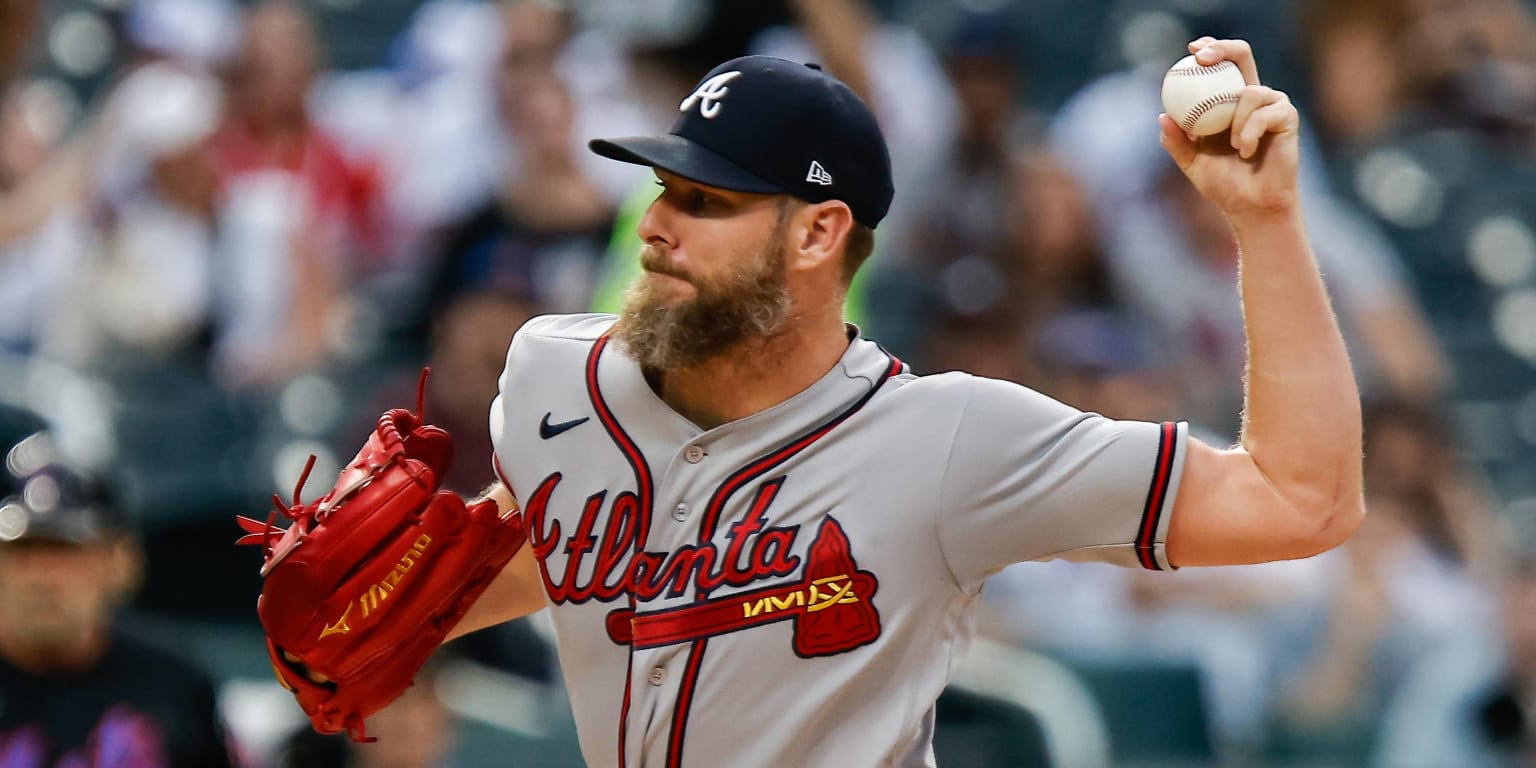
Tyler Mahle takes the ball Friday night at Yankee Stadium in his first outing as a Brave, a move that allows Atlanta to slot Chris Sale into Saturday's finale with eight days of rest—five more than the league baseline. The 37-year-old Sale hasn't pitched since July 29 against the Mets, a stretch the Braves have engineered deliberately. With a 2.08 ERA and a career-best 96.1 mph average on his four-seamer, Sale has reversed the velocity decay that typically haunts pitchers entering their late thirties. His previous high was 95.2 mph in 2018, at age 29. The gap matters because Sale's fastball is no longer a liability—it's a weapon that anchors his elite strikeout rate.
The Braves' deployment strategy is not theoretical. Sale's actual numbers under extended rest shape the betting calculus. In 11 starts with exactly one extra day, he owns a 1.92 ERA. In seven starts with more than one extra day, that mark drops to 1.31 ERA. By contrast, his two regular-rest starts carry a 4.50 ERA. Manager Walt Weiss has made it explicit: the organization is spacing Sale's turns to preserve both health and performance into the postseason. This is not risk management—this is resource allocation tied to measurable on-field outcomes.
Mahle enters a different situation. Acquired from the Giants just before the Trade Deadline on July 28, the right-hander posted a 3.06 ERA across his first six Braves starts before getting roughed up by the Padres last Saturday (five earned runs, 5⅔ innings). The nine strikeouts in that loss suggest his stuff remained intact despite the workload. Against a Yankees lineup primed for fastballs, Mahle becomes a test case for whether mid-season acquisition fatigue (multiple teams, travel, workload reset) cancels out his strikeout upside.
The prop angle hinges on Sale's velocity sustainability and command under extended rest. His fastball sits at 96.1 mph; when he gets eight days' recovery, he historically attacks the zone with higher conviction. Take Sale's strikeout total (typically 8.5–9.5 K in his 95-pitch outing profiles) as a fade early in the betting window. The market will price his historical 37-year-old discount into his K prop, but the combination of extra rest, elite velocity, and a Yankees lineup that strikes out at a slightly above-average rate creates an edge on the over. The Braves are not resting Sale by accident—they are building him into peak shape for a specific weekend, and the book has not yet adjusted for the velocity gains he's demonstrated.
Mahle's strikeout prop, conversely, carries less clarity. His recent Padres outing (nine K in 5⅔ innings) signals stuff, but sample size across his Braves tenure is thin. Tread cautiously on his K total until he logs another start; the edge, if it exists, is durable only after a second outing establishes his new-team baseline.
MLB Intelligence — Baseball intelligence beyond the box score. Open MLB Intelligence →