Braves' Postseason Rotation Strategy Tilts Toward Depth Over Peak Velocity in Wild Card
By Justin Erickson ·
Atlanta's final-week preparation reveals a rotation setup that prioritizes rest distribution and bullpen leverage over traditional ace-heavy opening matchups—a structural choice that reshapes how to value early October performance props.
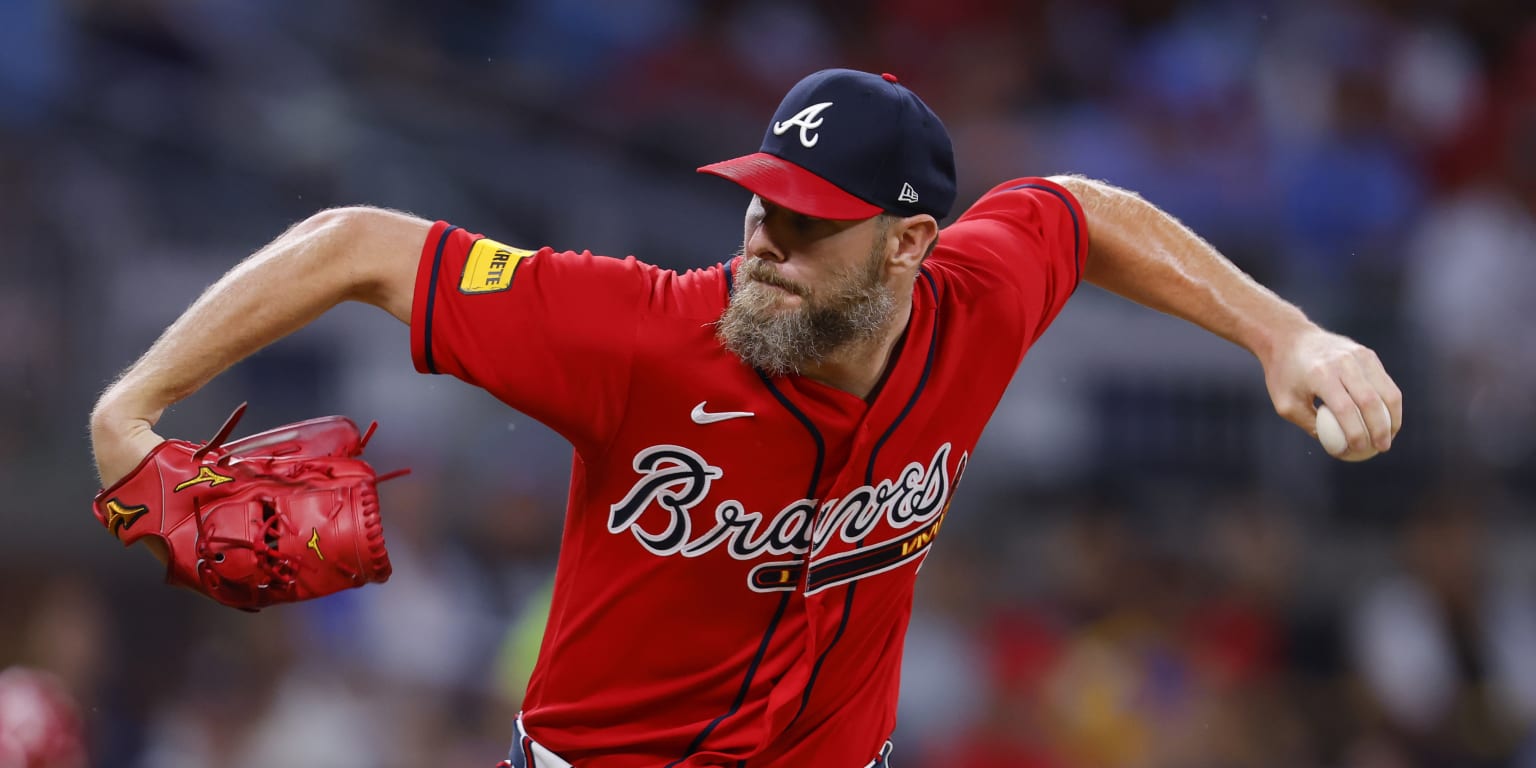
The Braves have secured the NL East and will enter the postseason as the National League's No. 3 seed, leaving them with one week to finalize their October architecture. The framework is already clear: Chris Sale starts Wednesday against Cincinnati with six extra days of rest, positioning him for Game 1 of the Wild Card Series with additional recovery. Tyler Mahle follows Thursday's series finale, which sets him up similarly for Game 2. But the third starter slot—and the conditional availability of the bullpen core—reveals Atlanta's real postseason philosophy: leverage depth and high-velocity relievers rather than lean on a traditional three-starter rotation through a best-of-three.
The decision tree for Game 3 of the Wild Card Series hinges on Grant Holmes versus Martín Pérez, and the underlying data tells the story of why both are being considered. Holmes shut down the Astros on Saturday, allowing two runs over six innings, but his batted-ball profile carried risk: eight of 20 balls in play registered 100 mph or harder, with twelve hitting 95 mph or above. That's a flyball pitcher operating at velocity limits, vulnerable to one big inning in a winner-take-all spot. Pérez, by contrast, worked one run in 4⅓ innings Sunday, and Braves manager Walt Weiss is aware the 37-year-old veteran prefers regular rest cycles. If the team schedules Pérez's final regular-season appearance for Saturday in Miami, he'd have the extra day needed for Game 3. The trap for bettors is assuming Atlanta will throw its freshest starter in every elimination game—the Braves are explicitly rejecting that model.
The wild card in October availability is Robert Suarez, who pitched his first live game since June 19 in a Triple-A rehab appearance Sunday. Weiss has indicated a desire to see Suarez pitch a couple of MLB games before the Wild Card Series (which begins September 29, eight days from now), but he hasn't committed to that timeline. Suarez's return to a healthy bullpen alongside Didier Fuentes, Raisel Iglesias, and Dylan Lee would be transformational—yet Lee has deteriorated in the second half, and Suarez's arm rehab remains on the critical path. Bryce Elder, cleared only 13 days ago from surgery to remove bone fragments from his right knee (September 8), is ahead of schedule on a three-to-four week recovery window but almost certainly unavailable for the Wild Card round. He could emerge as the fourth starter option for the NLDS, which tips off four days after the Wild Card winner is crowned.
The prop implication cuts directly to relief innings and starter usage patterns. Markets are pricing Wild Card Series starter strikeout totals and team unders based on conventional rotation depth; Atlanta's actual plan is to minimize starter length and funnel high-leverage situations to the bullpen as early as Game 1. Sale and Mahle will be rested and available, but if Holmes or Pérez are forced into relief duty for Game 3, or if Suarez remains unavailable, the Braves' ability to chase strikeouts in early innings erodes. Sale's K9 is historically elite, but Game 1 relief appearances by secondary starters compress the strike zone. Conversely, if Suarez does pitch in big-league games before September 29, his return injects velocity back into the bullpen and could elevate team strikeout totals by 1–1.5 K per game across the series.
For bettors, the read is this: lean toward lower starter strikeout props and unders on team K totals if Suarez remains unavailable heading into the Wild Card Series, because Atlanta will compensate with longer starter outings and fewer power-relief appearances. If Suarez pitches in the next eight days and tests clean, reverse that lean entirely—the bullpen suddenly has the velocity profile to support higher K props across all matchups. The Braves' transparency about this rotation construction is unusual and valuable; most teams obscure their October prep. Atlanta is showing you exactly which availability statuses matter for their October performance. Pay attention to the transaction wire between now and September 29.