MLB
Braves Clinch NL East as Depth Depth Narrative Collapses Into October Reality
Atlanta won the division on the back of depth arms and deadline saves, not stars—a structural advantage that shifts the postseason betting logic in their favor.
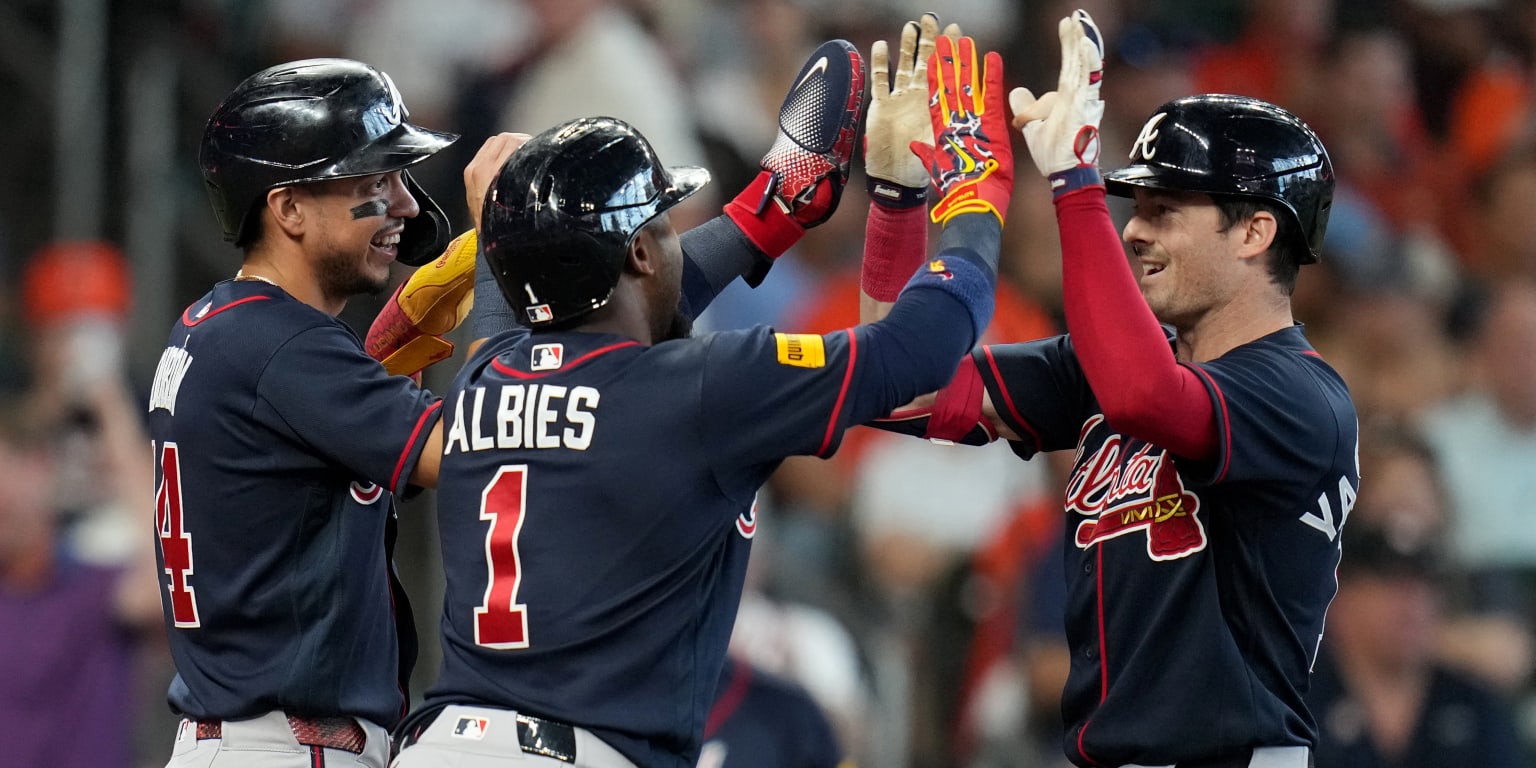
The Braves clinched the NL East on Sunday with a 4-2 win over Houston, finishing a four-game road trip that gave them six games to rest before October. The margin was comfortable enough that Atlanta secured the crown before the final week, but the path to the division title tells a sharper story than a simple third seed ranking. Martin Pérez—a non-roster invitee designated for assignment in April—took the mound in a game the Braves had to win. Mike Yastrzemski, a December waiver claim, delivered the decisive three-run homer. These aren't the names that moved preseason title odds. They're the names that explain why Atlanta's actual roster construction, once you strip away the star-power optics, carries hidden edges heading into the postseason.
Spring Training dealt the Braves a brutal hand. Spencer Strider, Hurston Waldrep, Spencer Schwellenbach, and Joey Wentz all hit the injured list before the regular season began, dismantling what should have been a rotation anchored by elite arms. Instead, Atlanta leaned on depth: Pérez posted a 3.04 ERA across 30 starts; Tyler Mahle, acquired at the deadline with a 5.13 ERA in tow, has been a different pitcher since arriving, posting a 1.28 ERA in eight starts. Manager Walt Weiss navigated June's stumble and built a late-season surge that matters most. The rotation weakness that looked like a disaster in March became a scheduling advantage by September—the Braves forced their pitching staff to prove competence in low-leverage spots, and the ones that survived (Pérez, Victor Mederos in relief, AJ Smith-Shawver's fastball touching 100.5 mph) have been battle-tested in ways Orlando or even Atlanta's star power couldn't replicate.
What's often missed in this narrative is that depth isn't an accident. Alex Anthopoulos signed Dubón in November for defensive versatility and clubhouse glue. That move isn't a splash headline, but Dubón doubled ahead of Yastrzemski's homer and has accumulated value across 162 games that box scores don't fully capture. The Braves built for resilience, not for 2025 projection models. That structural discipline—the ability to absorb injuries to four projected-starters and still win the division—is a postseason edge because playoff baseball punishes teams that rely on a single tier of talent. Atlanta has distribution.
For prop bettors, this matters in specific ways. First, the pitching depth means Braves playoff games should be priced assuming reliable middle-relief innings and a bullpen that has seen live-game leverage. Opponent total bases and strikeout rates may be slightly overpriced in first-five-inning props if the market is anchoring to "third seed, lower seed starts better pitchers." The Braves' Game 1 starter won't necessarily be their most dominant arm; it'll be whichever pitcher gives Atlanta the highest expected value for that matchup. Second, the Yastrzemski pattern—acquiring depth bats in the offseason and deadline window and letting them accumulate at-bats across six months—creates compounding offensive variance. Yastrzemski's three homers on this road trip don't predict his playoff performance, but they signal that Atlanta isn't relying on a three-man offensive core. Ronald Acuña Jr., Matt Olson, and Chris Sale are the public stars, but games will be decided by the seventh, eighth, and ninth hitters. That distributes risk away from the favorites and toward the underdogs who have learned to win without expecting their top names to carry every inning.
Weiss's first season has been a candidate for Manager of the Year partly because nobody expected him to manage a division winner. The market had settled on Atlanta as a division contender with playoff upside; instead, the Braves won outright by building a roster that won when it wasn't supposed to. That's not regression or luck—it's organizational architecture. For the postseason, expect the Braves to be undervalued in series matchups where their opponent relies on two or three ace-level starters. Atlanta will match them with six serviceable arms, and over a best-of-five or best-of-seven, distribution beats concentration.